
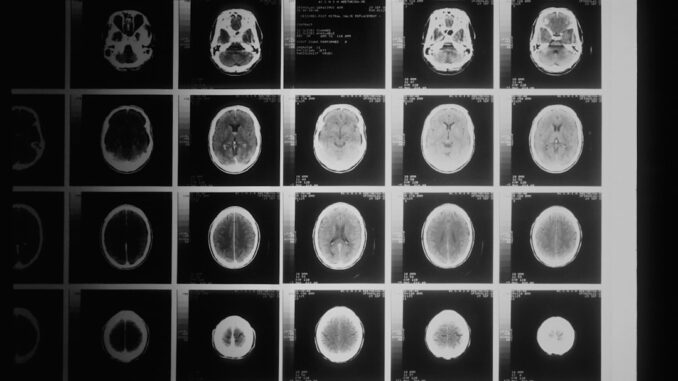

Illuminating Hope: How BraTS-PEDs is Revolutionizing Pediatric Brain Tumor Diagnosis
Imagine a world where a child’s laughter isn’t overshadowed by the grim shadow of a brain tumor. For far too many families, that’s the heart-wrenching reality. Pediatric brain tumors, particularly the aggressive gliomas, present one of the most formidable challenges in modern medicine. They’re rare, yes, but their impact is devastatingly profound. We’re talking about incredibly complex diseases, heterogeneous in their nature, often hiding in plain sight within a developing brain, making both diagnosis and treatment incredibly difficult. Can you even begin to fathom the stakes?
Consider this stark reality: the five-year survival rate for high-grade gliomas in children barely scrapes past 20%. That’s a truly chilling statistic, one that screams for urgent innovation. It underlines not just a need, but an absolute imperative, for us to develop significantly better diagnostic tools and, crucially, more effective therapeutic strategies. This isn’t just about statistics; it’s about giving kids a chance at a full life, you know?
Healthcare data growth can be overwhelming scale effortlessly with TrueNAS by Esdebe.
It’s against this backdrop that the Brain Tumor Segmentation (BraTS) Challenge, a well-established international initiative, took a vital step forward in 2023. They expanded their focus, dedicating a specific track to pediatric brain tumors, brilliantly named BraTS-PEDs. This wasn’t merely an academic exercise. It was a concerted, global effort designed to rigorously benchmark the latest volumetric segmentation algorithms. The goal? To precisely delineate pediatric brain gliomas using multi-parametric structural MRI (mpMRI) data. By creating these standardized, quantitative performance evaluation metrics, BraTS-PEDs isn’t just encouraging research; it’s actively accelerating the creation of automated segmentation techniques, custom-tailored for our youngest, most vulnerable patients.
The Silent Struggle: Why Pediatric Brain Tumors Are So Challenging
Before we dive into the incredible technological strides, it’s worth pausing to appreciate the unique difficulties inherent in pediatric neuro-oncology. Unlike adult brains, a child’s brain is a dynamic, rapidly developing organ. Tumors growing within this delicate landscape often present differently. They can be more diffuse, have less distinct borders, or mimic normal developmental milestones, sometimes delaying diagnosis. And when they are high-grade, like glioblastomas or diffuse midline gliomas, they don’t just grow quickly; they infiltrate brain tissue with a ruthless efficiency, making complete surgical resection incredibly tricky.
Then there’s the sheer diversity. Pediatric brain tumors aren’t a monolith. You’ve got astrocytomas, medulloblastomas, ependymomas, craniopharyngiomas, and many more, each with its own cellular architecture, growth pattern, and genetic signature. This heterogeneity means a ‘one-size-fits-all’ approach simply won’t cut it. Moreover, the treatments themselves – radiation and chemotherapy – can have profound, long-lasting neurocognitive side effects on a developing brain. So, precise targeting isn’t just about curing the tumor; it’s about preserving a child’s future quality of life.
Traditionally, a neuroradiologist, often with years of specialized training, manually outlines these tumors slice by painstaking slice on MRI scans. It’s a labor-intensive, time-consuming process, and despite their expertise, there can be subtle variations between different observers, or even the same observer on different days. This inter-observer variability, small as it might seem, can have huge implications for treatment planning and, critically, for objectively assessing how a tumor responds to therapy in clinical trials. If you can’t accurately measure change, how can you truly know if a new drug is working? This is where automated, consistent segmentation steps in as a game-changer.
BraTS-PEDs: A Beacon of Collaboration and Innovation
The BraTS-PEDs 2023 challenge didn’t just appear out of nowhere; it built upon years of experience from the broader BraTS initiative, which has been pushing the boundaries of adult brain tumor segmentation since 2012. The organizers recognized that while adult and pediatric tumors share some imaging characteristics, the nuances for children warranted a dedicated focus. The unique anatomical variations, tissue properties, and the need for age-specific considerations in image interpretation demanded a specialized approach. They understood that you can’t just downscale an adult solution and expect it to work effectively for kids.
The challenge meticulously curated a dataset of multi-parametric MRI (mpMRI) scans. If you’re not familiar, mpMRI isn’t just one type of scan; it’s a suite of sequences, each providing distinct information. Think of it like different lenses on a camera, each revealing a different aspect of the subject. We’re talking T1-weighted images, T1-weighted images with contrast enhancement (T1ce), T2-weighted images, and Fluid-Attenuated Inversion Recovery (FLAIR) sequences. Each of these sequences highlights different tissue characteristics – water content, fat, blood flow, and the presence of contrast agents that help illuminate parts of the tumor where the blood-brain barrier is compromised. By integrating all this data, radiologists get a comprehensive picture, and more importantly, so do the sophisticated algorithms participating in BraTS-PEDs.
The ‘standardized quantitative performance evaluation metrics’ are the backbone of the competition. The most prominent, the Dice Similarity Coefficient (Dice score), measures the spatial overlap between the algorithm’s segmentation and the expert-drawn ‘ground truth.’ A Dice score of 1.0 means perfect overlap. The Hausdorff distance at 95% (HD95) is another critical metric; it assesses the maximum distance between the borders of the segmented tumor and the ground truth, effectively telling us about the worst-case boundary errors. A smaller HD95 is definitely better, indicating a more precise boundary delineation. These metrics aren’t just for academic bragging rights; they provide objective, reproducible measures of accuracy, which is paramount for clinical adoption.
Unpacking the Algorithms: A Symphony of AI Excellence
The 2023 BraTS-PEDs challenge truly spurred an explosion of innovation. Teams from around the globe poured their ingenuity into developing algorithms that could tackle these complex segmentation tasks. Let’s look at some of the standout approaches.
The Ensemble Powerhouse: nnU-Net, Swin UNETR, and HFF-Net
One particularly impressive entry leveraged a sophisticated ensemble approach, cleverly combining the strengths of three cutting-edge architectures: nnU-Net, Swin UNETR, and HFF-Net. It’s like assembling a dream team, each member bringing their unique superpower to the table.
-
nnU-Net: This architecture is a veritable workhorse in medical image segmentation. What makes it so robust and adaptive? It’s ‘self-configuring,’ meaning it automatically adjusts its hyperparameters based on the dataset, making it incredibly versatile. For BraTS-PEDs, the team incorporated ‘adjustable initialization scales’ for optimal complexity control. Think of it as fine-tuning the engine to get the best performance for the specific nuances of pediatric data, rather than just running a generic setup.
-
Swin UNETR: Here, we see the power of Transformer-based models making their mark in medical imaging. Transformers, originally lauded for their prowess in natural language processing, are incredibly good at capturing long-range dependencies and global context within an image. Crucially, this team utilized ‘transfer learning’ from BraTS 2021 pre-trained models. Now, you might wonder, aren’t adult and pediatric brains different? Absolutely. But pre-training on a large adult dataset helps the model learn generalized features of brain anatomy and tumor characteristics. Then, by fine-tuning on the smaller, specific pediatric dataset, it quickly adapts, refining its understanding of pediatric specifics without having to learn everything from scratch. It’s an incredibly efficient way to leverage existing knowledge.
-
HFF-Net: This component introduces a fascinating concept: ‘frequency domain decomposition.’ In essence, HFF-Net breaks down the image information into different frequency components. Low-frequency signals generally represent the broad, smooth contours of tissues and overall tumor shape. High-frequency signals, on the other hand, capture the finer, sharper details, like subtle texture variations or the precise edges where a tumor meets healthy tissue. By separating these, the HFF-Net can process them optimally. For instance, the general shape of the tumor (low-frequency) might be easier to discern, but distinguishing the precise, sometimes fuzzy, boundary from surrounding edema (high-frequency details) is where this approach truly shines. It’s critical for achieving the kind of precision needed in delicate neurosurgery or radiation planning.
When these three powerhouses combined their efforts, the results were really quite compelling. The final ensemble achieved impressive Dice scores across various tumor sub-regions:
- Enhancing Tumor (ET): 72.3%
- Non-Enhancing Tumor (NET): 95.6%
- Core Tumor (CC): 68.9%
- Edema (ED): 89.5%
- Tumor Core (TC): 92.3%
- Whole Tumor (WT): 92.3%
Let’s unpack these numbers a bit, because what does a ‘72.3% Dice for ET’ actually mean? The ‘enhancing tumor’ (ET) is often the most metabolically active and aggressive part, showing up bright after a contrast agent. A 72.3% Dice score here is good, but it also reflects the inherent difficulty in precisely delineating these often irregular and invasive regions. On the other hand, ‘non-enhancing tumor’ (NET) or ‘whole tumor’ (WT) often have higher Dice scores (like 95.6% and 92.3% respectively) because they represent larger, perhaps more contiguous regions, or areas that are easier to distinguish from normal brain tissue. The ‘tumor core’ (TC), which usually includes the enhancing tumor and necrotic core, also showed a strong 92.3%. These metrics provide radiologists and oncologists with invaluable, consistent data points, moving beyond subjective visual assessments.
Radiologist-Inspired Architecture: Learning from the Experts
Another significant innovation came from a team that developed a novel deep learning architecture, directly ‘inspired by expert radiologists’ segmentation strategies.’ This isn’t just about feeding an algorithm data; it’s about embedding human clinical reasoning into the AI. How does an experienced radiologist look at an MRI? They don’t just see pixels; they identify patterns, consider anatomical context, integrate information across different sequences, and use their knowledge of tumor biology. This model sought to mimic that multi-faceted approach, essentially teaching the AI to ‘think’ more like a human expert.
This architecture delineated ‘four distinct tumor labels,’ which likely correspond to key regions like the enhancing core, the necrotic core, non-enhancing tumor components, and surrounding peritumoral edema. Each of these components has different clinical implications, so accurate segregation is incredibly valuable. The model’s real test came when it was benchmarked on a completely ‘held-out PED BraTS 2024 test set’ – meaning data it had never seen before, ensuring its true generalization capabilities. This is crucial for real-world applicability; you wouldn’t want a model that only works on the data it was trained on, right?
When evaluated against the previous state-of-the-art model using an external dataset of 30 patients from the Children’s Brain Tumor Network (CBTN), the proposed algorithm showed clear superiority. It achieved an average Dice score of 0.642 and a Hausdorff distance at 95% (HD95) of 73.0 mm. The existing model, for comparison, had a Dice score of 0.626 and an HD95 of 84.0 mm. What do these differences mean? A higher Dice score, even a seemingly small jump from 0.626 to 0.642, indicates better overall overlap and segmentation accuracy. More strikingly, a reduction in HD95 from 84.0 mm to 73.0 mm means the algorithm is identifying tumor boundaries much more precisely. An 11mm difference in HD95 can be absolutely critical when you’re talking about structures millimeters away from vital brain regions. This improved precision is essential for everything from evaluating subtle changes in tumor volume during chemotherapy to guiding a neurosurgeon’s scalpel, or accurately focusing radiation beams to minimize damage to healthy tissue. It’s a tangible step towards better patient care.
The Collaborative Spirit: Fueling Progress Beyond Algorithms
The technological breakthroughs we’ve discussed are undeniably exciting, but they wouldn’t be possible without a bedrock of collaboration. The success of the BraTS-PEDs challenge really underscores the absolutely critical role that interdisciplinary teamwork plays in advancing pediatric brain tumor research. It’s not just about clever algorithms; it’s about people coming together.
Think about it: who are these people? You’ve got the intrepid clinicians – the pediatric neurologists, neurosurgeons, and neuro-oncologists who are on the front lines, seeing these kids and their families every day. Then there are the neuroradiologists, the expert interpreters of those intricate MRI scans, whose insights are invaluable for ground-truth annotations. And, of course, the brilliant AI and imaging scientists, data scientists, and engineers who actually build and refine these complex models. But don’t forget the vital contributions of patient advocacy groups and philanthropic organizations, who often champion these initiatives and help secure the necessary funding and patient data. This beautiful tapestry of expertise ensures that the AI models developed are not just technically sound but also clinically relevant and ethically responsible.
Bringing these diverse minds together has fostered ‘faster data sharing,’ which is no small feat in the world of medical research. Data sharing is notoriously complex, riddled with privacy concerns (think HIPAA and GDPR), ethical considerations, and the sheer technical challenge of standardizing data across different institutions and even different MRI scanners. BraTS-PEDs has helped establish common platforms and trust, overcoming some of these hurdles to create robust, multi-institutional datasets that truly reflect the diversity of pediatric brain tumors. This is a huge step forward because larger, more diverse datasets mean more generalizable and robust AI models.
These ‘automated volumetric analysis techniques’ aren’t just neat academic tools; they’re poised to significantly benefit clinical trials. Imagine a scenario where every patient’s tumor volume is measured with consistent, objective precision. This reduces inter-observer variability, which can introduce noise into clinical trial data. It allows for more sensitive detection of subtle changes in tumor size, providing objective endpoints that can accelerate drug development. Furthermore, it enables researchers to analyze larger patient cohorts more efficiently, which is particularly important for rare diseases like pediatric brain tumors. Ultimately, this means faster, more reliable insights into which treatments are truly effective.
For the ‘care of children with brain tumors,’ these advancements translate into tangible improvements. Automated segmentation can provide rapid, consistent tumor measurements for real-time treatment planning, whether it’s for precisely guiding a neurosurgeon during tumor resection, carefully delineating radiation fields to spare healthy brain tissue, or monitoring response to chemotherapy. This precision is foundational to personalized medicine, tailoring treatment strategies to the unique characteristics of each child’s tumor, potentially reducing side effects and improving outcomes. It’s a profound shift.
The Horizon: BraTS-PEDs 2025 and Beyond
Looking ahead, the BraTS-PEDs challenge isn’t resting on its laurels; it’s continuously evolving. The 2025 edition, for instance, is already introducing ‘new methodologies and datasets’ to further refine segmentation algorithms. What might these new methodologies entail? Perhaps integrating multimodal data beyond just structural MRI – think functional MRI (fMRI) to map brain activity, or even genomic data to correlate imaging features with genetic mutations. Longitudinal data, tracking tumor changes over time within the same patient, will also be invaluable for building predictive models. And new datasets will undoubtedly aim for even greater demographic diversity and include even rarer pediatric tumor subtypes, ensuring that the AI tools developed are truly inclusive and widely applicable.
The emphasis on ‘frequency-aware ensemble learning,’ as highlighted in the lead-up to the 2025 challenge, demonstrates this ongoing commitment to enhancing both segmentation accuracy and generalizability. It suggests a continuous push to extract every last bit of useful information from the imaging data, discerning even the most subtle patterns that could define a tumor’s edge or its internal heterogeneity. These innovations aren’t just incremental; they’re crucial for developing the personalized treatment plans we’ve all been dreaming of. When you can precisely map a tumor in three dimensions, you can plan surgery with unprecedented accuracy, ensuring maximum safe resection. You can fine-tune radiation doses to the exact contours of the tumor, sparing critical brain structures.
But the future extends beyond mere segmentation. The insights gleaned from these challenges are paving the way for advanced applications like radiomics – extracting high-dimensional quantitative features from medical images to predict tumor behavior, treatment response, and patient prognosis. We’re talking about building AI models that can, in theory, predict which child will respond best to a certain chemotherapy regimen or which tumor is most likely to recur. That’s a truly transformative potential. Of course, there are ethical considerations to navigate here, ensuring explainability of AI decisions and tackling potential biases in training data, but the path is set.
Imagine a scenario, not too far off, where a child is diagnosed with a brain tumor. Instead of weeks of agonizing uncertainty and manual analysis, an AI-powered system, refined by challenges like BraTS-PEDs, rapidly and precisely segments the tumor in minutes. It then integrates this information with genetic data and clinical history, providing a personalized risk assessment and suggesting optimal treatment pathways. This isn’t science fiction anymore; it’s the future that BraTS-PEDs is actively building. And frankly, it’s about time.
In conclusion, the BraTS-PEDs Challenge has undeniably played a pivotal role in propelling pediatric brain tumor segmentation into a new era. Through this incredible symphony of collaborative efforts, rigorous benchmarking, and continuous algorithmic innovation, it has laid the groundwork for more accurate diagnostics and, critically, more effective treatment strategies. It offers not just hope, but a tangible pathway, for improved survival rates and a better quality of life for children affected by these challenging, often devastating, tumors. It really makes you wonder, doesn’t it, what other seemingly impossible medical challenges AI can help us conquer next?
References
-
Kazerooni, F., Khalili, N., et al. (2024). The Brain Tumor Segmentation (BraTS) Challenge 2023: Focus on Pediatrics (CBTN-CONNECT-DIPGR-ASNR-MICCAI BraTS-PEDs). ArXiv. pubmed.ncbi.nlm.nih.gov
-
Yi, Y., Zhuang, Q., Xu, Z.-Q. J. (2025). Frequency-Aware Ensemble Learning for BraTS 2025 Pediatric Brain Tumor Segmentation. ArXiv. arxiv.org
-
Bengtsson, M., Keles, E., et al. (2024). A New Logic For Pediatric Brain Tumor Segmentation. ArXiv. arxiv.org
-
Kazerooni, F., Khalili, N., et al. (2025). BraTS-PEDs: Results of the Multi-Consortium International Pediatric Brain Tumor Segmentation Challenge 2023. MELBA. melba-journal.org
-
Kazerooni, F., Khalili, N., et al. (2024). The Brain Tumor Segmentation in Pediatrics (BraTS-PEDs) Challenge: Focus on Pediatrics (CBTN-CONNECT-DIPGR-ASNR-MICCAI BraTS-PEDs). ArXiv. emergentmind.com
So, AI-powered systems can now segment brain tumors in minutes? I wonder if they can be trained to find my car keys, or perhaps locate the matching socks lost in the dryer. That would be a real game-changer in my household!
That’s a funny thought! While AI finding car keys might still be a ways off, think about how these segmentation advancements could improve diagnostic speed. Perhaps in the future there will be more time for tackling those matching socks. What are some other potential applications that may become reality soon?
Editor: MedTechNews.Uk
Thank you to our Sponsor Esdebe
The enhanced precision in delineating tumor boundaries, as demonstrated by improved Hausdorff distance metrics, holds significant promise for more targeted radiation planning, potentially minimizing damage to healthy tissue.
Thanks for highlighting that important point! It’s great to consider how this enhanced precision can directly translate to minimizing damage during radiation treatment. It really is about improving the quality of life for these children and giving them the best possible outcome! What other advances do you feel will most improve patient outcomes?
Editor: MedTechNews.Uk
Thank you to our Sponsor Esdebe
Given the potential for radiomics to predict treatment response, how can we ensure equitable access to these advanced diagnostic tools and therapies, particularly in underserved communities?
That’s such a vital question. We need to think about infrastructure, training, and funding models that prioritize equitable access. Perhaps telemedicine solutions and cloud-based platforms can help bridge the gap and bring these advancements to those who need them most. What are some other ideas?
Editor: MedTechNews.Uk
Thank you to our Sponsor Esdebe
Given the success of BraTS-PEDs in advancing segmentation, how can we leverage these algorithms to predict tumor recurrence or treatment resistance in pediatric brain tumors?
That’s a fantastic question! Building on the segmentation accuracy, we can explore radiomics to identify imaging biomarkers linked to recurrence or resistance. Analyzing features like texture and shape, could reveal subtle patterns undetectable to the human eye. This can potentially allow for earlier intervention! What specific imaging features might be most predictive?
Editor: MedTechNews.Uk
Thank you to our Sponsor Esdebe
Given the focus on enhancing segmentation accuracy, how might these algorithms be adapted to handle the variability in image acquisition protocols across different medical facilities?
That’s a really important consideration! Standardizing image acquisition protocols across facilities would definitely optimize algorithm performance. Perhaps focusing on techniques robust to variations, like incorporating data augmentation strategies during training, is also key. What specific augmentation approaches do you think would be most beneficial?
Editor: MedTechNews.Uk
Thank you to our Sponsor Esdebe
Given the inherent challenges in pediatric brain tumor diagnosis, how might AI-driven segmentation algorithms incorporate longitudinal imaging data to track tumor evolution and predict future growth patterns?
That’s a brilliant question! By tracking changes over time with longitudinal data, we can potentially identify early indicators of aggressive growth patterns. Imagine algorithms ‘learning’ a tumor’s unique trajectory and predicting its response to different treatments. What specific data points from longitudinal imaging would be the most informative for these predictive models?
Editor: MedTechNews.Uk
Thank you to our Sponsor Esdebe
Given the progress in automated segmentation, what are the next steps in translating these refined imaging biomarkers into actionable clinical insights for guiding personalized treatment strategies?
That’s a critical question! Beyond segmentation, integrating imaging biomarkers with other ‘omics’ data, like genomics and proteomics, could create a more complete picture. This multi-dimensional approach may improve patient stratification and lead to more targeted, effective therapies! What role do you think patient-reported outcomes should play in this?
Editor: MedTechNews.Uk
Thank you to our Sponsor Esdebe
The discussion of interdisciplinary teamwork highlights the need for diverse expertise. Expanding datasets to include genomic data alongside imaging could allow for correlations between imaging features and genetic mutations, ultimately refining personalized treatment strategies.
That’s a fantastic point! Exploring the intersection of imaging and genomics opens exciting possibilities. Imagine using AI to predict a tumor’s genetic profile directly from MRI scans, guiding treatment decisions. What challenges do you foresee in integrating these complex datasets and ensuring robust, reliable correlations?
Editor: MedTechNews.Uk
Thank you to our Sponsor Esdebe
AI dissecting tumors… fascinating! But if it gets too good, will radiologists start training AI models to do *their* taxes too? Just a thought.
That’s a fun idea! Perhaps AI could help with more mundane tasks. However, I believe that even with advanced AI, the radiologist’s role will evolve, not disappear. Their expertise in interpreting complex data and making critical clinical decisions will still be essential, no matter how clever the AI becomes!
Editor: MedTechNews.Uk
Thank you to our Sponsor Esdebe
The potential for AI to mimic expert radiologists’ segmentation strategies is fascinating. How could incorporating eye-tracking data from radiologists during their analysis further refine these AI models, teaching them where to focus and what subtle cues to prioritize?
That’s a fantastic idea! Eye-tracking data could provide a wealth of information about the visual attention strategies of expert radiologists. This could help to focus on subtle features that might otherwise be missed. It may even highlight areas to explore further! Perhaps using the models in real time with tracking data would increase accuracy?
Editor: MedTechNews.Uk
Thank you to our Sponsor Esdebe
The idea of mimicking expert radiologists’ strategies is compelling. Could these algorithms be developed to detect subtle changes in the peritumoral environment, offering earlier insights into potential recurrence beyond the tumor boundaries themselves?