

Abstract
Vitamin K deficiency bleeding (VKDB) is a preventable yet potentially devastating condition affecting newborns, characterized by uncontrolled bleeding due to insufficient vitamin K levels. This comprehensive review examines the global epidemiology and prevalence of VKDB, delves into the pathophysiology of its various forms—early, classical, and late—discusses diagnostic challenges, outlines advanced treatment protocols for active bleeding episodes, and explores the long-term neurological and developmental outcomes for infants who survive severe manifestations, such as intracranial hemorrhage.
Many thanks to our sponsor Esdebe who helped us prepare this research report.
1. Introduction
Vitamin K is a fat-soluble vitamin essential for the synthesis of clotting factors II, VII, IX, and X, which are crucial for blood coagulation. Newborns are particularly susceptible to vitamin K deficiency due to low placental transfer and a sterile gut microbiome at birth, leading to minimal endogenous vitamin K production. Without prophylactic vitamin K administration, infants are at risk of VKDB, a condition that can result in significant morbidity and mortality if not promptly addressed.
Many thanks to our sponsor Esdebe who helped us prepare this research report.
2. Epidemiology and Prevalence
2.1 Global Incidence
VKDB is classified into three types based on the timing of onset:
-
Early VKDB: Occurs within the first 24 hours after birth, predominantly in infants whose mothers have taken medications interfering with vitamin K metabolism, such as anticonvulsants or isoniazid. The incidence in this group can be as high as 12% in the absence of prophylaxis.
-
Classical VKDB: Manifests between 2 to 7 days of life, often associated with delayed or inadequate feeding. Without prophylactic vitamin K, the incidence is estimated to be between 0.25% and 1.7%.
-
Late VKDB: Occurs between 2 to 12 weeks of life, primarily in exclusively breastfed infants who did not receive vitamin K at birth. The incidence ranges from 4.4 to 72 cases per 100,000 births, with higher rates observed in Southeast Asia. Mortality rates for late VKDB are significant, ranging from 20% to 50%, and survivors may experience severe neurological sequelae due to intracranial hemorrhage.
2.2 Regional Variations
The prevalence of VKDB varies globally, influenced by factors such as maternal health, breastfeeding practices, and adherence to prophylactic guidelines. In regions with high rates of exclusive breastfeeding and low prophylactic vitamin K administration, the incidence of late VKDB is notably higher. Conversely, in areas with routine vitamin K prophylaxis, the incidence is markedly reduced.
Many thanks to our sponsor Esdebe who helped us prepare this research report.
3. Pathophysiology
Vitamin K is essential for the post-translational modification of certain proteins, including clotting factors II, VII, IX, and X, through γ-carboxylation. This modification enables these proteins to bind calcium ions, a necessary step for their activation and subsequent participation in the coagulation cascade. In VKDB, insufficient vitamin K leads to the production of inactive clotting factors, resulting in impaired coagulation and increased bleeding risk.
3.1 Early VKDB
Early VKDB is typically associated with maternal use of medications that interfere with vitamin K metabolism, such as anticonvulsants or isoniazid. These drugs can inhibit the enzyme vitamin K epoxide reductase, essential for recycling vitamin K, thereby reducing its availability for clotting factor synthesis in the fetus.
3.2 Classical VKDB
Classical VKDB is often linked to inadequate vitamin K intake, commonly due to delayed or insufficient feeding, leading to low vitamin K levels in the infant. Breast milk contains low concentrations of vitamin K, and without supplementation, infants may not receive adequate amounts to support normal coagulation.
3.3 Late VKDB
Late VKDB is predominantly observed in exclusively breastfed infants who did not receive vitamin K at birth. The condition is characterized by bleeding into the brain (intracranial hemorrhage) and other internal organs. The exact pathophysiology remains not fully understood, but it is believed that the low vitamin K content in breast milk, combined with the infant’s immature liver function and sterile gut microbiome, contributes to the development of VKDB.
Many thanks to our sponsor Esdebe who helped us prepare this research report.
4. Diagnosis
Diagnosing VKDB involves a combination of clinical assessment and laboratory investigations.
4.1 Clinical Assessment
Clinical signs of VKDB may include:
-
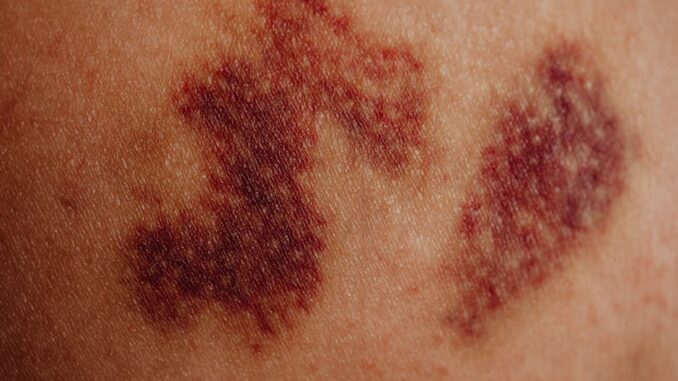
Unexplained bruising or bleeding, especially around the head and face.
-
Bleeding from the nose or umbilical cord.
-
Pale skin or jaundice.
-
Blood in the stool or vomit.
-
Irritability, seizures, or excessive sleepiness, which may indicate intracranial hemorrhage.
4.2 Laboratory Investigations
Laboratory findings suggestive of VKDB include:
-
Prolonged prothrombin time (PT), reflecting impaired clotting factor activity.
-
Low levels of vitamin K-dependent clotting factors (II, VII, IX, and X).
-
Elevated levels of des-gamma-carboxy prothrombin (PIVKA-II), a precursor protein that accumulates in vitamin K deficiency.
Confirmatory diagnosis is achieved by observing clinical improvement following vitamin K administration.
Many thanks to our sponsor Esdebe who helped us prepare this research report.
5. Treatment
5.1 Acute Management
Immediate treatment of VKDB involves the administration of vitamin K:
-
Intramuscular (IM) Vitamin K: A single dose of 1 mg IM vitamin K is recommended for newborns at birth to prevent VKDB. This regimen has been shown to be effective in reducing the incidence of VKDB.
-
Intravenous (IV) Vitamin K: In cases of active bleeding or severe VKDB, IV vitamin K may be administered, followed by supportive measures such as blood or plasma transfusions, depending on the severity of the bleeding.
5.2 Prophylaxis
Routine vitamin K prophylaxis at birth is the most effective strategy to prevent VKDB. The American Academy of Pediatrics recommends a single IM dose of 1 mg vitamin K for all newborns at birth. This practice has significantly reduced the incidence of VKDB in populations adhering to this guideline.
Many thanks to our sponsor Esdebe who helped us prepare this research report.
6. Long-Term Outcomes
6.1 Neurological and Developmental Outcomes
Infants who survive severe forms of VKDB, particularly those with intracranial hemorrhage, may experience:
-
Developmental delays.
-
Motor impairments.
-
Cognitive deficits.
-
Seizure disorders.
The severity of these outcomes correlates with the extent of the hemorrhage and the timeliness of medical intervention.
6.2 Prognosis
The prognosis for infants with VKDB varies:
-
Early and Classical VKDB: With prompt diagnosis and treatment, the prognosis is generally good, with most infants recovering without long-term sequelae.
-
Late VKDB: The prognosis is more guarded, especially in cases involving intracranial hemorrhage, where the risk of permanent neurological damage is high.
Many thanks to our sponsor Esdebe who helped us prepare this research report.
7. Prevention
The most effective prevention strategy for VKDB is the administration of vitamin K at birth. This practice has been endorsed by health organizations worldwide and has led to a significant decline in VKDB cases in populations that implement this prophylaxis.
Many thanks to our sponsor Esdebe who helped us prepare this research report.
8. Conclusion
Vitamin K deficiency bleeding remains a significant concern in neonatal care, particularly in regions where prophylactic vitamin K administration is not routine. Understanding the epidemiology, pathophysiology, diagnostic approaches, treatment protocols, and long-term outcomes associated with VKDB is crucial for healthcare providers to prevent and manage this condition effectively. Continued education, research, and adherence to prophylactic guidelines are essential to reduce the incidence and impact of VKDB globally.
Many thanks to our sponsor Esdebe who helped us prepare this research report.
References
-
Hand I, Noble L, Abrams SA; AAP Committee on Fetus and Newborn, Section on Breastfeeding, Committee on Nutrition. Vitamin K and the Newborn Infant. Pediatrics. 2022;149(3):e2021056036.
-
Zipursky A. Prevention of vitamin K deficiency bleeding in newborns. Br J Haematol. 1999;104:430–7.
-
Sutor AH, Kries R, Cornelissen EAM, McNinch AW, Andrew M. Vitamin K deficiency bleeding (VKDB) in infancy. Thromb Haemost. 1999;81:456–61.
-
McNinch AW, Tripp JH. Haemorrhagic disease of the newborn in the British Isles: two year prospective study. BMJ. 1991;303:1105–9.
-
Centers for Disease Control and Prevention. About Vitamin K Deficiency Bleeding. Available at: https://www.cdc.gov/vitamin-k-deficiency/about/index.html
-
Centers for Disease Control and Prevention. Vitamin K Deficiency Bleeding. Available at: https://www.cdc.gov/vitamin-k-deficiency/index.html
-
Merck Manual Professional Edition. Vitamin K Deficiency. Available at: https://www.merckmanuals.com/professional/nutritional-disorders/vitamin-deficiency-dependency-and-toxicity/vitamin-k-deficiency
-
MedlinePlus Medical Encyclopedia. Vitamin K deficiency bleeding of the newborn. Available at: https://medlineplus.gov/ency/article/007320.htm
-
StatPearls – NCBI Bookshelf. Vitamin K Deficiency. Available at: https://www.ncbi.nlm.nih.gov/books/NBK536983/
-
Hemorrhagic Disease of Newborn – PubMed. Available at: https://pubmed.ncbi.nlm.nih.gov/32644420/
-
Late vitamin K deficiency bleeding in infants: five-year prospective study – PubMed. Available at: https://pubmed.ncbi.nlm.nih.gov/33064995/
-
Laboratory Diagnosis of Bleeding. Available at: https://www.columbia.edu/itc/hs/medical/selective/AdvClinicalPathology/2005/lecture/LabDxBleedingDisordersColor_Diuguid.pdf
-
The Clinical Use of Blood Handbook. Available at: https://iris.who.int/bitstream/handle/10665/42396/9241545399.pdf
Be the first to comment