

SweetDeep: Unlocking the Future of Diabetes Screening with Wearable AI
Diabetes, particularly Type 2, isn’t just a medical condition; it’s a looming global health crisis, one that touches countless lives and strains healthcare systems worldwide. We’re talking about hundreds of millions affected, and projections suggest those numbers are only set to climb. The burden isn’t merely clinical; it’s profoundly economic and social too, isn’t it? Imagine the sheer volume of lost productivity, the cost of managing complications, and the immense personal suffering. Yet, for all its prevalence, detecting diabetes, especially in its early stages, remains a significant hurdle.
Traditional diagnostic approaches, those familiar biochemical assays, often present a formidable barrier. They’re invasive, demanding blood draws that can be uncomfortable, even painful for some. And let’s be honest, the costs can add up, making regular screening a luxury rather than a routine for many. This discomfort, this financial strain, this sheer inconvenience – it’s a potent cocktail that deters countless individuals from getting screened, or even monitored regularly. So, here we are, facing a global health challenge that urgently calls for a different approach. A non-invasive, cost-effective, and genuinely user-friendly screening method isn’t just a nice-to-have; it’s absolutely essential, something we just can’t compromise on anymore.
See how TrueNAS offers real-time support for healthcare data managers.
SweetDeep: A Glimpse into the Future of Screening
And that’s where SweetDeep steps in. This isn’t just another gadget; it’s a truly groundbreaking wearable device, harnessing the formidable power of artificial intelligence to deliver something truly revolutionary: real-time, non-invasive diabetes screening. Developed by a dedicated team of researchers whose vision clearly extends beyond the conventional, SweetDeep leverages data gathered from commercial Samsung Galaxy Watch 7 devices. Yes, those watches many of us already wear. This choice is incredibly astute, tapping into a widely adopted technology base, which speaks volumes about its potential for rapid deployment.
Participants in the study wore these watches over an intensive six-day period, a duration chosen to capture a significant snapshot of daily physiological rhythms. Each individual contributed multiple two-minute sensor recordings daily, often accumulating around twenty distinct readings. Think about what that entails: tiny, almost imperceptible measurements being taken throughout the day, during different activities, sleep, and rest. This extensive data collection wasn’t just about quantity; it aimed to build a truly comprehensive physiological and demographic profile of each user. They weren’t just looking for static numbers, you see, but dynamic patterns, subtle shifts that might signal underlying health changes. This continuous, unobtrusive monitoring is really the secret sauce here, laying the groundwork for an AI that can ‘learn’ the nuances of an individual’s health status. It’s a stark contrast to a single, isolated blood test, offering a much richer tapestry of data to work with. (arxiv.org)
The AI Under the Hood: Demystifying SweetDeep’s Mechanics
How exactly does SweetDeep pull off this seemingly futuristic feat? At its core lies a compact neural network, a sophisticated artificial intelligence model specifically designed and rigorously trained on the rich dataset collected from those Galaxy Watches. Now, when we say ‘compact,’ that’s not just a buzzword; it’s a critical design choice. A compact network means it’s efficient, requiring less computational power and memory, making it ideal for deployment on a resource-constrained device like a smartwatch. It suggests a streamlined architecture, honed to extract the most salient features from the sensor data without unnecessary complexity.
This isn’t about simply reading a single metric; it’s about sophisticated pattern recognition. The neural network learns to identify intricate, often imperceptible, physiological signatures that differentiate between individuals with diabetes and those without. What kind of ‘sensor recordings’ are we talking about here? While the abstract from the arXiv preprint doesn’t delve into granular detail, a modern smartwatch like the Galaxy Watch 7 typically boasts an impressive array of sensors. We’re talking about advanced photoplethysmography (PPG) sensors for heart rate and blood oxygen, accelerometers and gyroscopes for motion and activity tracking, often skin temperature sensors, and sometimes even bioelectrical impedance analysis (BIA) or electrocardiogram (ECG) capabilities. It’s plausible that SweetDeep’s AI is analyzing subtle shifts in heart rate variability, changes in skin conductance (which can be influenced by metabolic state), variations in activity patterns, or even minute thermal fluctuations – all data points that might correlate with glucose dysregulation. Imagine the AI sifting through this constant stream of data, looking for the tell-tale signs a human eye simply couldn’t detect. It’s truly fascinating, isn’t it?
Despite its ‘compact’ nature, implying an elegance in its design, the model achieved some genuinely impressive results under rigorous testing. It boasted an 82.5% patient-level accuracy. What does that actually mean? It means that, across all the individuals tested, the model correctly identified their diabetic status over four-fifths of the time. That’s a strong indicator of its potential as a screening tool, which is a crucial distinction. We’re not talking about a definitive diagnosis here, but rather a highly effective initial filter.
Furthermore, the model registered a macro-F1 score of 82.1%. If you’re not deep into machine learning metrics, the F1 score is a harmonic mean of precision and recall. A ‘macro’ F1 score is especially telling because it calculates the metric independently for each class (diabetic and non-diabetic) and then takes the average. This is vital when one class might be less prevalent than the other, ensuring the model isn’t just good at identifying the more common group. It demonstrates a balanced performance across both categories.
Breaking it down further, we see a sensitivity of 79.7%. Sensitivity, also known as recall, is about how well the model identifies actual positive cases. In simpler terms, if 100 people have diabetes, SweetDeep’s model would correctly identify nearly 80 of them. This is exceptionally important for a screening tool; we want to minimize false negatives, meaning we don’t want to miss people who actually have the condition. Missing a diabetic patient could delay intervention, leading to serious complications. Conversely, the model showed a specificity of 84.6%. Specificity measures how well the model identifies actual negative cases – that is, how accurately it identifies people who don’t have diabetes. If 100 people don’t have diabetes, SweetDeep would correctly identify almost 85 of them as non-diabetic. High specificity is crucial to avoid false positives, which can lead to unnecessary anxiety, costly follow-up tests, and an overburdening of healthcare resources. No one wants to be told they might have diabetes when they don’t, right? It’s emotionally taxing and financially draining.
These robust figures were achieved under a three-fold cross-validation methodology. This isn’t just a single test run; it’s a sophisticated technique where the dataset is divided into three subsets. The model is trained on two subsets and tested on the third, then this process is repeated three times, with each subset used as the test set once. This meticulous approach significantly enhances the model’s robustness and reliability, demonstrating that its performance isn’t just a fluke tied to a specific data split. It means the findings are far more likely to generalize to new, unseen data, giving us real confidence in SweetDeep’s capabilities. (arxiv.org)
The Paradigm Shift: Non-Invasive Monitoring’s Imperative
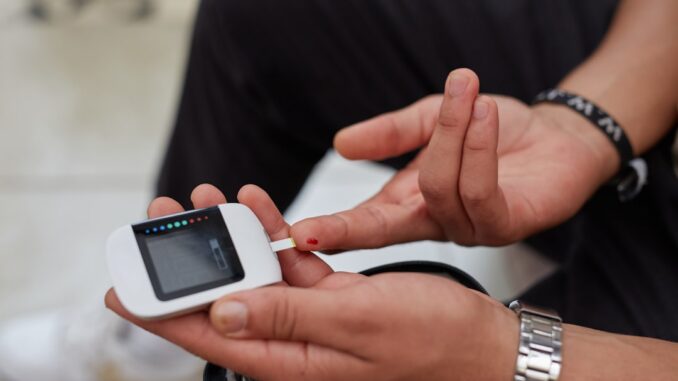
For decades, the pursuit of non-invasive glucose monitoring has been akin to a holy grail in diabetes care. The reason is simple, yet profound: the sheer ubiquity and discomfort associated with traditional methods. Cast your mind back to the evolution of diabetes management, if you will. We’ve moved from rudimentary urine tests to the era of fingerstick tests, a necessary but often painful ritual for millions. You know, that little prick on your fingertip, often multiple times a day, to get a snapshot of your glucose levels. While life-saving, it’s hardly pleasant, is it? And it only provides discrete data points, a single moment in time, missing the broader, dynamic picture of glucose fluctuations throughout the day and night.
Then came the continuous glucose monitors (CGMs), a significant leap forward. These devices use a small sensor inserted just under the skin, usually on the arm or abdomen, to measure interstitial fluid glucose levels continuously. They transmit data wirelessly to a receiver or smartphone, providing trends and alerts. CGMs have revolutionized management for many, offering invaluable insights. But even CGMs, for all their benefits, aren’t entirely non-invasive. They require sensor insertion, which, while less painful than a fingerstick, still involves a needle and can cause discomfort, skin irritation, or even infection for some. The sensors also have a limited lifespan, typically 7 to 14 days, necessitating regular replacement. And let’s not forget the cost; CGMs can be quite expensive, making them inaccessible to a large segment of the global population, especially those in developing nations. What a shame, really, given their potential.
SweetDeep’s approach offers a fundamentally different paradigm. It promises a truly painless alternative, leveraging sensors already present in a standard smartwatch. This isn’t just about comfort; it’s about eliminating the psychological barrier that often accompanies medical procedures. Imagine a world where diabetes screening becomes as routine and unremarkable as checking your email or counting your steps. This ease of use could dramatically increase the frequency and uptake of diabetes screening, especially among those at high risk who might otherwise defer testing due to fear of needles or simply the hassle. It’s a game-changer for early detection, empowering individuals to take proactive steps much sooner. Think of the societal benefits if we could catch pre-diabetes in its tracks, preventing or delaying the onset of full-blown Type 2 diabetes for millions. It truly changes the preventative healthcare narrative, doesn’t it?
Real-World Integration and Transformative Potential
The real-world applicability of SweetDeep is, frankly, what makes it such a game-changer. This isn’t a lab curiosity; it’s designed to integrate seamlessly into your daily life. Picture this: you’re wearing your regular smartwatch, going about your day – working, exercising, sleeping. Unbeknownst to you, or at least without any conscious effort on your part, SweetDeep is quietly collecting vital data in the background. It’s continuous monitoring without disrupting your routine, without an extra device, without a single painful prick. This truly is the epitome of user-friendliness.
This continuous data collection, operating in ‘free-living conditions,’ is far more powerful than sporadic measurements. It allows for the identification of subtle physiological patterns throughout the day and night, capturing how your body responds to meals, exercise, stress, and sleep. We can get a complete picture of diurnal glucose variations, post-meal responses, and even nocturnal patterns, insights that are incredibly difficult to obtain with intermittent testing. What do these insights lead to? More personalized and timely interventions. If the AI detects a concerning trend, it could, for instance, trigger a notification suggesting a dietary adjustment, a prompt for a brisk walk, or perhaps recommending a timely consultation with a doctor. This moves us from reactive treatment to proactive, preventative care. Imagine how empowering that would be for someone managing their health, giving them actionable insights rather than just retrospective numbers.
Moreover, the ability to identify individuals at risk before they develop full-blown diabetes – during the pre-diabetic stage – is monumental. Early intervention, through lifestyle changes, can often prevent or significantly delay the progression to Type 2 diabetes. SweetDeep positions itself as an invaluable tool in this preventative arsenal, reducing the immense personal suffering and societal costs associated with advanced diabetic complications. This also means a potential reduction in the burden on healthcare systems, shifting resources from managing chronic illness to promoting wellness. The scalability of such a solution, especially one leveraging ubiquitous smart devices, means it could reach underserved populations globally, bridging gaps in healthcare access that have long plagued efforts to combat diabetes. It’s a vision of healthcare that’s truly democratized, isn’t it?
Navigating the Road Ahead: Challenges and Ethical Labyrinths
While SweetDeep undeniably presents a hugely promising advancement, let’s not kid ourselves; the road to widespread adoption is paved with several significant challenges and considerations. We can’t just wave a magic wand and expect it to appear in every home tomorrow, can we?
Ensuring Robust Accuracy Across Diverse Populations
First and foremost, ensuring the device’s accuracy across diverse populations is absolutely crucial. Human physiology isn’t a one-size-fits-all phenomenon. Factors like race, ethnicity, age, skin tone, body composition, and pre-existing comorbidities can all influence how sensor data is collected and interpreted. For instance, optical sensors (like PPG, common in smartwatches) can sometimes struggle with darker skin tones due to differences in melanin absorption, potentially affecting accuracy. A model trained primarily on one demographic might not perform as well on another. Rigorous validation studies involving a broad spectrum of individuals will be paramount to building trust and ensuring equitable health outcomes.
Environmental Factors and Real-World Variability
Similarly, the impact of varying environmental conditions cannot be overlooked. Temperature, humidity, altitude, and even the user’s activity level (e.g., sweating during intense exercise) can all affect sensor readings. The device needs to maintain its accuracy whether you’re in a freezing office, a humid gym, or just lounging at home. This requires sophisticated algorithms capable of filtering out noise and compensating for these external variables, which, frankly, is a tough nut to crack in real-world ‘free-living’ conditions.
Data Privacy, Security, and Governance
Then there’s the thorny issue of data privacy and security. A device like SweetDeep collects intimate physiological data, often continuously. Who owns this data? How is it stored, transmitted, and protected from breaches? Concerns around privacy are legitimate and substantial. Adherence to strict regulatory frameworks like GDPR in Europe or HIPAA in the US will be non-negotiable. Users need absolute assurance that their most personal health information isn’t just secure, but also used ethically and transparently. We’re talking about preventing data misuse, preventing discriminatory practices based on health data, and ensuring individuals retain control over their own information. It’s a complex ethical landscape, one that demands proactive and thoughtful solutions.
The Gauntlet of Regulatory Approvals
Regulatory approvals represent another formidable hurdle. Bringing a medical device, even a screening one, to market requires navigating stringent processes laid out by bodies like the FDA in the United States or the EMA in Europe. This involves extensive clinical trials, demonstrating safety, efficacy, and accuracy in human subjects. It’s a long, expensive, and incredibly rigorous journey, often taking years. SweetDeep will need to prove its mettle beyond research papers, undergoing the crucible of real-world clinical validation.
User Engagement and Potential Misinterpretations
Moreover, sustained user compliance and engagement are vital. Will people consistently wear the device and act on the insights it provides? There’s also the potential for misinterpretation of data. A screening tool with an 82.5% accuracy isn’t perfect. False positives could lead to undue anxiety and unnecessary follow-up tests, while false negatives could foster a false sense of security, delaying necessary medical attention. Clear communication, educational resources, and integration with professional medical guidance will be essential to mitigate these risks. We can’t just hand someone a device and expect them to become their own doctor; it’s a tool to support, not replace, medical expertise.
Integration with Existing Healthcare Infrastructure
Finally, how will this technology integrate with existing healthcare infrastructure? Will doctors be equipped to interpret and act on the continuous stream of data? Seamless integration with electronic health records (EHRs) and clinical decision support systems will be crucial to maximize its impact and prevent it from becoming an isolated, underutilized data source. We need to think beyond the device itself and consider the entire ecosystem surrounding it.
The Broader Landscape of Non-Invasive Glucose Monitoring
It’s worth remembering that SweetDeep isn’t operating in a vacuum. The race for effective non-invasive glucose monitoring is fiercely competitive, with various innovative approaches emerging. We’ve seen fascinating research into optical sensing techniques, like spectroscopy, which analyzes how light interacts with tissue to infer glucose levels. There are also efforts in developing advanced sweat sensors that can detect glucose in perspiration, and even more out-of-the-box ideas like breath analysis or tear analysis. Some researchers are even exploring the potential of vocal signals, using machine learning to detect metabolic changes from the nuances of a person’s voice, which, honestly, sounds like something straight out of science fiction (arxiv.org).
Companies like NIQS Tech have reported incredibly high accuracies for their non-invasive glucose monitoring solutions, claiming up to 99.3% accuracy in some contexts (niqstech.com). Similarly, Know Labs has declared positive data for their own non-invasive diabetes screening device (igmpi.ac.in). So, where does SweetDeep fit in this burgeoning field?
SweetDeep’s distinctive advantage lies in its practical ingenuity: it leverages readily available, mass-market consumer electronics – specifically, existing smartwatches. This is a crucial differentiator. While other technologies might boast higher accuracy in controlled lab settings, or require specialized, often bulkier, dedicated devices, SweetDeep’s approach minimizes the barrier to entry significantly. The ability to utilize a device many people already own drastically accelerates its potential for widespread adoption. You don’t need a new, expensive piece of medical hardware; you just need the software and the existing sensors. This reduces cost, increases convenience, and ultimately, pushes us closer to making diabetes screening truly ubiquitous. SweetDeep might not achieve 99% accuracy in screening, but its 82.5% is more than sufficient to flag individuals for follow-up, and its accessibility makes it a powerful public health tool. It’s about practical impact over absolute precision in this specific screening context, don’t you think?
Conclusion
SweetDeep genuinely represents a significant leap forward in diabetes screening and management. Its elegant blend of non-invasive data collection and intelligent AI analysis offers a user-friendly, highly accessible alternative to traditional, often cumbersome, methods. Imagine a future where regular diabetes screening isn’t a chore, but an effortless, integrated part of your daily routine. That’s the promise SweetDeep holds.
This technology isn’t just about better diagnostics; it’s about empowering individuals, fostering proactive health management, and ultimately, transforming how both individuals and healthcare providers approach diabetes care. As technology continues its relentless march forward, innovations like SweetDeep illuminate the path toward a future where healthcare is more accessible, more personalized, and profoundly more effective for everyone. It’s an exciting time to be involved in health tech, and I, for one, can’t wait to see how SweetDeep shapes the landscape ahead. Truly, the future looks sweeter for diabetes management, doesn’t it?
References
-
Henriques, I., Elhassar, L., Relekar, S., Walrave, D., Hassantabar, S., Ghanakota, V., Laoui, A., Aich, M., Tir, R., Zerguine, M., Louafi, S., Kimouche, M., Cosson, E., Jha, N. K. (2025). SweetDeep: A Wearable AI Solution for Real-Time Non-Invasive Diabetes Screening. arXiv preprint. (arxiv.org)
-
Zhang, Z., Ahmed, K. A., Hasan, M. R., Gedeon, T., Hossain, M. Z. (2024). DiabetesNet: A Deep Learning Approach to Diabetes Diagnosis. arXiv preprint. (arxiv.org)
-
Liu, L., Zhan, K., Kilpijärvi, J., Kinnunen, M., Zhang, Y., Yaltaye, M., Li, Y., Zhyvolozhnyi, A., Samoylenko, A., Vainio, S., Huang, J. (2025). Bridging Optical Sensing and Wearable Health Monitoring: A Functionalized Plasmonic Nanopillar for Non-Invasive Sweat Glucose Detection. arXiv preprint. (arxiv.org)
-
Ahmadli, N., Sarsil, M. A., Ergen, O. (2024). Hearing Your Blood Sugar: Non-Invasive Glucose Measurement Through Simple Vocal Signals, Transforming any Speech into a Sensor with Machine Learning. arXiv preprint. (arxiv.org)
-
NIQS Tech. (2025). NIQS DELIVERS NON-INVASIVE GLUCOSE MONITORING WITH 99.3% ACCURACY. (niqstech.com)
-
Know Labs. (2025). Know Labs declares positive data for non-invasive diabetes screening device. (igmpi.ac.in)
-
Continuous glucose monitor. (2025). Wikipedia. (en.wikipedia.org)
-
Noninvasive glucose monitor. (2025). Wikipedia. (en.wikipedia.org)
-
Evolution in blood glucose monitoring: a comprehensive review of invasive to non-invasive devices and sensors. (2025). Discover Medicine. (link.springer.com)
-
Continuous glucose monitoring: Minimally and non-invasive technologies. (2025). Clinica Chimica Acta. (sciencedirect.com)
-
Electrochemical skin conductance. (2025). Wikipedia. (en.wikipedia.org)
-
A new non-invasive technology to screen for dysglycaemia including diabetes. (2025). PubMed. (pubmed.ncbi.nlm.nih.gov)
Be the first to comment