
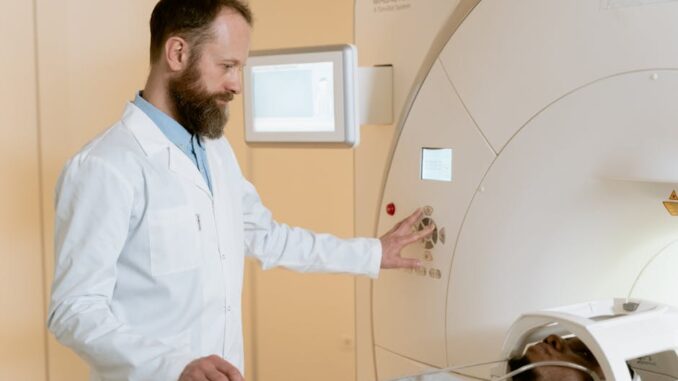

Navigating the Frontier: Delegated AI Autonomy and the Evolving Human-AI Partnership in Healthcare
It’s hard to deny the profound impact artificial intelligence is having across industries, and perhaps nowhere is its promise more palpable, yet complex, than in healthcare. For years, we’ve watched AI systems evolve from clunky computational tools into sophisticated engines capable of sifting through gargantuan datasets, spotting patterns invisible to the human eye, and even suggesting diagnostic pathways with startling accuracy. You can’t help but be impressed by the sheer velocity of its progress.
Yet, this integration into the very sensitive, often life-and-death, realm of clinical practice hasn’t been without its weighty deliberations. On one hand, you have the palpable excitement for revolutionizing patient care, making diagnostics faster, treatments more personalized, and operations incredibly efficient. But then, on the other, a cautious apprehension bubbles up. We worry about the ‘black box’ phenomenon, ethical quandaries, the ever-present specter of bias in algorithms, and perhaps most importantly, preserving that irreplaceable human connection, that empathetic touch, which truly defines compassionate care. We’re on the precipice, really, of redefining what healthcare looks like, and how we interact with technology at its very core.
The Foundational Shift: Human-AI Teaming at the Bedside
For a while now, the prevailing model for AI in healthcare has been one of collaboration, often dubbed ‘human-AI teaming.’ Here, AI isn’t meant to replace the clinician but to act as an incredibly intelligent co-pilot, a support system augmenting human decision-making. Think of it like this: the AI becomes an invaluable consultant, offering recommendations, highlighting anomalies, or performing tedious, data-intensive tasks that would otherwise bog down medical professionals. It’s about making 1 + 1 equal more than 2, as some researchers put it.
Consider the bustling environment of an Intensive Care Unit (ICU), for instance. The constant barrage of vital signs, lab results, medication orders, and patient histories can be overwhelming, even for the most seasoned doctor or nurse. This is where AI truly shines. Algorithms can continuously monitor patients, flagging subtle shifts in physiological parameters that might indicate an impending crisis – a slight dip in oxygen saturation here, a nuanced change in heart rhythm there. These aren’t always immediately obvious to a human eye scanning multiple monitors, especially when juggling several patients. By providing early alerts, these systems empower healthcare providers to intervene proactively, often averting more severe complications. It’s less about the AI making the call, and more about it ensuring the human doesn’t miss anything critical, thereby enhancing overall clinical performance.
We see similar applications flourishing across various specialties. In radiology, AI can pre-screen imaging scans like X-rays or CTs, highlighting suspicious areas that warrant closer human inspection, effectively reducing the diagnostic backlog and improving turnaround times. Pathologists are using AI to analyze tissue samples, accelerating the identification of cancer cells and aiding in grading malignancies. Even in dermatology, AI-powered tools are helping clinicians evaluate skin lesions for potential melanoma, providing a crucial second opinion that can literally save lives. The key, it seems, is when clinicians perceive the AI not as a threat to their expertise, but as a trusted partner, an extension of their own cognitive abilities. This psychological alignment, where the AI is viewed as an assistant rather than a replacement, is absolutely crucial for successful adoption and optimal outcomes. Without it, you’re fighting an uphill battle.
This evolution from basic data processing to sophisticated diagnostic assistance represents a significant leap. Early AI in medicine focused on expert systems, rule-based programs that mimicked human decision logic. While useful, they lacked the flexibility and learning capabilities of modern machine learning. Today’s AI, particularly deep learning, excels at pattern recognition in complex, unstructured data – images, natural language, and continuous sensor readings. It’s this ability to not just process, but learn from vast medical datasets that truly positions AI as a transformative force, capable of extending human perception and mitigating cognitive load, letting clinicians dedicate more focus to the patient in front of them, not the screens around them.
Charting a New Course: The Ascent of Delegated AI Autonomy
While human-AI teaming has proven immensely valuable, a newer, more ambitious paradigm is now gaining significant traction: delegated AI autonomy. This model takes the collaboration a step further, allowing AI systems to operate with a degree of independence for specific, carefully defined patient cases. In essence, it grants the AI the authority to make certain decisions or execute certain actions without direct, real-time human oversight. In other scenarios, it reverts to its supportive role, offering recommendations for clinicians to accept, modify, or reject. The crux of this approach lies in meticulously establishing ‘delegation criteria’ – clear, unambiguous rules that dictate precisely when and where AI can act autonomously, and when it absolutely must loop in a human expert.
This isn’t about giving AI free rein over complex medical decisions. Far from it. Instead, it’s about intelligently allocating tasks based on the AI’s strengths and the inherent complexity and risk associated with a particular case. Think of it as a spectrum of autonomy, ranging from ‘human-in-the-loop,’ where every AI action requires explicit human approval, to ‘human-on-the-loop,’ where the AI operates independently but a human monitors its performance, ready to intervene, and eventually, for very specific, low-risk, high-volume tasks, ‘human-out-of-the-loop.’
What defines these delegation criteria? It’s a multi-faceted decision. Firstly, there’s case complexity: routine, well-defined scenarios are far more amenable to autonomous AI than rare, ambiguous, or multi-faceted cases that require nuanced human judgment. Secondly, the risk profile plays a huge role. Low-stakes administrative tasks, like confirming appointment details or generating routine follow-up reminders, are prime candidates for full autonomy. Life-threatening diagnostic decisions, however, will always require robust human oversight. Thirdly, data availability and quality are critical. Where AI has been trained on extensive, high-quality, representative datasets for a specific task, its confidence in autonomous action will be higher. Lastly, clinician workload and availability can also influence the level of delegation. In overburdened systems, judicious delegation can free up human experts for truly critical tasks. Critically, AI systems themselves can often provide confidence scores, indicating their certainty in a given decision; when this score drops below a certain threshold, the AI automatically flags the case for human review, acting as its own built-in safeguard.
For instance, let’s revisit histopathology. AI algorithms are now incredibly adept at analyzing vast quantities of stained tissue slides to identify cellular abnormalities. In routine, straightforward cases – say, confirming the absence of cancer in a biopsy where the AI’s confidence score is exceptionally high – the system could autonomously flag the sample as benign, significantly streamlining the diagnostic workflow. A human pathologist would still review a subset of these, or certainly any edge cases, but the bulk of the ‘normal’ findings could be handled by the AI, freeing up precious human expertise for the more intricate, challenging diagnoses. This, frankly, could make a huge dent in diagnostic backlogs and accelerate patient care, particularly in underserved areas.
Another compelling example comes from ophthalmology, specifically in the screening for diabetic retinopathy. AI systems have demonstrated remarkable accuracy in analyzing retinal images, often matching or even exceeding human experts in identifying early signs of the condition. In situations where an AI confidently determines a scan is entirely normal, it could autonomously clear the patient, indicating no signs of retinopathy. For any scans exhibiting potential abnormalities, however subtle, the AI would then automatically refer the case to an ophthalmologist for definitive review. This kind of delegated autonomy significantly enhances screening efficiency, reduces the burden on specialists, and ensures more patients receive timely assessments, potentially preventing vision loss. Similarly, in the realm of chronic disease management, an AI could, within pre-defined safe parameters, autonomously adjust drug dosages for a stable patient based on continuous glucose monitoring or blood pressure readings, only alerting the physician if readings fall outside acceptable ranges or if the AI’s confidence in its recommendation dips. It’s about leveraging AI for its precision and speed where it makes the most sense. And let’s not forget the potential for AI to autonomously handle various administrative tasks, from pre-authorizations to appointment scheduling, essentially reducing the ‘paperwork burden’ that currently consumes so much valuable clinical time.
The Intricate Dance: Balancing Trust, Transparency, and Regulation
For delegated AI autonomy to truly flourish, we must cultivate an ecosystem built on profound trust and unwavering transparency. Clinicians won’t – and shouldn’t – blindly trust AI systems to make critical decisions. This trust isn’t granted; it’s earned, built steadily over time through consistent, reliable performance and a crystal-clear understanding of the AI’s decision-making process. If you can’t understand why an AI made a particular suggestion, how can you ever truly rely on it?
This is where Explainable AI (XAI) becomes not just a nice-to-have, but an absolute necessity. Clinicians need to ‘see inside the black box,’ or at least have a comprehensible explanation for the AI’s reasoning. Was the decision based on imaging features, lab values, or demographic data? What were the most influential factors? Without this visibility, clinicians will understandably hesitate to cede any level of autonomy. It’s not enough to be accurate; AI must also be interpretable. Furthermore, we need robust performance metrics – not just accuracy, but precision, recall, specificity, and sensitivity – rigorously tested against diverse patient populations to ensure the AI performs equitably across all groups. Post-hoc auditing capabilities are also essential, allowing us to review and learn from every autonomous decision made by the AI. This is about building informed trust, not blind faith.
Beyond technical performance, robust regulatory frameworks are paramount. Governments and health authorities worldwide are grappling with how to effectively govern AI in healthcare, ensuring patient safety and upholding the highest ethical standards. The FDA in the US, the European Union with its nascent AI Act, and the MHRA in the UK are all developing guidelines, but the challenge is immense due to AI’s rapid evolution. How do you regulate something that’s constantly learning and adapting? Who bears liability when an autonomous AI makes an error – the developer, the hospital, or the overseeing clinician? These aren’t trivial questions, and getting them right is foundational to public and professional acceptance. We can’t let innovation outpace our ability to ensure safety and accountability.
Ethical considerations extend far beyond mere safety. We must actively address potential biases embedded in AI algorithms, often stemming from biased training data that might disproportionately affect certain patient demographics. Fairness, accountability, and beneficence must be baked into the design and deployment of these systems. This often necessitates the formation of interdisciplinary ethical oversight boards, comprising clinicians, ethicists, AI engineers, legal experts, and even patient advocates, to continuously review, scrutinize, and guide the responsible integration of AI. We can’t just let the tech companies dictate the terms; clinicians and patients must have a strong voice at the table.
The Road Ahead: Navigating Challenges and Embracing Evolution
Implementing delegated AI autonomy on a grand scale is, predictably, fraught with challenges. We can’t simply flip a switch and expect seamless integration. One of the most significant concerns revolves around the potential for AI to make errors, particularly in highly complex, rare, or ambiguous cases. While AI excels at identifying common patterns, it can stumble when presented with ‘out-of-distribution’ data – something it’s never seen before. Think of a rare disease presentation that deviates significantly from its training data; the AI might either misdiagnose or, perhaps even worse, confidently ‘pass’ on a critical finding.
To mitigate these risks, AI systems demand rigorous, continuous testing and validation against diverse, real-world datasets, far beyond the initial development phase. They also need mechanisms for continuous learning and updating to reflect the very latest medical knowledge. More critically, there must always be clearly defined, intuitive pathways for human clinicians to review, override, and intervene when an AI decision seems questionable or incorrect. This isn’t just about technical failsafe; it’s about maintaining human oversight and ultimate responsibility. We need user interfaces that make this review process quick and efficient, not cumbersome. Moreover, we must guard against ‘automation bias,’ the human tendency to over-rely on automated systems and dismiss contradictory information, which could lead to missed errors. Are we truly preparing clinicians for the psychological shift this entails?
Another profound challenge lies in preparing our healthcare workforce. Imagine a seasoned physician who’s spent decades honing their diagnostic acumen; suddenly, they’re being asked to integrate insights from a machine. This requires a significant cultural and educational shift. Comprehensive training programs are essential, equipping clinicians with the necessary AI literacy – not to become data scientists, but to understand how AI works, its capabilities, its limitations, and critically, how to interpret its outputs and integrate them judiciously into their clinical judgment. Medical schools will need to adapt their curricula, and ongoing professional development (CME) must provide practical, simulation-based training. It’s a bit like learning to drive a new, advanced car; you don’t need to be an engineer, but you absolutely need to understand its functions and how to operate it safely.
Beyond individual skills, we’re facing substantial infrastructure hurdles. Data silos remain a pervasive problem; healthcare data is often fragmented across different systems, making it difficult to feed AI systems with the comprehensive, high-quality data they need to thrive. Achieving true interoperability between various electronic health records (EHRs), diagnostic platforms, and AI applications is a monumental task. And let’s not forget the sheer cost and effort involved in data curation, cleaning, and ongoing maintenance. Furthermore, data privacy and security remain paramount concerns, requiring strict adherence to regulations like HIPAA and GDPR, especially as more sensitive patient information flows through these intelligent systems. These aren’t just technical issues; they’re organizational, financial, and cultural ones too, requiring concerted effort across the entire healthcare ecosystem.
The Horizon: A Smarter, More Empathetic Healthcare Future
The integration of AI into healthcare isn’t just a technological upgrade; it’s an evolving journey that promises to reshape how we deliver care. Delegated AI autonomy stands as a particularly promising pathway, striking a delicate yet powerful balance between the unparalleled efficiency and computational prowess of AI and the indispensable oversight, empathy, and holistic understanding of human clinicians. It’s not about AI replacing human brilliance, but about amplifying it, allowing clinicians to focus their precious time and expertise where it matters most: on complex cases, nuanced patient interactions, and truly personalized care plans.
As this technology continues its relentless march forward, we’ll undoubtedly see new roles emerge within healthcare – ‘AI whisperers’ who bridge the gap between technical teams and clinical staff, clinical AI specialists who help integrate and optimize these systems, and perhaps even AI safety engineers dedicated to ensuring algorithmic fairness and robustness. The vision is one of personalized medicine on a scale we could only dream of before, where AI can analyze individual genomic data, lifestyle factors, and environmental influences to tailor treatments with unprecedented precision. Could AI also help us bridge global health inequities, providing expert-level diagnostics and guidance in remote areas where specialists are scarce?
Ultimately, the future of human-AI collaboration in healthcare is not a fixed destination but a dynamic, continuous process of learning, adaptation, and ethical stewardship. It requires open dialogue, interdisciplinary collaboration, and a steadfast commitment to ensuring that technology always serves humanity, enhancing the lives of patients and empowering healthcare providers. It won’t be easy, but the potential rewards for global health are simply too vast to ignore. We’re not just building algorithms; we’re building a smarter, more empathetic future for medicine, together.
Be the first to comment