
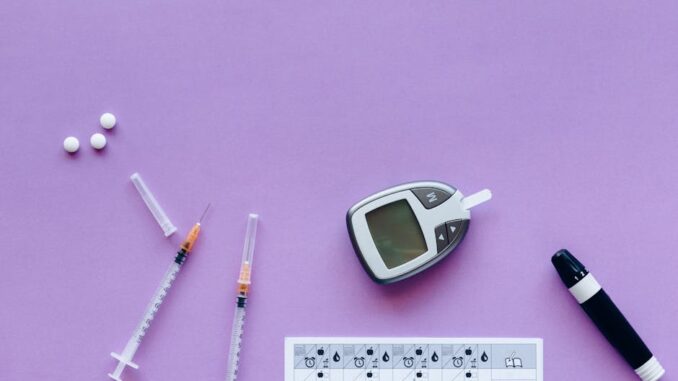

Predicting Tomorrow’s Glucose Today: How AI’s CGM-LSM is Rewriting the Rules of Diabetes Management
Managing diabetes, as anyone living with it or caring for someone who does can tell you, isn’t just a medical condition; it’s a relentless, minute-by-minute negotiation with your own body. You’re constantly calculating, guessing, and reacting. It’s like being a highly specialized air traffic controller for your own metabolism, making split-second decisions about food, insulin, and activity, all while trying to avoid the dangerous extremes of soaring highs or plummeting lows. The mental load? It’s immense, isn’t it? Just imagine the daily anxiety, the fear of a sudden hypoglycemic crash, or the long-term dread of complications from persistent hyperglycemia. For too long, even with advanced tools, patients have been largely in reactive mode.
But what if you had a crystal ball? What if you could peer into the very near future of your blood glucose levels, not just for a vague trend, but with remarkable precision? This isn’t science fiction anymore. Recent, truly groundbreaking advancements in artificial intelligence (AI) have introduced a revolutionary tool into the diabetes management landscape: the Continuous Glucose Monitor Large Sensor Model, or CGM-LSM. This isn’t just another incremental improvement; it’s a paradigm shift, leveraging vast, intricate streams of continuous glucose monitoring (CGM) data to predict near-future blood glucose levels with an accuracy that frankly, has been unimaginable until now. It’s offering a profound leap in personalized diabetes care, giving patients and clinicians something truly invaluable: foresight.
The Genesis of CGM-LSM: Learning the ‘Language’ of Glucose
For years, traditional AI models in diabetes management mostly focused on macro-level insights. They might predict long-term risk factors for complications or suggest optimal insulin dosages over weeks, for instance. And don’t get me wrong, those contributions were valuable. However, they often overlooked the granular, immediate fluctuations in blood glucose levels that are the daily reality for patients, the very patterns that dictate moment-to-moment decisions. That was a significant gap, a void where real-time, actionable intelligence was desperately needed.
Recognizing this inherent limitation, a team of forward-thinking researchers, as detailed in their compelling work (Luo et al., 2024), began exploring a fundamentally different approach. They drew inspiration from the incredible successes of large language models (LLMs) – models that learn the complex patterns and ‘grammar’ of human language by processing colossal amounts of text. The core idea? What if blood glucose data, collected continuously, wasn’t just a series of numbers, but rather a ‘language’ spoken by the body? A language with its own syntax, semantics, and context.
This led to the conceptualization of CGM-LSM, essentially a ‘large sensor model’ built upon an autoregressive architecture, much like its LLM cousins. Instead of words, this model interprets patients’ physiological states as sequences of glucose time steps. Imagine each glucose reading, minute after minute, hour after hour, as a ‘word’ in an ever-unfolding narrative of your body’s metabolic state. By processing these vast sequences, CGM-LSM doesn’t just look at isolated data points; it captures the deep, latent knowledge embedded within the entire tapestry of CGM data. It learns the subtle rhythms, the predictable reactions, the individualized quirks that define a person’s glucose dynamics. This allows it to do something truly remarkable: accurately predict what those ‘words’ will be in the near future, anticipating how your body’s glucose story will continue to unfold.
The Anatomy of a Breakthrough: Training, Performance, and What it Means
Building such an intelligent system isn’t a trivial undertaking; it demands an enormous amount of data and computational power. To ensure CGM-LSM’s robustness and, crucially, its generalizability across a diverse patient population, the model underwent pretraining on an absolutely massive dataset. We’re talking about an astounding 15.96 million glucose records. Yes, you read that right, nearly sixteen million individual data points, meticulously collected from 592 distinct diabetes patients. That’s a staggering amount of information, a digital echo of countless meals, exercises, insulin doses, stresses, and sleeps.
This isn’t just big data for big data’s sake. The diversity woven into that dataset was absolutely critical. It included individuals with varying diabetes types – both Type 1 and Type 2 – across a wide spectrum of ages, from younger individuals facing adolescence with diabetes to older adults managing the condition later in life, and, importantly, across different genders. This broad, representative sample allowed the model to learn a truly comprehensive range of glucose dynamics, ensuring it wasn’t just accurate for a narrow demographic, but could understand the varied ‘glucose languages’ spoken by many different bodies. If you’re building a tool for everyone, you need to teach it with data from everyone, right?
Putting the Model to the Test: Unpacking the Metrics
When it came to evaluating CGM-LSM’s predictive prowess, researchers put it through its paces against established state-of-the-art methods, utilizing the well-respected OhioT1DM dataset. This dataset is a gold standard in the field, often used to benchmark algorithms designed for diabetes management, making the comparison particularly meaningful.
The results were, to put it mildly, exceptional. For Type 1 diabetes patients, CGM-LSM achieved a root mean square error (rMSE) of 29.81 mg/dL over a two-hour prediction horizon. Now, for those less familiar with the technical jargon, rMSE is essentially a measure of the average magnitude of the errors. A lower number means the predictions are closer to the actual values. So, an rMSE of just under 30 mg/dL over two hours is pretty impressive when you consider the inherent variability of blood glucose.
For Type 2 diabetes patients, the model performed even better, achieving an rMSE of 23.49 mg/dL. This slight improvement often reflects the generally less volatile glucose swings seen in many Type 2 individuals compared to the more insulin-dependent Type 1 population. But here’s where it gets truly jaw-dropping: in a shorter, one-hour prediction scenario – which is often the most critical window for immediate decisions – CGM-LSM reduced the rMSE to an astonishing 15.64 mg/dL. To give that context, this literally halved the previous best performance of 31.97 mg/dL. Think about that for a second. We’re talking about reducing the prediction error by half! It’s like going from being a bit off, to being almost spot on. Such a drastic reduction in prediction error really empowers users, making the difference between, say, a proactive correction and a reactive scramble.
This isn’t just about numbers on a chart, though. A smaller rMSE translates directly into more reliable predictions, which means patients and their care teams can make more confident decisions. It means less anxiety, less guesswork, and ultimately, a safer and healthier existence for individuals navigating the complexities of diabetes. It’s quite a feat, frankly, and speaks volumes about the model’s ability to truly understand glucose dynamics.
Beyond the Lab: Real-World Robustness and Adaptability
One of the biggest hurdles for any medical AI making the leap from research paper to real-world application is its ability to perform consistently in diverse, unpredictable environments. A model might shine in a carefully controlled lab setting, but how does it fare when faced with the messy, individualized reality of human physiology? This is where CGM-LSM truly stands out: its robustness and adaptability are nothing short of remarkable.
The model maintained consistent, high-level performance not only for patients it had never seen before during its training phase but also when predicting glucose levels for future periods for existing patients. This is incredibly important. It tells us that CGM-LSM isn’t just memorizing patterns; it’s learning fundamental principles that apply broadly, even as a patient’s body changes over time due to illness, stress, medication adjustments, or lifestyle shifts. It’s a testament to its ability to generalize, to adapt to the ongoing, dynamic story of an individual’s glucose. That’s a huge win, don’t you think?
Furthermore, its accuracy held steady across different diabetes types, ages, and genders. This means it doesn’t favor one demographic over another, a critical consideration for equitable healthcare technologies. We can’t have tools that only work well for certain groups, after all. Perhaps even more impressively, it demonstrated consistent accuracy across various hours of the day. Whether it’s the quiet stillness of deep sleep, the morning scramble of the dawn phenomenon, the post-meal surge, or the energetic demands of an afternoon workout, CGM-LSM kept its predictive edge. It understands that a glucose level of 120 mg/dL at 3 AM might have a very different trajectory than 120 mg/dL right after breakfast, and it accounts for those subtle, contextual nuances. This adaptability ensures that CGM-LSM can truly provide reliable, personalized predictions tailored to individual patient profiles and their often-unpredictable daily routines, empowering them at every turn.
Transforming Lives: The Profound Implications for Diabetes Management
So, what does all this mean for the millions globally living with diabetes? The integration of CGM-LSM into diabetes care represents nothing less than a transformative step forward. By providing these incredibly precise near-future glucose predictions, it empowers patients to transition from a reactive stance to a proactive one. This shift changes everything.
Think about it: imagine seeing a prediction that your glucose is likely to dip into a hypoglycemic range in the next 30-60 minutes. Instead of the sudden, disorienting onset of a low – the sweats, the shakes, the confusion, the very real danger of severe events – you receive an early warning. This foresight allows you to take preventive action: perhaps a small, targeted snack, a quick adjustment to your insulin pump, or a pause in your exercise. This proactive approach doesn’t just enhance patient safety; it significantly reduces the anxiety that constantly looms over those managing diabetes. That peace of mind? It’s priceless.
Similarly, imagine seeing a prediction of an impending hyperglycemic spike. You can adjust your meal choices, pre-bolus your insulin more effectively, or even opt for a short walk after eating. Avoiding these highs isn’t just about feeling better in the moment; it’s crucial for mitigating the long-term complications associated with diabetes, such as neuropathy, retinopathy, and kidney disease. CGM-LSM, by helping patients navigate these dangerous extremes, isn’t just improving daily management; it’s contributing to a healthier future.
This proactive capability fundamentally improves the overall quality of life. Patients can experience greater freedom and flexibility in their daily lives, less worry about unexpected glucose excursions impacting work, social events, or even just a good night’s sleep. It’s a step towards regaining a sense of control over a condition that often feels like it controls you.
Beyond individual patients, the implications ripple through the entire healthcare ecosystem. For clinicians, CGM-LSM offers richer, more actionable data, potentially reducing the frequency of in-person visits by enabling more effective remote monitoring and timely interventions. For healthcare systems, it could translate into reduced costs associated with emergency room visits for severe hypo- or hyperglycemia, and fewer resources spent managing advanced complications. It’s a win-win, really.
Moreover, the resounding success of CGM-LSM isn’t just confined to diabetes. It powerfully underscores the broader potential of large sensor models to drive innovation across numerous domains involving complex, time-series sensor data. Imagine similar models optimizing cardiac care by predicting arrhythmias, enhancing neurological monitoring, or even personalizing drug delivery for other chronic conditions. We’re talking about a foundational technology here, paving the way for advancements that could truly revolutionize how we approach chronic disease management across the board.
The Road Ahead: Challenges, Opportunities, and the Future Landscape
While CGM-LSM represents a significant leap, it’s important to remember that this is a journey, not a destination. The path from groundbreaking research to widespread clinical adoption always involves navigating a few important considerations.
First, there’s the critical step of clinical validation. While the existing data is compelling, larger, prospective clinical trials will be essential to further solidify its efficacy and safety in diverse real-world settings. We’ll need to demonstrate its impact on patient outcomes beyond just glucose metrics – things like quality of life, complication rates, and healthcare utilization. Then, of course, comes regulatory approval, a rigorous process ensuring that these advanced tools meet the highest standards for patient care.
Another significant challenge lies in integration. How seamlessly will CGM-LSM fit into existing diabetes management ecosystems? Will it be an app on your phone, integrated directly into CGM devices, or part of a broader telemedicine platform? The user experience will be paramount. If it’s cumbersome or confusing, even the most accurate predictions won’t achieve their full potential. Education for both patients and healthcare providers will be key here; understanding how to interpret and act on these predictions is crucial.
We also need to consider the ethical dimensions. Data privacy and security are paramount when dealing with such sensitive personal health information. Robust safeguards will be non-negotiable. And while AI offers immense benefits, we must guard against the potential for algorithmic bias, ensuring the model’s accuracy and reliability remain consistent across all demographic groups. Over-reliance on AI is another point; these tools are meant to augment human decision-making, not replace it. The human-AI partnership will be key.
Looking ahead, the opportunities are vast. Future iterations of CGM-LSM could incorporate even more data types beyond just glucose – things like insulin doses, detailed food logs, exercise intensity, sleep patterns, and even stress levels. Imagine a truly holistic model that understands not just your glucose, but the full symphony of physiological and lifestyle factors influencing it. This could lead to even greater predictive accuracy and truly individualized recommendations.
Ultimately, the long-term vision could involve CGM-LSM as a crucial component of an even smarter artificial pancreas system. Current closed-loop systems automate insulin delivery, but imagine one informed by CGM-LSM’s predictive power, capable of anticipating needs with unparalleled precision, optimizing insulin delivery even before a glucose excursion truly begins. That, my friends, is the dream: a future where the relentless daily burden of diabetes is significantly eased, allowing individuals to live fuller, healthier, and freer lives.
Conclusion: A New Horizon in Personalized Care
In the ever-evolving, often challenging landscape of diabetes management, CGM-LSM stands out as a true beacon of innovation. Its ability to predict near-future blood glucose levels with such astonishing accuracy marks a genuinely significant advancement in personalized diabetes care. It’s not just about better numbers; it’s about better lives. It’s about giving back control, fostering peace of mind, and empowering individuals with knowledge that can prevent harm and promote well-being.
As research continues to unfold, as more data becomes available, and as these technologies mature and integrate, models like CGM-LSM are poised to further revolutionize the way we approach chronic disease management. They offer not just hope, but tangible, evidence-based tools for more effective, more individualized, and ultimately, more humane treatments. We’re witnessing the dawn of a new era in healthcare, one where intelligent systems work hand-in-hand with human ingenuity to unlock unprecedented possibilities. It’s an exciting time, wouldn’t you agree?
References
- Luo, J., Kumbara, A., Shomali, M., Han, R., Iyer, A., Agarwal, R., & Gao, G. (2024). Let Curves Speak: A Continuous Glucose Monitor based Large Sensor Foundation Model for Diabetes Management. arXiv preprint arXiv:2412.09727. arxiv.org
Be the first to comment