

The Diabetes Dilemma: GluMarker’s Quest for Precision in a Fluctuating World
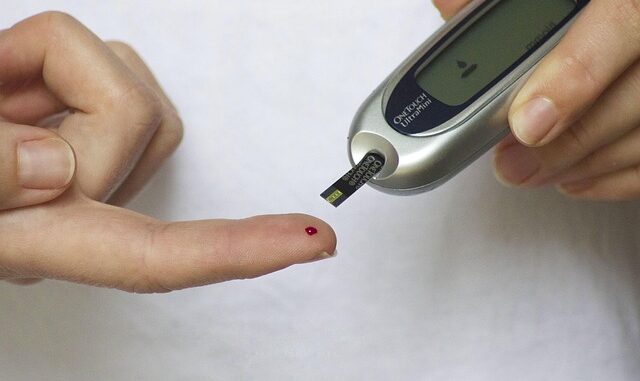
Diabetes, a pervasive chronic condition, impacts hundreds of millions globally. It’s a relentless daily balancing act, isn’t it? For far too long, managing this intricate disease has hinged on a rather reactive approach: patients constantly measuring blood glucose, often with a finger-prick, then adjusting insulin doses. It’s like trying to navigate a winding, unpredictable river by only checking the map every few hours. You’re bound to miss some crucial turns and rapids, aren’t you?
The reality is, these conventional methods, while foundational, simply can’t capture the complex, minute-to-minute ebb and flow of glucose levels throughout a person’s day. They provide snapshots, sure, but miss the dynamic interplay of countless factors that influence glycemic control. Think about it: what you ate for breakfast, that brisk walk you took, even the stress from a tough meeting – it all plays a part.
But what if we could predict those fluctuations? What if we could move beyond mere observation to genuinely anticipate? Enter GluMarker, a truly groundbreaking framework. It’s leveraging an impressive array of digital biomarkers, painting a far more accurate picture of future glycemic control than we’ve ever seen. It’s a significant leap, if you ask me.
See how TrueNAS offers real-time support for healthcare data managers.
Beyond the Prick: Understanding the Limitations of Traditional Management
For decades, the cornerstone of diabetes management has been a mix of self-monitoring blood glucose (SMBG) via finger-pricks, A1c tests, and more recently, continuous glucose monitors (CGMs). Each has its place, of course, but each also comes with inherent limitations.
SMBG, while providing immediate data, offers discrete points in time. It’s like looking through a peephole; you see a small part of the scene, but you miss the bigger picture, the transitions. You might get a reading before a meal, and then two hours after, but what happened in between? What if a sudden spike or drop occurred that you completely missed? This fragmented data often leads to reactive rather than proactive adjustments, making it incredibly challenging for patients and clinicians to truly optimize care.
Then there’s the A1c, the three-month average of blood glucose. It’s a vital indicator, certainly, a great long-term snapshot of control, but it tells you nothing about the daily swings, the hypoglycemia scares, or the hyperglycemic peaks that impact quality of life and long-term complications. A person could have a ‘good’ A1c but still experience significant glucose variability, leading to cellular damage and emotional distress. It just doesn’t tell the whole story, you know?
CGMs have been a game-changer, providing continuous, real-time data. They offer a much richer stream of information, showing trends and alerts. Yet, even with CGM data, prediction remains the holy grail. Knowing your glucose is trending up now is good, but knowing it will trend up significantly in a few hours, based on your activity, meal, and sleep from yesterday, is far more powerful. That’s where GluMarker steps in, aiming to fill that crucial predictive gap. It’s about seeing around the corner, which frankly, is revolutionary.
GluMarker Unveiled: A Holistic Vision for Glycemic Control
Traditional diabetes management has, by necessity, focused intensely on insulin dosing and isolated glucose values. We often overlooked the broader, interconnected tapestry of an individual’s daily life that so profoundly influences their glucose metabolism. GluMarker, however, isn’t just about glucose numbers. It’s about weaving together a rich narrative of your daily existence, and that’s its true genius.
Its core philosophy? That a truly personalized and effective management strategy must consider the entire context of an individual’s physiological and behavioral patterns. This framework beautifully addresses the shortcomings of conventional methods by integrating a wide array of digital biomarkers. We’re talking about things like precise dietary intake, not just ‘a meal,’ but what kind of meal, how much, when; detailed physical activity levels, the nuances of your daily movement; and, crucially, how your glucose levels behaved on the previous day. It’s all connected, and GluMarker understands this implicitly.
By analyzing these myriad factors in concert, GluMarker provides an incredibly holistic, almost panoramic, view of an individual’s glucose metabolism. This isn’t just data; it’s a deep understanding, allowing for management strategies that are not only more personalized but, importantly, far more effective. Imagine having a crystal ball, one that actually works, for your blood sugar. Pretty neat, huh?
The Power of Digital Biomarkers – A Deeper Dive
What exactly are these digital biomarkers that GluMarker champions? They’re quantifiable physiological and behavioral data points collected through digital devices – think wearables, smartphones, smart home devices, and even specialized apps. They represent a significant evolution from traditional clinical biomarkers, offering continuous, real-world insights rather than sporadic measurements.
-
Dietary Nuances: It’s not enough to know someone ate. GluMarker considers the size of the meal, its macronutrient composition (carbohydrates, fats, proteins), the timing, and even the glycemic index where available. For instance, a high-fiber, low-glycemic meal will likely have a very different impact than a refined carbohydrate-heavy one, even if the calorie count is similar. This level of granular detail allows for far more accurate prediction. We all know how much a slice of pizza can differ from a bowl of lentils, don’t we?
-
Physical Activity’s Impact: Beyond just ‘exercise,’ GluMarker factors in the intensity, duration, and type of physical activity. Was it a high-intensity interval training session, a leisurely stroll, or a strength-training workout? Each will have a distinct, and sometimes prolonged, effect on insulin sensitivity and glucose uptake. And it’s not just structured exercise either; even non-exercise activity thermogenesis (NEAT), like fidgeting or walking around the house, contributes. These subtle differences matter immensely.
-
The Shadow of Yesterday’s Glucose: GluMarker ingeniously incorporates past glucose patterns. A day of high variability or prolonged hyperglycemia often primes the body differently for the next day’s challenges. This ‘lag effect’ or physiological memory is crucial. Yesterday’s rollercoaster can absolutely influence today’s ride, and ignoring it would be a huge oversight.
-
Other Potential Biomarkers (Beyond the Core): While the initial research focuses on the above, the beauty of digital biomarkers is their expandability. One could easily envision future iterations incorporating data on sleep quality (poor sleep dramatically affects insulin resistance), stress levels (cortisol spikes glucose), heart rate variability, or even environmental factors like temperature and humidity, which can sometimes influence metabolic responses. The potential is vast, truly.
The Engine Under the Hood: Deconstructing GluMarker’s Machine Learning Prowess
So, how does GluMarker actually do all this? It’s not magic, though it might feel like it sometimes. At its heart lies a sophisticated machine learning model, specifically engineered to process two distinct, yet equally critical, types of data: continuous and discrete features. This dual-pathway processing, followed by an ingenious fusion mechanism, is what gives GluMarker its predictive edge.
Data Pathways: Continuous and Discrete Streams
Think of the data flowing into GluMarker as two separate rivers, each carrying different kinds of information.
-
Continuous Data: This stream consists of real-time, frequently updated measurements. The most obvious example is continuous glucose monitoring (CGM) data, providing a constant flow of glucose values. But it also includes things like heart rate from a wearable, step counts, or calories burned – essentially, any metric that changes fluidly over time and can be sampled at regular, high-frequency intervals. This data tells us about the trends and dynamics.
-
Discrete Data: This river carries more categorical or event-based information. This includes your dietary intake – ‘meal size: large,’ ‘meal type: high carb,’ ‘bolus insulin amount: 10 units,’ ‘physical activity: 30 minutes moderate cardio.’ These are often logged manually by the patient or derived from other integrated apps. They provide crucial context and events that influence the continuous physiological responses.
Architectural Brilliance: Multi-Layer Dense Blocks and Parallel Processing
GluMarker’s architecture is where the computational magic really happens. It treats these two data streams with specialized processing, ensuring each type of information is optimally understood before being combined.
For the continuous data, the model employs multi-layer dense blocks. Imagine these as highly efficient data processors, designed to extract intricate feature representations from the continuous stream. They’re adept at identifying subtle patterns, trends, and temporal dependencies within the glucose readings, activity data, and so on. For instance, these blocks might learn that a rapid rise in glucose followed by a slow decline, coupled with a previous day’s similar pattern, is a strong indicator of a specific metabolic response to a certain food type. They’re basically looking for hidden signals in the noise, picking out what truly matters.
Meanwhile, the discrete data (meal type, insulin dose, etc.) is handled through a parallel branch. This branch is designed to interpret these more categorical inputs effectively, perhaps using embedding layers to convert them into a numerical format that the machine learning model can understand, or one-hot encoding for specific features. The key is that both types of data are processed simultaneously but distinctly, leveraging their unique characteristics.
The Synergy of Cross-Attention: Weaving a Predictive Tapestry
Here’s where it gets really clever. Once both continuous and discrete data streams have been processed independently, their respective feature representations are brought together using a sophisticated cross-attention mechanism. If you’ve heard of ‘attention’ in AI, you know it’s powerful. Cross-attention takes this a step further.
Think of it like this: the continuous data (e.g., your real-time glucose) ‘pays attention’ to the discrete data (e.g., the meal you just logged) and vice-versa. This mechanism allows the model to selectively emphasize components from each modality based on their immediate relevance to glycemic control. For example, if the continuous glucose readings show a rapid spike, the cross-attention mechanism might give more weight to the ‘high carbohydrate meal’ discrete input. Conversely, if there’s an unexplained drop in glucose, it might focus on a recent ‘correction bolus’ or ‘intense exercise’ entry.
This isn’t just simple addition or averaging; it’s a dynamic, context-aware fusion. The model learns how different pieces of information from disparate sources relate to each other and which pieces are most important at any given moment for predicting future glucose levels. This innovative architecture is what allows GluMarker to build such a nuanced and accurate predictive model, far surpassing simpler approaches that might just concatenate data. It’s truly building a complete story, not just a collection of facts, and it’s brilliant.
Validating the Breakthrough: Insights from Anderson’s Dataset
No matter how elegant the algorithm, its true worth lies in its real-world performance. GluMarker was rigorously evaluated on ‘Anderson’s dataset,’ a well-regarded collection of diabetes patient data, known for its comprehensive nature. Now, I can’t tell you every single detail of Anderson’s work from the top of my head right now, but generally, such datasets are incredibly valuable because they contain a rich mix of continuous glucose readings, dietary logs, insulin doses, and activity data, all meticulously collected over extended periods from actual individuals living with diabetes. It’s the kind of real-world complexity you need to truly test a robust model.
The results? Frankly, they’re impressive. GluMarker achieved state-of-the-art performance in predicting next-day glycemic control. This isn’t just a marginal improvement; it represents a significant leap forward in accuracy. To achieve ‘state-of-the-art’ means it outperformed existing, established models, which is no small feat in such a heavily researched area. The model wasn’t just guessing; it was consistently making highly accurate forecasts, which could be transformative for daily management.
Unpacking the Key Biomarkers
Beyond just predicting, GluMarker also shone a spotlight on which digital biomarkers truly matter most. The framework identified several key factors that significantly influence daily glucose fluctuations, offering invaluable insights for both patients and clinicians.
-
Meal Size and Composition: This came through as a particularly strong predictor. It’s not just about carbohydrates, but the overall quantity of food consumed, the interplay of fats and proteins, and the speed of digestion. For instance, a very large meal, even if carb-counted correctly, can lead to prolonged post-prandial hyperglycemia due to delayed absorption or a slower insulin action profile. GluMarker quantifies this impact, helping individuals understand their personal responses better.
-
Total Bolus Insulin: The amount of fast-acting insulin administered for meals and corrections proved highly influential. This highlights the delicate dance between food intake and insulin dosage. Too little, and glucose spikes; too much, and hypoglycemia looms. GluMarker’s ability to factor in these doses provides a more complete picture of the metabolic environment.
-
Correction Bolus Amounts: Distinct from meal boluses, correction boluses are given to bring down high blood sugar. Their presence and amount indicate prior hyperglycemic events, which as mentioned, can have carry-over effects. This specific detail offers a window into the patient’s ‘rescue’ efforts and how effective they were, informing future predictive cycles.
The insights derived from these identified biomarkers are instrumental. They don’t just say ‘you’ll be high tomorrow,’ but suggest why. This illumination of the daily factors affecting glycemic management offers vital, actionable information for diabetes care teams. Imagine a patient seeing a prediction for high glucose tomorrow and being shown, ‘This is likely due to the larger-than-usual meal you had last night combined with slightly less activity.’ That’s empowerment.
A New Horizon: Transforming Diabetes Care and Empowering Patients
The integration of digital biomarkers into predictive modeling like GluMarker truly represents a paradigm shift in diabetes care. We’re moving away from a ‘one-size-fits-all’ or even a ‘trial-and-error’ approach, towards something far more precise and proactive. It’s a very exciting time, I think.
By moving beyond traditional, somewhat blunt monitoring methods, GluMarker enables healthcare providers to offer dramatically more personalized treatment plans. No two people with diabetes are exactly alike; their metabolic responses, lifestyles, and challenges are unique. This framework understands that individuality. Instead of general guidelines, a clinician using GluMarker could say, ‘Based on your specific data, we see that on days you have your high-intensity workout in the morning, your insulin sensitivity improves significantly by evening, so let’s adjust your basal rate accordingly for those days.’ This level of specificity wasn’t realistically possible before.
This approach doesn’t just enhance the accuracy of glycemic control predictions; it profoundly empowers patients. When you’re dealing with a chronic condition like diabetes, feeling in control, understanding why things happen, is huge for mental well-being and adherence. Patients can make more informed, proactive decisions about their daily routines. They can adjust their food choices, plan their exercise, or even fine-tune their insulin doses before a problem arises, rather than reacting to a crisis. This shift from reactive management to proactive anticipation is absolutely critical for improving overall health outcomes and, importantly, the quality of life for individuals living with diabetes. It’s giving them back a sense of agency, don’t you think?
Think about the typical patient-doctor interaction. It’s often a review of past data, trying to figure out what went wrong. With GluMarker, those conversations could shift. They could focus on future strategies, on optimizing for upcoming challenges. It’s about building a better future, not just analyzing the past.
The Road Ahead: Challenges, Ethical Considerations, and Future Promise
While GluMarker presents an incredibly promising future, it’s also important to acknowledge that the path forward isn’t entirely without speed bumps. As with any advanced technological solution in healthcare, there are crucial considerations to address.
Data Privacy and Security: The framework relies on collecting sensitive personal health data – glucose levels, dietary information, activity patterns. Robust, iron-clad measures for data encryption, storage, and access are paramount. Patients need to trust that their most intimate health details are protected, and rightly so.
Algorithmic Bias: Machine learning models are only as unbiased as the data they’re trained on. If the initial datasets lack diversity in terms of ethnicity, socioeconomic status, or even specific diabetes complications, the model’s predictions might not be equally accurate or beneficial for all populations. Ensuring equitable performance across diverse patient groups is a continuous challenge.
Scalability and Accessibility: For GluMarker to truly make a global impact, it needs to be scalable and accessible. This means considering integration into existing healthcare systems, cost-effectiveness, and ease of use for a wide range of patients, including those who may not be tech-savvy. The digital divide is real, and we can’t ignore it.
Integration into Clinical Workflows: Clinicians are already busy. Integrating a new, data-intensive tool requires careful thought about how it fits seamlessly into their daily practice, providing actionable insights without adding significant administrative burden. Training and support will be key.
Despite these challenges, the future promise of GluMarker is undeniable. I can see it evolving to incorporate even more data streams – perhaps real-time stress markers, sleep cycle analysis, or even integration with smart home environments to prompt healthier choices. Imagine a smart fridge that subtly adjusts meal suggestions based on GluMarker’s prediction of your next-day glucose, or your fitness tracker suggesting a specific type of activity based on your upcoming meal schedule. The potential for truly integrated, proactive health management is just enormous.
Concluding Thoughts: A Glimmer of Hope in a Complex World
GluMarker stands at the forefront of a genuinely new era in diabetes management. We’re moving beyond simple monitoring and into a realm of personalized, data-driven insights that pave the way for far more effective and individualized care strategies. Its remarkable ability to integrate such diverse digital biomarkers into a cohesive, predictive model offers an incredibly promising avenue, not just for enhancing glycemic control, but for fundamentally improving the quality of life for millions of individuals living with diabetes.
It’s about empowering people, giving them the tools and knowledge to navigate their condition with greater confidence and foresight. As someone who’s watched the relentless march of technological innovation, particularly in health, I can’t help but feel a profound sense of optimism. GluMarker isn’t just a piece of software; it’s a glimmer of hope, promising a future where managing diabetes becomes less about constant reaction and more about intelligent anticipation. And that, you have to admit, is something truly special.
Be the first to comment