
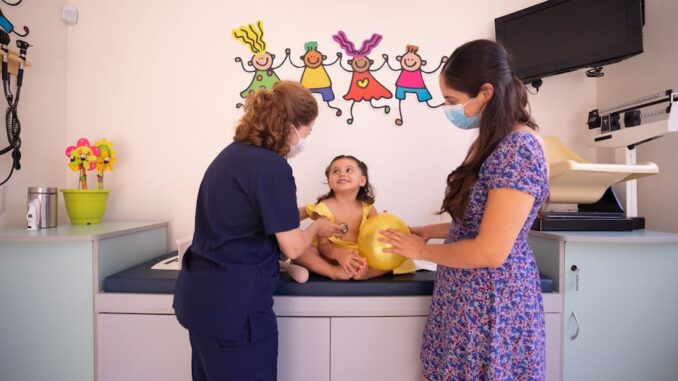

A New Horizon in Tiny Hearts: How Children’s National and Compremium Are Redefining Pediatric Diagnostics
In a move that’s truly shaking up the world of pediatric medicine, Children’s National Hospital, a name synonymous with innovation in child health, has formally joined forces with Compremium AG, a Swiss medical device company making waves with its non-invasive technologies. This isn’t just another partnership; it’s a strategic alliance, a declaration of intent to radically transform how we diagnose and manage pressure-related conditions in our youngest, most vulnerable patients. You know, it’s those collaborations that really stick with you, the ones that promise fundamental change.
Unpacking the Ordeal: The Unique Challenges of Pediatric Diagnostics
If you’ve ever spent time in a pediatric ward, you understand the inherent complexities. Diagnosing certain pressure-related conditions in children, conditions like elevated intracranial pressure or critical shifts in central venous pressure, has historically been a veritable minefield. Forget the sterile, calm environment often associated with adult care; with kids, it’s an entirely different ballgame.
TrueNAS: the healthcare storage solution thats secure, scalable, and surprisingly affordable.
Traditional methods, while medically necessary, are often far too invasive. We’re talking about procedures that necessitate the insertion of catheters, external ventricular drains, or even arterial lines—things that, frankly, no parent wants to see their child endure. Imagine a tiny infant, already fragile, needing a central line just to get a pressure reading. It’s not just the physical discomfort, which is significant, but the risks: infection, bleeding, even psychological trauma that can linger long after discharge. For children, particularly infants and toddlers, these procedures often require sedation or general anesthesia, adding another layer of risk and anxiety for both the child and their family. Can’t we do better?
Physiologically, children aren’t just small adults. Their bodies react differently to illness and injury. Their cardiovascular systems are more labile, their skulls aren’t fully fused, and their pain thresholds and ability to communicate discomfort are vastly different. These unique factors mean that what works for an adult simply won’t cut it, or at least isn’t ideal, for a child. Pediatricians and intensivists have wrestled with these limitations for decades, often making do with sub-optimal solutions or delaying crucial diagnostic information to avoid invasive steps. It’s a tough spot to be in, isn’t it, constantly balancing the need for data with patient well-being?
This is precisely where Compremium’s innovative technology steps into the limelight. Their solution isn’t just ‘less invasive’; it’s fundamentally non-invasive, a true point-of-care game-changer. It promises to transform the diagnostic landscape for conditions involving venous pressure, intracranial pressure, and tissue pressure, offering real-time insights without a single needle stick. That’s a huge deal. Dr. Kolaleh Eskandanian, who serves as Vice President and Chief Innovation Officer at Children’s National, really hammered home the significance of this partnership, stating, ‘This collaboration is a pivotal step in advancing pediatric-specific technologies to address critical gaps in care. Compremium’s non-invasive, real-time pressure monitoring technology not only has the potential to transform pediatric care but also demonstrates how prioritizing pediatric innovation can pave the way for broader adoption and scalability to adult populations.’ It’s a powerful vision, isn’t it, one where innovation for kids paves the way for everyone.
The Silent Threat: Congenital Heart Disease and the Quest for the Holy Grail
The initial, and quite critical, focus of this groundbreaking collaboration centers squarely on patients battling congenital heart disease, or CHD. For those unfamiliar, CHD encompasses a range of birth defects affecting the heart’s structure and function. It’s the most common birth defect, affecting nearly 1 in 100 babies born in the United States each year. These children often face a lifetime of specialized care, surgeries, and vigilant monitoring.
Pediatric cardiologists and cardiac surgeons, the true heroes in these complex cases, frequently need to monitor central venous pressure (CVP). Think of CVP as a crucial barometer, reflecting the blood volume returning to the heart and, by extension, the overall circulatory function. If CVP is too high, it could indicate fluid overload, heart failure, or issues with blood flow from the body to the heart. Too low, and you’re looking at potential dehydration or inadequate blood volume. Traditionally, measuring CVP means inserting a central line, a catheter threaded into a large vein, often in the neck or groin, and advanced towards the heart. It’s an invasive procedure, fraught with risks like infection, blood clots, or even puncturing a vessel or lung. For a child with an already compromised heart, these risks are amplified.
Imagine the daily struggle: a child recovering from open-heart surgery, wires and tubes seemingly everywhere, and then the added worry of a central line for CVP monitoring. It’s an ordeal. What if you could get that vital CVP data just by placing a sensor on their skin? This is the promise. Improved, non-invasive CVP data isn’t just about avoiding a needle; it’s about unlocking new insights into cardiovascular health in real-time. It could allow for earlier detection of complications, more precise adjustments to fluid management, and timely interventions that could fundamentally alter a child’s prognosis.
And the stakes are incredibly high. The long-term impact of CHD extends far beyond the heart itself. Approximately 33% of CHD patients nationwide grapple with developmental delays and learning difficulties, often linked to periods of compromised cardiovascular function or the stress of repeated medical interventions. Better, continuous monitoring, particularly of CVP, could mitigate these long-term complications, giving these children a far better shot at reaching their full developmental potential. We’re not just talking about saving lives here, are we? We’re talking about improving the quality of those lives.
Dr. Yves d’Udekem, the esteemed Chief of the Division of Cardiac Surgery at Children’s National, perfectly encapsulated the medical community’s sentiment: ‘Non-invasive CVP monitoring for the pediatric population is the holy grail of cardiac care, a long-awaited advancement that has the potential to revolutionize care. Pediatric cardiac surgeons worldwide are eager for this breakthrough solution, which could transform how we monitor and treat cardiovascular patients. It’s exciting to see this innovation, and we are thrilled that Children’s National is leading the way in bringing it to children everywhere.’ When a respected surgeon calls something the ‘holy grail,’ you know you’re onto something truly transformative.
The Brains Behind the Breakthrough: AI and Predictive Power
This collaboration isn’t content with just non-invasive pressure monitoring; it’s elevating the technology by integrating artificial intelligence. You see, data is powerful, but analyzed data, especially in real-time, is transformative. By fusing Compremium’s cutting-edge sensor technology with AI-driven advancements, the partnership aims to achieve a trifecta of benefits: enhanced accuracy, real-time data analysis, and perhaps most excitingly, predictive insights. These capabilities aren’t just ‘nice-to-haves’; they’re absolutely critical for significantly improving pediatric care.
How does AI play into this? Imagine a stream of continuous pressure readings. A human clinician can interpret trends, of course, but an AI algorithm can detect subtle, nuanced patterns that might be imperceptible to the human eye. It can learn from vast datasets of patient physiology, correlating pressure fluctuations with clinical outcomes. This isn’t just about displaying numbers; it’s about providing context and foresight. For instance, the AI could flag a minute change in intracranial pressure hours before it becomes clinically obvious, allowing for proactive intervention rather than reactive crisis management. Think about the difference that could make in preventing secondary brain injury in a child after trauma or surgery. That’s a game-changer.
Real-time data analysis means clinicians aren’t waiting for lab results or intermittent manual readings. They have immediate, actionable information at their fingertips. This velocity of information can dramatically shorten diagnostic delays and enable swift adjustments to treatment plans, whether it’s tweaking medication dosages or altering fluid therapy. The predictive insights component takes this a step further, allowing the system to potentially forecast deterioration or improvement based on current and historical data. It’s like having a highly intelligent co-pilot, constantly scanning the horizon for potential turbulence. Dr. Eskandanian echoed this enthusiasm, noting, ‘Our pediatric providers are eager for innovative, child-friendly monitoring solutions that reduce the need for invasive procedures, and this collaboration is dedicated to making that a reality.’ This isn’t just about technology; it’s about empowering clinicians to deliver truly personalized and timely care.
Compremium’s Journey: From Space to the Smallest Patients
For Compremium, this partnership with Children’s National Hospital marks a profound milestone—it’s their very first major foray into the specialized, yet incredibly rewarding, realm of pediatric healthcare. Vincent Baumann, CEO of Compremium, shared his palpable enthusiasm: ‘We are honored to collaborate with Children’s National Hospital. This initiative allows us to accelerate and expand the clinical adoption of our solution, particularly for a vulnerable patient population.’ It’s clear they understand the gravity and the privilege of working with children.
But where did Compremium’s technology come from? Its roots are truly out of this world, literally. In October 2024, the company garnered significant recognition, securing a $50,000 grant in the highly competitive ‘Make Your Medical Device Pitch for Kids!’ competition. This event, co-presented by the Alliance for Pediatric Device Innovation (APDI) and Additional Ventures, specifically sought out innovations aimed at improving care for children with heart conditions. Compremium’s non-invasive diagnostic device wasn’t just another entry; it stood out for its remarkable versatility and potential application across over 30 distinct medical indications. That’s a broad impact right there, isn’t it?
Here’s where it gets really interesting: the device prototype has been in regular use for six years by NASA on the International Space Station (ISS). Think about that for a moment. The ISS is arguably one of the most extreme, demanding environments known to humankind. Equipment there must be impeccably reliable, unbelievably accurate, and robust enough to withstand the rigors of microgravity, radiation, and sustained operation far from Earth. If a technology can prove its mettle monitoring astronauts, who experience profound physiological shifts in space (like fluid shifts that mimic terrestrial pressure changes), then its application in a hospital setting on Earth, especially for delicate pediatric patients, speaks volumes about its inherent reliability and precision. It’s not just a fancy anecdote; it’s a testament to rigorous validation in an unparalleled setting. This isn’t just good engineering, it’s space-grade engineering, which is a whole other level of trust and confidence.
Powering Progress: Children’s National Innovation Ventures
The intricate dance of bringing a cutting-edge medical device from concept to bedside is complex, particularly in pediatrics. This is where Children’s National Innovation Ventures (CNIV) plays its indispensable role. As the commercialization arm of Children’s National, CNIV isn’t merely a passive facilitator; it’s an active driver, absolutely dedicated to advancing regulated medical products that measurably improve pediatric health outcomes. You might think of them as the orchestrators of innovation, making sure the right pieces come together at the right time.
Their mission is multi-faceted and critically important. First, they proactively identify and champion pediatric-driven technologies, understanding that solutions designed for adults rarely translate perfectly to children. Second, they meticulously build strategic industry alliances, just like this one with Compremium, fostering the crucial connections needed to move ideas forward. Third, and vital for any startup, they facilitate funding to de-risk and validate innovations, often bridging the notorious ‘valley of death’ that many promising medical technologies encounter between conception and commercial viability. Finally, they expertly manage intellectual property and licensing, ensuring that these life-changing innovations can actually reach the children who need them most. Without this kind of structured, specialized support, many brilliant ideas would simply languish in labs, wouldn’t they?
A Global Tapestry of Innovation: Beyond Our Borders
This partnership with Compremium isn’t an isolated incident; it’s a vibrant thread in a much larger tapestry of global collaboration being woven by Children’s National. They’re not just thinking nationally; they’re thinking internationally, recognizing that accelerating innovation in pediatric medical devices demands a collective, worldwide effort. In fact, just a few months prior, in October 2024, Children’s National spearheaded a consortium that forged a powerful partnership with DeCODe, a European Commission-funded device consortium. This particular collaboration is focused on advancing medical technologies specifically designed to benefit children, especially those grappling with rare diseases.
Why is this global perspective so crucial? Because rare diseases, by definition, affect a small number of people in any given country. This fragmentation makes it challenging to gather sufficient patient populations for clinical trials, and it can deter investment from larger medical device companies who see a limited market return. International collaborations like these, however, pool resources, expertise, and, critically, patient data across borders. They create a larger, more impactful ecosystem where knowledge is shared, development costs are potentially spread, and regulatory pathways can be harmonized to some extent. It’s an acknowledgment that some challenges are simply too big for any single institution or country to tackle alone.
These collective efforts aim to address the unique healthcare needs of children with rare diseases, catalyzing innovation in pediatric medical devices that might otherwise be overlooked. It’s about creating a unified front against some of the most daunting health challenges our children face, ensuring that no child is left behind simply because their condition is uncommon. This kind of synergy, between brilliant minds and cutting-edge technology, feels like the future, doesn’t it?
The Promise of Tomorrow: Transforming Lives, One Tiny Heart at a Time
As this collaboration between Children’s National Hospital and Compremium AG marches forward, its potential to fundamentally transform pediatric care is undeniable. By bringing truly non-invasive diagnostic technologies to the bedside, we’re not just reducing the need for uncomfortable, risky procedures; we’re fundamentally altering the patient experience. Imagine a world where a child, already facing significant health challenges, can avoid the trauma of central lines or cranial bolts, simply because we have better, gentler tools. That’s not just medical progress; it’s humanitarian progress.
The integration of AI-driven insights further elevates this potential, offering clinicians a real-time, accurate, and even predictive window into a child’s physiological status. This proactive approach can lead to earlier interventions, more precise treatments, and, ultimately, significantly improved patient outcomes. And let’s not forget the broader implications: as Dr. Eskandanian wisely observed, innovations proven effective and safe in the delicate pediatric population often find their way into adult care, setting the stage for wider applications and benefits across the entire healthcare spectrum.
This isn’t just a story about two organizations coming together; it’s a beacon of hope. It’s a testament to what’s possible when cutting-edge technology meets unwavering dedication to the most vulnerable among us. It shows us that with ingenuity, collaboration, and a clear vision, we really can change the world, one tiny heart at a time.
Be the first to comment