

In October 2025, a significant shift in emergency medical care protocols unfolded. The American Heart Association (AHA) unveiled its much-anticipated guidelines for Cardiopulmonary Resuscitation (CPR) and Emergency Cardiovascular Care (ECC), marking the first comprehensive revision since 2020. This wasn’t just a minor tweak; these updates introduce pivotal changes in managing choking incidents, responding to the ongoing opioid crisis, and advancing pediatric resuscitation practices, all meticulously designed to improve survival rates across a diverse range of critical scenarios.
Think about it for a moment: every five years or so, the AHA, drawing upon an exhaustive body of scientific evidence and the collective wisdom of countless experts, revises these life-saving protocols. It’s a monumental undertaking, scrutinizing every single procedure, every recommendation, to ensure we’re equipped with the absolute best practices. These guidelines truly represent the gold standard, providing a clear roadmap for both lay rescuers and seasoned medical professionals when seconds literally mean the difference between life and death. You can’t underestimate the impact these updates will have on communities worldwide.
Secure patient data with ease. See how TrueNAS offers self-healing data protection.
Revised Choking Response Protocols: A More Dynamic Approach
Let’s dive into one of the most immediate and impactful changes: the expanded recommendations for handling choking emergencies across all age groups. It’s a terrifying moment when someone starts choking, isn’t it? That feeling of helplessness, it’s something we all dread. The previous guidelines, while effective, sometimes left room for interpretation, especially for adults and older children.
Now, for conscious adults and children, the AHA advises a more dynamic, alternating approach: five back blows followed by five abdominal thrusts. You continue this sequence, back and forth, until the obstruction clears, or, regrettably, the person becomes unresponsive. This isn’t just an arbitrary change; it’s rooted in the understanding that different mechanisms can dislodge an object. Back blows create a sudden increase in intrathoracic pressure, potentially pushing the object out, while abdominal thrusts compress the diaphragm, also forcing air up. Combining them maximizes the chances of success.
Previously, for adults, specific instructions for alternating weren’t as explicit, and for children, abdominal thrusts alone were often the go-to. This new, combined method offers a powerful, multi-pronged attack on that lodged item. It makes sense, really, to use every tool in your arsenal when someone can’t breathe. What if the first method doesn’t work? You’ve got another one ready to go.
For our tiniest patients, infants, the protocol has also seen a crucial refinement. We’re now talking about alternating five back blows with five chest thrusts, using the heel of one hand. The key here, and it’s a critical distinction, is the explicit avoidance of abdominal thrusts. Why? Because an infant’s internal organs, particularly their liver and spleen, are much more vulnerable to injury. A forceful abdominal thrust could cause significant internal trauma, which is the last thing you want to add to an already dire situation. Chest thrusts, executed carefully, provide the necessary pressure without risking organ damage. It’s a delicate balance, but one these guidelines address with precision.
Imagine you’re at a family dinner, and a child starts choking. Knowing this clear, alternating sequence – back blows then thrusts – gives you a concrete, actionable plan. It takes away some of that panic, replacing it with purpose. That’s the power of these updated, evidence-based protocols.
Enhanced Opioid Overdose Management: A Lifeline in a Crisis
The opioid crisis, tragically, continues to cast a long shadow over communities worldwide, claiming countless lives. It’s an epidemic that demands our attention, and these new AHA guidelines directly address it with a robust, new algorithm for suspected opioid overdoses. This is a big deal, and it’s something we simply couldn’t ignore.
Recognizing an opioid overdose quickly is paramount. The guidelines outline key warning signs: slow or absent breathing, choking or gurgling sounds (often called a ‘death rattle’), extreme drowsiness, pinpoint pupils, and cyanosis – that bluish tint to the skin, especially around the lips or fingertips, indicating a lack of oxygen. If you spot these, you’re looking at a potential overdose, and time is of the essence.
The critical update here is the instruction for rescuers to administer naloxone, an opioid antagonist, as long as it doesn’t interfere with ongoing CPR efforts. Naloxone is nothing short of a miracle drug in these scenarios. It works by rapidly reversing the effects of opioids on the brain, particularly the respiratory depression that is often fatal. Think of it as a competitive inhibitor; it rushes in, binds to the same opioid receptors in the brain, and essentially kicks the opioid off, allowing the person to start breathing again. Its effects can be incredibly fast, sometimes bringing someone back from the brink in minutes.
This recommendation expands the scope of who can and should administer naloxone. Historically, it was primarily a medical professional’s tool, but with widespread community access programs, lay rescuers are increasingly equipped with this life-saving medication. The caveat, ‘as long as it doesn’t interfere with ongoing CPR,’ is crucial. If someone isn’t breathing at all and has no pulse, high-quality CPR remains the priority. But if they’re still breathing, albeit slowly, or if CPR is already underway and a second rescuer can administer naloxone, you do it. You don’t hesitate. Many states now have Good Samaritan laws protecting individuals who administer naloxone, which is fantastic for encouraging timely intervention.
We’re seeing more and more naloxone available over-the-counter or through pharmacy programs, which is incredibly important. Equipping more people with this tool, coupled with clear guidelines, is a direct assault on the devastating statistics of opioid-related deaths. It’s about empowering everyone to be part of the solution.
A Unified Chain of Survival: Streamlining the Lifeline
Perhaps one of the most significant philosophical shifts in the 2025 guidelines is the adoption of a single, unified Chain of Survival for all forms of cardiac arrest, regardless of age or setting. Honestly, this is a game-changer for clarity and consistency. Previously, we had separate chains: one for adults, another for children and infants, and then further distinctions for in-hospital versus out-of-hospital scenarios. While each had its merits, the sheer complexity could be confusing, especially in high-stress situations.
Imagine trying to recall which chain applies when you’re under pressure. It’s like having three different instruction manuals for essentially the same crisis. The unified approach simplifies training, reduces cognitive load, and most importantly, reinforces a consistent response strategy. It’s about building a universal understanding of what needs to happen, fast.
So, what are the links in this streamlined chain? They remain fundamentally critical, but their integration is key:
- Early Recognition and Activation of Emergency Response: This is the absolute first step. Recognizing that someone is in cardiac arrest – unresponsiveness, no breathing or only gasping, no pulse – and immediately calling 911 or your local emergency number. Every second counts, and delayed recognition can be fatal.
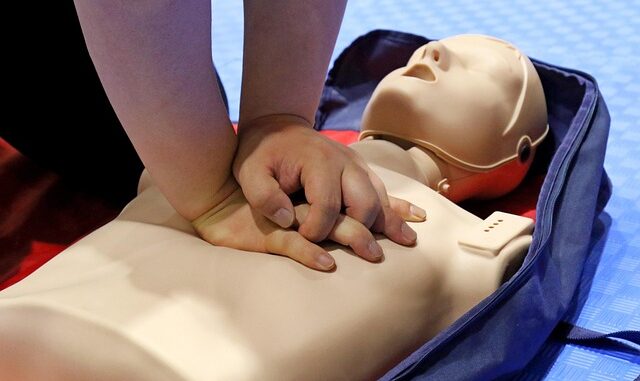
- High-Quality CPR: This isn’t just chest compressions; it’s about effective chest compressions. We’re talking about compressing hard (at least 2 inches for adults), fast (100-120 compressions per minute), allowing for full chest recoil after each compression, and minimizing interruptions. These are the mechanical actions that circulate blood and oxygen to the brain and vital organs until more advanced help arrives. It’s the engine that keeps things going.
- Rapid Defibrillation: If the cardiac arrest is due to a shockable rhythm (like ventricular fibrillation), an Automated External Defibrillator (AED) is the definitive treatment. Getting an AED on the patient and delivering a shock as quickly as possible dramatically increases survival chances. These devices are increasingly common in public places, and learning how to use one is simpler than you might think.
- Early Advanced Resuscitation: This is where emergency medical services (EMS) personnel take over. They bring advanced airway management, IV medications, and specialized equipment to stabilize the patient and prepare them for transport.
- Post-Cardiac Arrest Care: The fight isn’t over once a pulse is restored. This crucial link involves comprehensive care in the hospital, focusing on optimizing brain function, managing potential organ damage, and addressing the underlying cause of the arrest. Think of it as the intensive care required to truly recover and prevent recurrence.
This unified chain isn’t just about simplification; it’s about emphasizing the seamless transition between each link. A strong chain, after all, is only as strong as its weakest link. By standardizing this sequence, we’re building a more robust, more intuitive system that should lead to better outcomes for everyone, everywhere.
Pediatric Resuscitation Advancements: Nurturing Future Lifesavers and Brain Health
When we talk about saving lives, particularly young ones, every piece of new evidence feels incredibly important. The 2025 guidelines bring some really insightful advancements in pediatric resuscitation, shining a light on both prevention and optimal recovery.
One particularly encouraging finding indicates that children aged 12 years and older can effectively learn and perform CPR and even use defibrillation techniques. Isn’t that amazing? We sometimes underestimate what our younger generations are capable of. This isn’t just about theory; these kids can make a difference. To fully harness this potential and enhance community readiness, the AHA strongly recommends proactive measures like media campaigns, instructor-led training programs in schools, and community-based initiatives. Imagine a generation growing up knowing CPR – the impact could be profound. It’s not just about teaching them the skills; it’s about fostering a culture of preparedness and empowerment.
Beyond immediate intervention, the guidelines place significant emphasis on the importance of temperature control during post-cardiac arrest care, particularly for improving neurological outcomes. For adults who remain unresponsive to verbal commands after cardiac arrest, the recommendation is to maintain temperature control for at least 36 hours. This isn’t just keeping them warm or cool; it’s about targeted temperature management, often referred to as therapeutic hypothermia or controlled normothermia.
Why is this so crucial? When the heart stops, the brain is deprived of oxygen. Even when blood flow is restored, a complex cascade of cellular events can lead to further brain injury, known as reperfusion injury. Precisely managing the body’s temperature can mitigate this damage. It slows down metabolic processes, reduces inflammation, and helps protect brain cells. Maintaining this controlled temperature for an extended period, like 36 hours, allows the brain sufficient time to stabilize and recover, significantly improving the chances of a good neurological outcome. It’s a testament to how far critical care has come, focusing not just on survival, but on quality of survival.
Neonatal Care Updates: A Gentle Start to Life
In collaboration with the American Academy of Pediatrics, the AHA has also meticulously updated neonatal care protocols, recognizing that the earliest moments of life can profoundly influence long-term health. One significant revision, and one that’s been gaining traction in recent years, is the extended delay in umbilical cord clamping.
Previously, a delay of around 30 seconds was often recommended. Now, the guidelines advocate for delaying umbilical cord clamping from birth to at least 60 seconds. This might seem like a small adjustment, but the implications are vast and beneficial. Why this change? Well, during those crucial extra seconds, blood continues to flow from the placenta to the newborn. This extra blood transfer provides a substantial boost of blood volume, red blood cells, and crucial iron stores to the infant.
The benefits are quite compelling. Studies have shown that delayed cord clamping is associated with improved blood health, higher iron levels (which can reduce the risk of iron-deficiency anemia), and even improved neurodevelopmental outcomes, particularly in preterm infants. For preterm babies, it’s also linked to a reduced need for blood transfusions and a lower incidence of severe intraventricular hemorrhage. It’s a simple, non-invasive intervention that harnesses the natural physiology of birth to give babies a healthier start. Of course, there are always situations, like specific medical emergencies, where immediate clamping might still be necessary, but for most births, this gentle, patient approach is now the recommended standard. It really highlights how our understanding of neonatal physiology continues to evolve and inform best practices.
Emphasis on Public Education and Training: Empowering the Bystander Effect
Let’s be blunt: the fate of thousands often rests in the hands of ordinary people, bystanders. The 2025 guidelines truly stress the profound importance of public education and widespread CPR awareness. Why? Because the numbers are stark. In the U.S. alone, approximately 350,000 out-of-hospital cardiac arrests occur annually. And here’s the kicker: only about 41% of adults receive bystander CPR before emergency medical services even arrive. Think about that for a second. More than half of people experiencing sudden cardiac arrest aren’t getting immediate, life-saving help from those around them.
This gap is where we, as a society, must do better. Early intervention is the single most critical factor in improving survival chances. For every minute that passes without CPR, the chance of survival decreases by 7% to 10%. That’s a staggering statistic, isn’t it? It means rapid, decisive action isn’t just helpful; it’s absolutely essential. You truly can’t overstate the impact of immediate, high-quality bystander CPR.
So, what’s stopping more people from acting? Often, it’s a combination of fear – fear of doing harm, fear of legal repercussions (though Good Samaritan laws typically protect rescuers), or simply a fear of not knowing what to do. The AHA addresses this head-on by encouraging individuals to take CPR classes. These aren’t just for healthcare professionals; they’re designed for everyone. Learning the basic skills and techniques, whether it’s Hands-Only CPR or full CPR with rescue breaths, can dispel that fear and replace it with confidence.
Hands-Only CPR, in particular, is incredibly simple to learn and remember: call 911, then push hard and fast in the center of the chest. It removes the barrier of mouth-to-mouth resuscitation, which some people are hesitant about, and focuses on the most vital aspect – circulating blood to the brain. We need more media campaigns, more community programs, more employers offering training – essentially, a societal push to ensure that if someone collapses near you, you’re not just a bystander, you’re a potential lifesaver.
Imagine the ripple effect: one person gets trained, they save a life, and that inspires others to get trained. Suddenly, our communities become much safer, much more resilient. It’s about empowering people to overcome that initial moment of shock and act decisively. And believe me, knowing you can make that difference is an incredibly powerful feeling.
Conclusion: A Brighter Future for Emergency Care
The 2025 AHA CPR and ECC guidelines represent a monumental step forward in resuscitation practices. Integrating the very latest scientific evidence, they’re poised to significantly enhance survival outcomes across an incredibly diverse range of emergency scenarios. From the subtleties of managing choking in infants to the urgent need to address the opioid crisis, these updates touch every facet of life-saving care.
By standardizing protocols, making them more intuitive, and emphasizing the critical importance of timely, effective interventions, these guidelines aim to empower everyone – from a concerned family member to a seasoned paramedic – to act decisively and effectively when it matters most. It’s a testament to continuous learning, scientific rigor, and an unwavering commitment to saving lives. Let’s all do our part to familiarize ourselves with these changes; our collective ability to respond defines the health and safety of our communities. We can’t afford not to.
References
-
American Heart Association. (2025). 2025 AHA Guidelines for CPR and ECC. Circulation. (newsroom.heart.org)
-
American Heart Association. (2025). Updated CPR guidelines tackle choking response, opioid-related emergencies and a revised Chain of Survival. Newsroom. (newsroom.heart.org)
-
American Heart Association. (2025). 2025 AHA CPR & ECC Guidelines Update. CPR & First Aid. (cpr.heart.org)
-
American Heart Association. (2025). 2025 AHA Guidelines for CPR and ECC – Professional Heart Daily. (professional.heart.org)
-
American Heart Association. (2025). 2025 AHA CPR & ECC Guidelines Update. CPR & First Aid. (cpr.heart.org)
Be the first to comment