
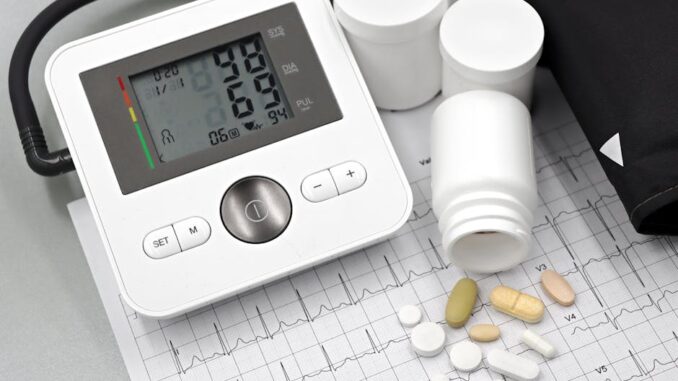

Geriatric Cardiology in 2025: A Deep Dive into the Future of Heart Health for Seniors
As the global population continues its inexorable march towards an older demographic, the challenges of cardiovascular health in our senior citizens have never been more pressing. We’re talking about millions more people living longer, and with that longevity comes a higher incidence of heart disease, demanding truly innovative solutions. In 2025, the field of geriatric cardiology isn’t just responding; it’s practically exploding with advancements, offering not just more effective but profoundly personalized care that would’ve seemed like science fiction just a decade ago. It’s a genuinely exciting time, really, to be involved in this space.
This isn’t merely about tweaking existing treatments. Oh no, it’s a wholesale paradigm shift. From the intricacies of our genetic code to the swift precision of robotic hands, and the omnipresent vigilance of artificial intelligence, every facet of diagnosing, treating, and managing cardiovascular diseases in the elderly is being reimagined. Let’s unpack some of the most groundbreaking breakthroughs, shall we? You’re going to want to hear about these.
The Genetic Blueprint: Personalized Medicine and Genomic Testing
Think about it: for years, medicine was a bit of a ‘one-size-fits-all’ endeavor. Doctors would prescribe based on population-level studies, hoping for the best. But in 2025, that’s just not how we’re doing things, particularly in geriatric cardiology. Personalized medicine has truly become the cornerstone, and frankly, it’s about time. By delving into an individual’s unique genetic profile, cardiologists can now craft treatments with an almost bespoke precision, drastically optimizing efficacy and, crucially, minimizing those pesky adverse effects.
So, how does this actually work? Well, it goes beyond simply identifying genetic predispositions to disease. We’re talking pharmacogenomics, for instance. Imagine an active 70-year-old patient, let’s call her Margaret, with newly diagnosed atrial fibrillation. Historically, she’d get a standard anticoagulant. But now, her genetic makeup, revealed through a simple saliva or blood test, can tell us exactly how she metabolizes different medications. Perhaps she’s a slow metabolizer of a common anticoagulant, meaning a standard dose could lead to dangerous bleeding. Or maybe she’d respond better to one antiarrhythmic drug over another, avoiding frustrating trial-and-error periods. With genomic insights, Margaret receives a medication regimen specifically suited to her, enhancing treatment outcomes, reducing the likelihood of a trip to the ER, and ultimately, letting her get back to her grandkids and gardening much faster.
The benefits extend beyond just drug dosages. Genetic markers can also inform lifestyle interventions, pinpointing specific dietary needs or exercise tolerances, and even predicting the likelihood of certain complications developing down the line. It’s like having a crystal ball, but one rooted in scientific fact. Of course, there are ethical considerations to navigate, like data privacy and ensuring equitable access to these advanced tests, but the trajectory is clear: personalized care isn’t just a buzzword anymore, it’s a powerful reality reshaping how we approach heart health in our elders.
The Art of the Minimally Invasive: Revolutionary Procedures
For a long time, serious heart conditions often meant serious surgery—a big incision, a long hospital stay, and a protracted, often grueling, recovery. For older adults, who might have other health issues or simply less physiological reserve, this could be a daunting, sometimes even prohibitive, prospect. That’s why the revolution in minimally invasive cardiac procedures is such a game-changer. These aren’t just minor tweaks; these are fundamental shifts in how we fix hearts, offering quicker recovery times and significantly reduced complication risks compared to traditional open-heart surgeries.
Take Transcatheter Aortic Valve Replacement (TAVR), for example. Instead of cracking open the chest to replace a failing aortic valve, surgeons can now thread a new valve through a catheter, typically inserted via a small incision in the leg. It’s truly remarkable. I remember speaking with Mr. Davies, a spry 75-year-old who, before TAVR, was struggling to even walk to his mailbox without getting severely breathless. He was told traditional open-heart surgery was too risky given his age and a touch of lung disease. But after TAVR, he was up and about in days, not weeks. Within a month, he was back on the golf course, albeit with an electric cart. It’s not just about prolonging life, is it? It’s about drastically improving its quality.
Similarly, catheter-based ablation techniques for arrhythmias, especially atrial fibrillation, have seen incredible refinement. These procedures use radiofrequency energy or cryotherapy to precisely destroy or isolate small areas of heart tissue that cause irregular heartbeats. For many seniors, who might struggle with medication side effects or who simply want a more definitive solution, ablation offers a path to a regular rhythm without the trauma of open surgery. We’re also seeing the rise of leadless pacemakers and MitraClip procedures for mitral regurgitation, all contributing to a surgical landscape that’s far gentler on the aging body. This move towards less invasive interventions means more seniors are candidates for life-changing treatments, leading to truly active, vibrant later years. And that’s something we can all celebrate.
Seeing the Unseen: AI-Enhanced Cardiac Imaging
Diagnosis is the first step, isn’t it? And in 2025, artificial intelligence has quite simply supercharged cardiac imaging, dramatically improving both diagnostic accuracy and efficiency. AI algorithms aren’t replacing cardiologists; they’re augmenting them, acting as incredibly sophisticated co-pilots. These systems can pore over echocardiograms, MRIs, and CT scans with a relentless precision that human eyes, no matter how expert, just can’t match.
Imagine an AI algorithm trained on millions of cardiac images. It can identify subtle abnormalities – a whisper of early-stage cardiomyopathy, a tiny plaque in a coronary artery that might otherwise be overlooked, or minute changes in heart function over time – that might be missed during a routine, hurried analysis. This technology is particularly beneficial for seniors, who often present with complex, multifactorial cardiac issues, where symptoms are atypical and pathology can be layered. An older patient might have mild kidney dysfunction, requiring careful contrast use in a CT, or perhaps some neurological issues making it hard to lie still for an MRI. AI helps make sense of imperfect images and complex clinical pictures, ensuring nuanced interpretations and preventing crucial details from slipping through the cracks.
Furthermore, AI aids in quantification, providing precise measurements of heart chambers, blood flow velocities, and ejection fractions, reducing inter-observer variability. This means more consistent, reliable diagnoses across different clinics and practitioners. It frees up cardiologists to focus on the truly complex decision-making and, perhaps more importantly, on the patient interaction itself. We’re not just getting sharper images; we’re getting deeper insights, allowing for earlier interventions and more tailored treatment plans, ultimately leading to better outcomes for our elderly patients.
Wearable Wonders: Heart Monitors and Continuous Tracking
Remember when a heart monitor meant a clunky device you wore for 24 hours? Well, those days are increasingly behind us. The latest generation of wearable cardiac monitors in 2025 offers seniors real-time tracking of an impressive array of vital heart metrics. We’re talking continuous ECG, heart rate variability, oxygen saturation, even sleep patterns and activity levels, all streamed seamlessly. These aren’t just glorified fitness trackers; they’re sophisticated medical devices, but crucially, they’re designed with older adults in mind.
You see, user-friendliness is key. Larger displays, intuitive interfaces, and impressively long battery life – sometimes weeks on a single charge – make these devices practical for daily use by seniors, even those who might not be digital natives. I saw my aunt, who’s always been a bit intimidated by tech, easily manage her new wrist-worn device; it has a clear display and gentle haptic feedback for alerts, it’s pretty clever really. The data collected from these wearables isn’t just sitting there either. It’s seamlessly transmitted to healthcare providers through secure cloud platforms, enabling remote monitoring that’s both proactive and responsive.
This continuous data stream allows for rapid response to cardiac events. Imagine an alert going straight to a care team if a patient’s heart rate variability suddenly drops or if an irregular rhythm is detected. It means potential issues can be flagged before they become emergencies. For seniors and their families, it offers incredible peace of mind, knowing there’s a constant, silent guardian watching over them. It’s transforming cardiac care from reactive visits to the doctor’s office into a continuous, preventative partnership between patient and provider, ensuring timely interventions and fewer unexpected hospitalizations.
Beyond the Cuff: Noninvasive Blood Pressure Monitoring Innovations
Blood pressure measurement is fundamental, isn’t it? Yet, traditional cuff-based methods often fall short, especially for our older patients. Why? Arterial stiffness, common in aging, can lead to inaccurate readings, and the phenomenon of ‘white-coat hypertension’ – where BP spikes just from being in a doctor’s office – is particularly prevalent in seniors. Not to mention the hassle of regularly finding and using a cuff at home.
In 2025, these traditional methods are being supplemented, and in some cases, entirely replaced, by continuous, noninvasive monitoring devices. We’re seeing innovations like optical sensors embedded in smartwatches or patches that measure blood pressure through pulse wave velocity (PWV) or tonometry-based techniques. These devices provide continuous data, capturing fluctuations throughout the day and night, offering a far more reliable and holistic picture of a patient’s true blood pressure profile. For someone whose BP only spikes during a doctor’s visit, or whose nocturnal hypertension is missed by daytime readings, this is truly transformative.
What’s more, these new sensors integrate beautifully with the broader ecosystem of wearables and mHealth platforms. Imagine a system that not only tracks your continuous BP but also correlates it with your activity levels, sleep quality, and even medication adherence. This wealth of data allows for incredibly precise medication management, reducing the risk of over- or under-treatment, and providing both patients and clinicians with unparalleled insights into cardiovascular health. It’s a significant step forward in managing a condition that affects so many older adults.
Enabling Recovery: Mobile Health Cardiac Rehabilitation
Cardiac rehabilitation is vital for recovery after a heart event, no doubt about it. But for many older adults, getting to a clinic-based program can be a real hurdle—think transportation issues, mobility limitations, or just the sheer exhaustion that comes with recovery. This is where Mobile Health Cardiac Rehabilitation, or mHealth-CR, truly shines, emerging as an incredibly promising and effective approach for seniors.
mHealth-CR leverages smartphone apps, connected devices, and telehealth platforms to bring comprehensive cardiac rehab directly into a patient’s home. These programs typically include guided exercise plans tailored to individual capabilities, educational modules on diet and lifestyle, medication reminders, and even virtual consultations with physiotherapists and cardiologists. Imagine a patient, let’s say Mr. Rodriguez, recovering from a heart attack. Instead of struggling to get to a clinic three times a week, he uses an app that guides him through his exercises, tracks his progress, and allows him to video call his rehab nurse with any questions. It’s a phenomenal boost to accessibility and adherence.
A compelling study, part of the RESILIENT trial, underscored this potential. Researchers found that seniors receiving mHealth-CR were significantly more likely to exceed their personalized rehabilitation goals compared to those receiving usual care. This isn’t just about meeting the minimums; it’s about fostering meaningful, patient-centered progress, even if conventional clinical endpoints like peak oxygen uptake didn’t show a massive difference. The qualitative improvements in patient engagement, self-efficacy, and overall quality of life were undeniable. It’s a testament to the power of technology to bridge gaps in care, empower patients, and ultimately, facilitate a more robust and sustained recovery, regardless of geographical or physical barriers.
Unpacking Imaging Complexities: Noninvasive Cardiac Imaging in Older Adults
Diagnosing heart conditions in older adults presents a unique set of challenges. Their bodies often carry the cumulative effects of decades of life—calcification, reduced physiological reserve, multiple comorbidities. This makes noninvasive cardiac imaging, while incredibly powerful, a nuanced endeavor. A state-of-the-art review in 2025 truly dissected these complexities, offering invaluable guidance on navigating the strengths and limitations of various modalities when evaluating seniors.
Think about it: Transthoracic Echocardiography (TTE) is usually our first line. It’s non-invasive, widely available, relatively inexpensive. But in an older patient, issues like poor acoustic windows, calcified valves, or lung disease can make getting clear images a real struggle. Then there’s Transesophageal Echocardiography (TEE), which offers superior detail by placing a probe down the esophagus. More invasive, yes, and requires sedation, which you’ve got to consider carefully in a frail senior.
Stress Echo, great for assessing ischemia without radiation, might be limited by an older person’s physical capacity or their ability to safely take certain pharmacological stress agents. Cardiac CT is fantastic for visualizing coronary arteries, but radiation exposure and the risks of contrast-induced nephropathy are always on our minds for patients with impaired kidney function, which, frankly, isn’t uncommon in older age. Cardiac MRI provides superb tissue characterization, but those long scan times can be tough for someone with claustrophobia, cognitive impairment, or just general discomfort from lying still. And finally, nuclear imaging, while excellent for perfusion and viability, comes with its own radiation burden.
The review emphasized something crucial: a multimodality, patient-centered approach. This means we’re not just picking one test; we’re often using a combination, carefully weighing the diagnostic yield against the patient’s specific risks, comorbidities, and preferences. Critically, it involves incorporating a comprehensive geriatric assessment – evaluating frailty, cognitive status, functional status, and polypharmacy – into the imaging decision-making process. It’s about tailoring the imaging strategy to improve accuracy, guide care decisions, and ultimately, enhance outcomes for each unique older adult, ensuring we’re not just diagnosing, but diagnosing wisely and effectively.
Bridging Two Worlds: AI-Driven Systematic Reviews in the Brain-Heart Interconnectome
For far too long, specialties have existed in silos. Cardiology here, neurology there. But in older adults, the intricate connection between brain health and heart health, what we’re calling the ‘brain-heart interconnectome,’ is profoundly important. Think about how atrial fibrillation increases stroke risk, or how heart failure can lead to cognitive decline. The research in this interwoven domain is vast and growing exponentially, making it incredibly difficult for human researchers to keep up. That’s where an ingenious AI-driven system comes in, designed to revolutionize systematic reviews in this complex area.
Why do we need AI for this? Because traditional systematic reviews are painstakingly slow, often outdated before they’re even published, and prone to human bias or oversight. This new AI system integrates several cutting-edge capabilities: automated detection of study components using natural language processing, semantic search that understands the meaning behind the words, graph-based querying to uncover complex relationships between concepts, and topic modeling to identify emerging trends or, just as importantly, underexplored areas. It’s like having a hyper-intelligent research assistant who never sleeps, never misses a paper, and can connect dots no human could reasonably see.
The real power here is its ability to reduce research waste. By providing real-time updates through a ‘living database,’ it ensures researchers aren’t inadvertently duplicating efforts or asking questions that have already been answered. Moreover, it offers an interactive interface with intuitive dashboards and conversational AI, allowing clinicians and researchers to query the vast body of evidence effortlessly. ‘Tell me all studies on microbleeds in AFib patients over 80,’ you might ask, and receive an instant, comprehensive, and up-to-the-minute synthesis. This system promises to accelerate discovery, refine clinical guidelines, and ultimately, lead to better integrated care for the brain and heart health of our aging population. It’s a massive leap in evidence synthesis, freeing up human ingenuity for higher-level thinking.
Virtual Hearts, Real Skills: Patient-Specific Dynamic Digital-Physical Twins
Training interventional cardiologists is rigorous. They learn to navigate the intricate, often tortuous, pathways of coronary arteries, placing stents with pinpoint accuracy. Historically, this training involved cadavers, generic plastic models, or observing live procedures. All valuable, sure, but what if you could practice on your specific patient’s heart, with its exact anatomy and dynamic characteristics, before even touching them? That’s precisely what patient-specific dynamic digital-physical twins are delivering in 2025.
This isn’t some abstract concept; it’s a tangible, comprehensive research framework built on 4D-CTA (4-dimensional CT angiography, meaning images captured over time to show movement). It integrates digital twin technology – a virtual replica of the patient’s heart – with computer vision for dynamic analysis, and then, astoundingly, physical model manufacturing using advanced 3D printing. So, you get a physical model that not only replicates the precise anatomical structures of a patient’s coronary vasculature but also moves like it, reproducing pulsatility and compliance.
Imagine a trainee cardiologist preparing for a complex stenting procedure. They can now practice on a physical model that feels like the real thing, experiencing visual and tactile feedback specific to that particular patient’s calcified lesion or tortuous vessel. They can even navigate a digital twin in a mixed reality environment, overlaying virtual data onto the physical model. This offers an unprecedented, risk-free environment for education, allowing for repeated practice, troubleshooting, and perfecting techniques before they enter the cath lab. This precision and personalization will undoubtedly lead to safer procedures, reduced complications, and ultimately, improved outcomes for patients undergoing coronary interventions. It’s an absolute game-changer for training and pre-procedural planning, making interventional cardiology safer and more predictable.
Language of the Heart: CardioEmbed for Clinical Cardiology
In the vast ocean of medical literature and clinical notes, finding precisely what you need, understanding its nuance, and connecting disparate pieces of information is a monumental task. General language models, while powerful, sometimes stumble when faced with the highly specialized, often jargon-filled language of cardiology. That’s why the development of CardioEmbed, a domain-specialized embedding model, is such a significant advancement.
What are ‘text embeddings’? Simply put, they convert words, phrases, or even entire sentences into numerical vectors in a way that captures their semantic meaning. Words with similar meanings are located closer together in this ‘vector space’. CardioEmbed was specifically trained using contrastive learning – a method where the model learns by contrasting positive and negative pairs of examples – on a meticulously curated corpus of comprehensive cardiology textbooks. This isn’t just internet data; this is the authoritative, expert-verified knowledge of the field.
The results are impressive: the model achieves a staggering 99.60% retrieval accuracy on cardiac-specific semantic retrieval tasks. This means when you ask it to find documents related to ‘atrial flutter ablation strategies’ or ‘management of hypertrophic cardiomyopathy in the elderly,’ it understands the precise clinical meaning and retrieves highly relevant information with incredible accuracy. This specialized training allows CardioEmbed to outperform general models in understanding the subtleties and relationships within cardiology concepts. It also shows competitive performance on related biomedical domains, indicating its robustness. This innovation will empower clinicians with faster, more accurate information retrieval, aiding clinical decision support, research, and even automated summarization of patient records, ultimately translating into more informed and efficient care for heart patients.
Conclusion: A Transformative Era for Geriatric Heart Health
Honestly, the year 2025 truly marks a transformative period in geriatric cardiology. We’re not just making incremental improvements; we’re witnessing a sea change driven by personalized medicine, incredibly refined minimally invasive procedures, and the ubiquitous, intelligent power of AI-driven technologies. It’s a convergence of innovation that’s genuinely changing lives.
These advancements aren’t just about tweaking diagnostic precision or marginally boosting treatment efficacy. They’re profoundly about improving the overall quality of life for older adults. They mean more years lived actively, with dignity and independence, free from the crushing burden of poorly managed heart disease. It means less time in hospitals and more time living life. It’s an investment in healthy longevity, and if you ask me, it’s an investment that pays dividends for individuals, families, and society as a whole.
As research continues its relentless pace, we can only expect further innovations to emerge, pushing the boundaries of what’s possible. The future promises even more tailored, even more effective, and even more compassionate cardiovascular care for our aging population. It’s a future where age isn’t a barrier to cutting-edge treatment, and where every heartbeat counts, truly. And for those of us working in healthcare, that’s incredibly hopeful, isn’t it?
References
-
Goyal, P., Li, H., Zhang, C., et al. (2025). Postoperative Atrial Fibrillation and Risk of Development of Dementia. JACC Advances. (acc.org)
-
Tom-Ayegunle, K., Jamil, Y., Echouffo-Tcheugui, J., et al. (2025). Cumulative Burden of Geriatric Conditions and Cardiovascular Outcomes in Older Adults: Analysis From ARIC. JACC Advances. (acc.org)
-
Shwayder, E., Dodson, J., Adhikari, S., et al. (2025). Goal Attainment Among Older Adults With Ischemic Heart Disease Using Mobile-Health Cardiac Rehabilitation in RESILIENT. JACC Advances. (acc.org)
-
Patel, K., Strom, J., Syed, M., et al. (2025). Noninvasive Cardiac Imaging in Older Adults: Diagnostic Challenges and Prognostic Implications Across Modalities. JACC Advances. (acc.org)
-
Rahgozar, A., Mortezaagha, P., Edwards, J., et al. (2025). An AI-Driven Live Systematic Reviews in the Brain-Heart Interconnectome: Minimizing Research Waste and Advancing Evidence Synthesis. arXiv. (arxiv.org)
-
Wang, S., Ren, T., Cheng, N., et al. (2025). Patient-Specific Dynamic Digital-Physical Twin for Coronary Intervention Training: An Integrated Mixed Reality Approach. arXiv. (arxiv.org)
-
Young, R. J., Matthews, A. M. (2025). CardioEmbed: Domain-Specialized Text Embeddings for Clinical Cardiology. arXiv. (arxiv.org)
Be the first to comment