

Predicting the Unpredictable: How AI and ECG are Revolutionizing Seizure Detection in Pediatric ICUs
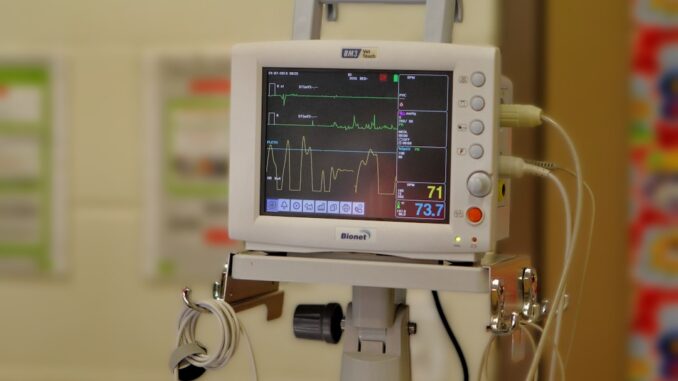
Imagine the pulsating heart of a Pediatric Intensive Care Unit, the PICU. It’s a place where every beep from a monitor, every subtle shift in a child’s breathing, carries immense weight. You know the drill, the relentless vigilance required. In this high-stakes environment, among the myriad threats that loom, epileptic seizures are particularly insidious. They’re often silent, elusive, yet their potential to escalate morbidity and even mortality is terrifyingly real. For years, continuous electroencephalogram, or cEEG, monitoring has been our trusty, albeit cumbersome, gold standard for catching these neurological storms. But let’s be honest, it’s not without its profound limitations.
We’re talking about a resource that’s expensive, often scarce, and demands specialized expertise for both application and interpretation. It’s a logistical challenge, isn’t it? Hospitals, especially those in more rural or underserved areas, simply can’t always provide round-the-clock cEEG for every child who might need it. This creates a significant gap in care, a space where we’ve had to rely on clinical suspicion and intermittent observations, sometimes missing crucial, subtle events.
Healthcare data growth can be overwhelming scale effortlessly with TrueNAS by Esdebe.
The Unseen Threat: Why Seizures are So Dangerous in the PICU
Why are seizures such a big deal for our tiny patients in the PICU? Well, for starters, critically ill children are inherently vulnerable. Their brains are often already under immense stress from underlying conditions like severe infections, traumatic brain injuries, hypoxic-ischemic encephalopathy, or metabolic derangements. A seizure, even a brief one, can exacerbate brain injury, prolong hospital stays, and seriously impair neurodevelopmental outcomes down the line. We’re not just talking about the dramatic, convulsive types either. Oh no, the most dangerous ones, the ones that really worry us, are often non-convulsive. They might manifest as subtle eye fluttering, repetitive mouth movements, or just a prolonged stare, easily mistaken for sedation or altered mental status in an intubated, sedated child.
Detecting these silent seizures, which can persist for hours or even days, without constant EEG monitoring, is like trying to find a needle in a haystack blindfolded. It’s a nightmare scenario, really. The longer these events go unaddressed, the greater the risk of irreversible brain damage, impacting a child’s future in profound ways. And then there’s the sheer burden on the medical staff. Constantly monitoring for these subtle signs, making subjective judgments, it adds immense pressure to an already overstretched team. We needed something more, something proactive, something that could help us see what’s often invisible.
A Paradigm Shift: Leveraging ECG Data for Seizure Prediction
This is where the magic of machine learning, or ML, begins to truly shine, offering a beacon of hope in this complex landscape. Recent advancements are paving the way for us to utilize something as ubiquitous as electrocardiogram (ECG) data to predict seizure risk in critically ill children. Think about it: every child in a PICU has an ECG monitor hooked up, providing continuous data, twenty-four hours a day. It’s readily available, non-invasive, and relatively inexpensive compared to cEEG.
A groundbreaking study, one that really caught my attention, developed a data-driven model that scrutinizes features extracted from just the first hour of ECG recordings, fusing this with pertinent clinical data, to assess seizure risk. It’s a clever approach, wouldn’t you say? The research team, led by folks like Azriel, Hahn, and their colleagues, essentially taught a sophisticated algorithm to spot patterns in heart rhythm that might escape the human eye, signals indicative of an impending neurological event. What did they find? The model identified some truly pivotal predictive features, including the patient’s age, whether brain injury was the cause of their coma etiology, and fascinatingly, the QRS area in the ECG.
Now, for those unfamiliar, the QRS complex represents the electrical depolarization of the ventricles, essentially the main pumping chambers of the heart. Changes in its duration, amplitude, or morphology (like the ‘area’ metric they used) can reflect alterations in cardiac function, but here, it seems to be hinting at something more, a subtle interplay between the heart and the brain, perhaps mediated by the autonomic nervous system. The brain and heart aren’t isolated; they’re in constant communication, and a stressed brain can absolutely influence heart rate variability and morphology.
Remarkably, for patients without any prior clinical data to draw from, the model achieved an area under the receiver operating characteristic curve (AUROC) of 0.84 using just one hour of ECG data. If you’re wondering what an AUROC is, it’s a measure of a model’s ability to distinguish between classes – in this case, between children who will have a seizure and those who won’t. An AUROC of 1.0 is perfect prediction, 0.5 is essentially random chance. So, 0.84? That’s really quite good, isn’t it? It suggests a strong predictive power, far better than a coin toss. When they then incorporated clinical history, which makes perfect sense, the AUROC improved further to 0.87. This significantly enhanced the positive predictive value, meaning when the model said ‘seizure risk,’ it was much more likely to be correct than what we’d typically achieve with traditional clinical standards alone. It’s giving us a powerful, early warning system, using data we’re already collecting.
Real-World Impact: Integrating ML into Clinical Practice
The integration of these kinds of ML models into clinical practice presents several compelling advantages, poised to truly transform how we operate in the PICU. Think about the operational efficiencies alone. By accurately predicting seizure risk, these models empower healthcare providers to prioritize monitoring and interventions for high-risk patients. This isn’t just about better patient care; it’s about optimizing resource utilization, a constant battle in any busy hospital.
Imagine a scenario: it’s a packed night shift, the PICU is full, and you’ve got three children who, clinically, might need cEEG. Traditionally, you’re juggling, trying to decide who gets that precious resource first, perhaps based on gut feeling or the most obvious clinical signs. Now, picture this: an ML model analyzes their ECG data and core clinical details, flashing a ‘high risk’ alert for one child, ‘moderate’ for another, and ‘low’ for the third. Suddenly, your decision-making is data-driven, precise. You can allocate that cEEG machine, and the specialized technician to set it up, to the child who stands to benefit most, and quickly. This doesn’t just improve patient outcomes by facilitating earlier intervention; it streamlines care processes. It makes the PICU operate smarter, more efficiently.
Beyond resource allocation, consider the potential for proactive treatment. If we can identify a child at high risk before a seizure even occurs, we could initiate prophylactic anti-seizure medications, or at least have them readily available, perhaps even before overt clinical signs manifest. This shifts our approach from reactive crisis management to proactive prevention, mitigating potential neurological injury. And the economic benefits? Oh, they’re substantial. Fewer prolonged seizures mean shorter hospital stays, fewer complications requiring extensive interventions, and ultimately, lower healthcare costs. It’s a win-win situation for patients, clinicians, and hospital administrators alike. We’re talking about tangible improvements, not just theoretical ones.
Navigating the Hurdles: Challenges and Future Directions
Now, while the promise of these ML models is incredibly exciting, we can’t ignore the practical challenges that lie ahead in integrating them into routine clinical practice. It’s not simply a matter of plugging in a new algorithm and hoping for the best. There are layers of complexity we absolutely need to address.
Generalizability Across Diverse Populations: One of the biggest hurdles is ensuring these models maintain their predictive power across diverse patient populations and healthcare settings. A model trained on data from one specific hospital, or even one region, might not perform as well in another. Different demographics, varying underlying etiologies for critical illness, distinct treatment protocols, even differences in ECG equipment or data collection methods could impact its accuracy. We need multi-center studies, ideally spanning different continents, to truly validate these models’ robustness. We’re talking about making sure it works for all kids, not just a select few.
The ‘Black Box’ Problem: Ensuring Interpretability: You know what clinicians often say when faced with a complex AI model? ‘How did it get that answer?’ That’s the interpretability challenge. ML models, especially the more sophisticated ones, can sometimes feel like a ‘black box,’ spitting out predictions without offering a clear, understandable rationale. For a clinician to trust and act upon a prediction – to potentially change a child’s treatment plan based on an algorithm’s output – they must understand how that prediction was made. They need to see the logic, the key features the model emphasized. This isn’t just about confidence; it’s about accountability and ultimately, patient safety. Researchers are actively working on ‘explainable AI’ (XAI) techniques to shed light on these internal workings, making these models more transparent and trustworthy.
Data Privacy and Security: Naturally, handling sensitive patient data, especially in such large volumes, raises significant concerns about privacy and security. We’re dealing with protected health information, and any system integrating ML models must adhere to stringent regulations like HIPAA. Secure data storage, anonymization protocols, and robust cybersecurity measures are non-negotiable. Building trust in these systems means ensuring impeccable data governance from day one.
Regulatory Approval and Validation: Before these models can become commonplace, they’ll require rigorous regulatory approval, akin to any new medical device or drug. Agencies like the FDA will demand extensive testing, prospective validation in real-world scenarios, and proof of safety and efficacy. This isn’t a quick process; it involves meticulous trials, often over several years, to demonstrate consistent performance and minimal risk of unintended consequences. We can’t rush this vital step.
Seamless Integration into Workflow: Even a perfect model is useless if it doesn’t fit seamlessly into existing clinical workflows. How will the predictions be presented to clinicians? Will it integrate directly into electronic health records (EHRs)? Will it require additional steps or training for staff? If it adds friction to an already busy schedule, adoption will be slow. The design needs to be intuitive, user-friendly, and truly supportive of clinical decision-making, not an additional burden.
Ethical Considerations and Bias: We also have to be mindful of potential ethical pitfalls. Algorithms are only as good as the data they’re trained on. If the training data contains inherent biases – for example, if it disproportionately represents certain demographics or omits others – the model might perpetuate or even amplify those biases in its predictions. This could lead to inequities in care, which we absolutely can’t tolerate. We need careful data curation, bias detection techniques, and continuous auditing of these systems to ensure fairness and equity.
Beyond the Horizon: The Evolving Landscape of Pediatric AI
Looking further out, the application of machine learning in pediatric critical care extends far beyond just seizure prediction. Imagine AI assisting in predicting sepsis onset, identifying children at risk for cardiac arrest, or even optimizing ventilator settings in real-time. The vision is a truly proactive, predictive PICU, where critical events are anticipated, and interventions are initiated before conditions escalate. This isn’t about replacing the skilled clinician; it’s about augmenting their capabilities, providing an invaluable assistant that can tirelessly analyze vast datasets, spot patterns, and flag potential issues long before a human ever could. It’s about empowering our teams to deliver the best possible care, freeing them up to focus on the human element, the nuanced decisions, and the direct patient interaction that only we can provide.
Conclusion
The application of machine learning to predict epileptic seizures in critically ill children represents a significant, truly transformative advancement in pediatric care. By harnessing readily available, continuous ECG data, these models offer a cost-effective and highly efficient means to identify at-risk patients, facilitating timely interventions and, ultimately, dramatically improved outcomes. Think about the peace of mind, the increased precision this brings to an inherently challenging field.
As this technology continues its rapid evolution, the integration of such sophisticated predictive tools into our clinical workflows holds the immense promise of transforming pediatric intensive care. It’s moving us from a reactive posture to a proactive one, making care not just better, but fundamentally more precise, more personalized, and profoundly more patient-centered. It’s an exciting time to be in healthcare, isn’t it? We’re on the cusp of something truly remarkable, something that will undoubtedly save lives and improve the futures of countless children.
References
- Azriel, R., Hahn, C. D., De Cooman, T., Van Huffel, S., Payne, E. T., McBain, K. L., Eytan, D., & Behar, J. A. (2022). Machine learning to support triage of children at risk for epileptic seizures in the pediatric intensive care unit. Physiological Measurement, 43(9), 095003. (pubmed.ncbi.nlm.nih.gov)
- Li, X., Li, Y., Li, Y., & Li, Y. (2024). Accuracy of machine learning in detecting pediatric epileptic seizures: Systematic review and meta-analysis. Journal of Medical Internet Research, 26, e55986. (jmir.org)
- Rahman, M. M. (2025). Machine learning to predict critical events in pediatric care. JAMA Network Open, 8(1), e2834661. (jamanetwork.com)
Be the first to comment