

A Glimmer of Hope in the NICU: How AI is Revolutionizing Nutrition for Our Tiniest Patients
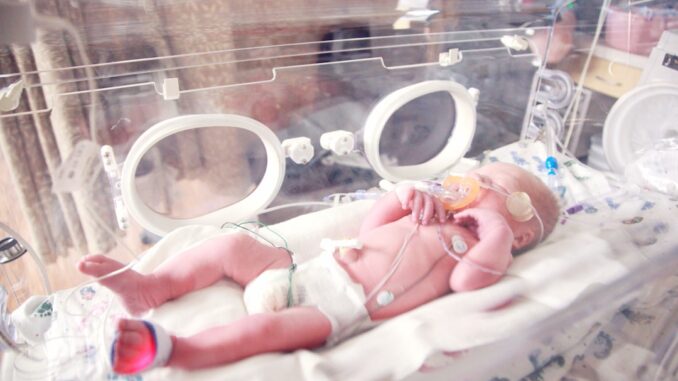
In the often-hushed, intensely vigilant world of the neonatal intensive care unit, where the air hums with the soft beeps of monitors and every breath is a victory, the stakes couldn’t be higher. For those minuscule, utterly vulnerable premature infants fighting to thrive, intravenous nutrition—what we call total parenteral nutrition, or TPN—isn’t just a supplement; it’s often their very lifeline. Imagine a baby, no bigger than your hand, whose digestive system just isn’t ready for the world. They need every nutrient to grow, to develop, to simply survive, and it all has to come through a tiny catheter. Yet, crafting the precise TPN formula has, for too long, remained a dizzyingly complex, incredibly intricate, and, frankly, error-prone process. Now, a groundbreaking development from Stanford Medicine offers not just a promising solution, but a veritable beacon of hope.
The Labyrinthine Challenge of TPN Formulation
Healthcare data growth can be overwhelming scale effortlessly with TrueNAS by Esdebe.
You know, it’s easy to just say ‘IV nutrition,’ but the reality behind that seemingly simple phrase is a medical tightrope walk. Creating a TPN prescription for each preemie isn’t just a meticulous task; it’s a daily, sometimes hourly, recalculation of a biological equation more complex than most of us can fathom. You see, it involves scrutinizing the baby’s exact weight, their precise gestational age, their stage of development, and, perhaps most critically, a full panel of their latest lab results. Are their electrolytes balanced? Is their liver handling the fats? Are their kidneys processing the amino acids correctly? These aren’t static values; they’re constantly shifting in a rapidly developing, often unstable, system.
Why So Complex?
Think about it: these babies are growing at an exponential rate. Their metabolic demands are immense, yet their organ systems are incredibly immature. Their little livers might not process fats efficiently; their kidneys might struggle with fluid and electrolyte balance. This means the TPN formula must supply everything a growing infant needs—amino acids for protein synthesis, dextrose for energy, lipids for essential fatty acids and calories, and a delicate cocktail of electrolytes like sodium, potassium, calcium, magnesium, and phosphate. Then there are the trace elements, zinc, copper, selenium, manganese, all vital for enzymatic functions, plus a full spectrum of vitamins. Getting the dose of each exactly right, for a body that could weigh less than a pound, is a monumental task. Too much of one thing, and you risk toxicity; too little, and you stunt their development or even compromise vital organ function. It’s truly a razor’s edge we’re walking.
Traditionally, this intricate process necessitates input from a multidisciplinary team. We’re talking neonatologists who understand the big clinical picture, pharmacists who specialize in compounding these highly customized solutions, and dietitians who are experts in nutritional science. Each brings their unique expertise, but the very act of hand-off, communication, and manual calculation across multiple specialists introduces cracks where errors can slip through. A misplaced decimal, a misread lab value, a simple transcription error under pressure – these seemingly small slip-ups can have catastrophic consequences for a fragile infant. What’s more, the sheer time and mental energy this demands from highly skilled professionals is immense, diverting them from other critical patient care activities.
Enter AI: A New Era of Precision Nutrition
This is where the genius of artificial intelligence truly shines. Researchers at Stanford Medicine, those brilliant minds always pushing the boundaries, have developed an AI algorithm that’s essentially a master nutritionist for preemies. They didn’t just build it from scratch; they trained it on an immense dataset – nearly 80,000 past TPN prescriptions. Imagine the collective wisdom and patterns embedded in that much historical clinical data! By meticulously analyzing electronic medical records, the AI learned to predict, with startling accuracy, the specific nutrients and their optimal quantities each individual preemie requires. It’s like having the world’s most experienced, tireless, and hyper-accurate dietitian, neonatologist, and pharmacist all rolled into one digital brain.
This isn’t about replacing human expertise, not at all. Instead, it’s about elevating it, giving clinicians an incredibly powerful tool. This AI-driven approach aims to standardize the best practices gleaned from decades of patient data, while simultaneously optimizing TPN formulations for each unique infant. And the ultimate goal? To dramatically reduce medical errors and fundamentally improve the quality of care. It’s a game-changer, plain and simple, moving us closer to a future where every preemie receives not just good nutrition, but perfectly personalized nutrition.
Real-World Validation: The Striking Impact of Nature Medicine‘s Findings
The proof, as they say, is in the pudding, or in this case, in the peer-reviewed data. A landmark study, published in the prestigious journal Nature Medicine, truly solidified the potential of this AI. The research team compared the AI-driven TPN prescriptions against the actual prescriptions given to a cohort of preterm infants in a real-world clinical setting. And honestly, the findings were nothing short of striking. They really made us sit up and take notice.
Infants whose actual, human-crafted prescriptions deviated significantly from the AI-recommended formulations faced demonstrably higher risks. We’re talking about serious complications here: increased rates of sepsis, a life-threatening infection; liver disease, a common and debilitating issue with prolonged TPN; and most tragically, even a higher risk of death. Let that sink in. Suboptimal nutrition, even when clinicians are doing their absolute best, can have such profound, devastating consequences. The AI wasn’t just suggesting slightly better numbers; it was pointing to differences that had tangible, often dire, clinical outcomes. This study didn’t just underscore the potential of AI; it screamed from the rooftops its capacity to profoundly enhance neonatal care by providing more accurate, more consistent, and deeply personalized nutrition plans. It demonstrated that even subtle variations from an optimal nutritional profile can cascade into severe health issues for these fragile lives.
Unpacking the Clinical Significance
To understand the gravity of these findings, you have to appreciate the delicate physiological balance in a preemie. Sepsis, for instance, can be exacerbated by imbalances in blood sugar or micronutrients that impair immune function. Overfeeding dextrose, a common misstep, can provide a feast for opportunistic bacteria in the gut, potentially leading to systemic infection. Liver disease, often manifesting as cholestasis, is a well-known complication of TPN. It can be triggered by various factors, including the type and amount of lipids used, overprovision of calories, or imbalances in amino acids. The AI, by analyzing thousands of successful and unsuccessful cases, learned to fine-tune these parameters in a way that often eludes human clinicians grappling with a myriad of other factors. And the ultimate endpoint, mortality? Well, that’s the starkest reminder that in this context, nutrition isn’t just about growth; it’s about survival. The AI’s ability to nudge prescriptions closer to an optimal state directly translated into fewer babies facing these life-threatening conditions, a testament to its profound clinical utility.
Broader Implications: Reshaping Neonatal Care Beyond the Bottle
Beyond improving individual patient outcomes, which is, of course, the primary and most vital benefit, AI’s deeper role in TPN formulation promises to streamline the entire care process. This isn’t just about better prescriptions; it’s about a smarter, more efficient healthcare system, particularly crucial in a domain as resource-intensive as the NICU.
Efficiency Unleashed
Think about the sheer volume of manual calculations, cross-referencing, and double-checking that goes into each TPN order. By automating and standardizing these prescriptions, healthcare providers stand to save enormous amounts of time and, consequently, resources. Imagine a neonatologist no longer spending precious minutes agonizing over electrolyte calculations, or a pharmacist freeing up half an hour per shift that was previously dedicated to verifying complex TPN orders. This isn’t just a hypothetical; it translates into more focused attention on other critical aspects of patient care, less clinician burnout, and ultimately, a more responsive healthcare team. This newfound efficiency means that the highly specialized expertise of these clinicians can be directed towards more complex diagnostic challenges or interacting with families, which frankly, is where their human touch is irreplaceable.
Democratizing High-Quality Care
This efficiency takes on even greater significance in low-resource settings, where access to specialized medical staff like dedicated neonatal pharmacists or dietitians might be severely limited, or even nonexistent. If an AI algorithm can consistently generate high-quality TPN prescriptions, it effectively democratizes access to expert-level nutritional care. A smaller, less specialized team, armed with this AI tool, could potentially provide a level of care that was previously only available in the most advanced, well-staffed tertiary hospitals. This is a truly profound implication, offering the potential to uplift neonatal care standards globally, narrowing the health equity gap for our most vulnerable citizens. It’s about bringing world-class expertise to every corner of the planet, or at least, that’s the dream we can now realistically aspire to.
A Learning System
Furthermore, what’s often overlooked is the inherent learning capability of these AI systems. As more data is fed into them, as more clinical outcomes are linked to specific TPN formulations, the algorithms become even more refined, even more predictive. It creates a continuous feedback loop where the system constantly improves, learning from every baby it helps. This is something human clinicians, as brilliant as they are, simply can’t achieve on such a grand scale. We learn from our experiences, yes, but we can’t process 80,000 patient records in seconds and identify subtle patterns across them. An AI can, and it’ll only get better.
Navigating the Future: Challenges and Ethical Considerations
While the integration of AI into neonatal care, particularly for TPN formulation, is undeniably promising, it’s absolutely essential to approach this transformative technology with a healthy dose of caution and a clear-eyed understanding of the road ahead. We’re talking about human lives, after all, and the smallest ones at that.
The Trust Factor
One of the biggest hurdles won’t be technological, but human. Clinicians, quite rightly, need to trust these algorithms. They’ll ask, ‘How does it work? Can I override it? What if it’s wrong?’ This means continuous monitoring, rigorous validation, and transparent explanations are paramount. We need to ensure that AI-driven decisions consistently align with the best interests of preterm infants, and that clinicians feel empowered, not sidelined, by the technology. Building trust means making the AI a collaborative partner, not a dictatorial overlord. It’s a tool, not a replacement for human judgment. Isn’t that always the way?
Regulatory and Ethical Labyrinths
Then there are the regulatory hurdles. Medical AI is still a relatively new frontier for bodies like the FDA. How do we ensure these systems are safe, effective, and free from bias? Data privacy and security, given the intensely sensitive nature of patient health information, will also require robust frameworks. What about algorithmic bias? If the training data inadvertently reflects past suboptimal care practices or health disparities, the AI could perpetuate, rather than solve, those inequalities. We must actively work to ensure our datasets are diverse and representative to avoid baking in systemic issues.
The ‘Human in the Loop’ Imperative
Ultimately, no matter how sophisticated these algorithms become, a ‘human in the loop’ will always be critical. The AI provides a recommendation, a highly informed suggestion, but the final decision and ultimate responsibility will, and should, always rest with the attending clinician. They’re the ones who integrate the AI’s output with their intuition, their real-time observations, and the complex, often unpredictable, dynamics of a specific patient’s condition. We can’t let the allure of automation overshadow the nuanced art of medicine.
The Horizon: Expanding AI’s Role in Neonatal Care
As research progresses and these systems mature, AI’s role in neonatal nutrition is expected to expand far beyond just TPN, potentially transforming countless care practices and improving outcomes for the tiniest patients in ways we’re only just beginning to imagine. We’re really just scratching the surface here.
Imagine predictive analytics that flag infants at high risk for necrotizing enterocolitis, a devastating intestinal disease common in preemies, days before clinical symptoms even appear. Or AI systems that integrate real-time physiological data—heart rate variability, oxygen saturation, glucose levels—with genomic information to create truly hyper-personalized care plans. We’re talking about a future where each preemie could effectively have a ‘digital twin,’ a virtual model that allows clinicians to test different interventions and predict outcomes before implementing them on the actual infant. That’s a mind-boggling prospect, isn’t it?
The collaboration between AI developers, data scientists, and clinical experts will become even more crucial. It’s this synergy that will unlock the full potential of these technologies, ensuring they are not just technically brilliant, but clinically relevant, ethically sound, and genuinely beneficial to the patients who need them most. Our journey in neonatal care is one of constant innovation, driven by an unwavering commitment to these fragile lives. With AI as our ally, we’re stepping into an era where precision, personalization, and proactive care become the new standard, ensuring every precious preemie has the very best chance at a healthy, vibrant future.
Be the first to comment