
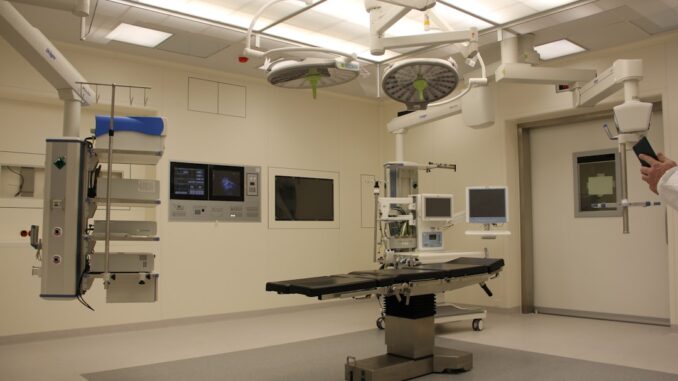

Artificial intelligence (AI) is revolutionizing pediatric perioperative care, offering innovative solutions to enhance safety, efficiency, and decision-making. By analyzing vast datasets, AI assists clinicians in predicting risks, personalizing anesthesia management, and streamlining surgical processes, ultimately improving patient outcomes.
Predictive Analytics in Pediatric Perioperative Care
AI’s ability to process and interpret large volumes of data enables the development of predictive models that identify patients at risk for perioperative complications. For instance, machine learning algorithms can analyze electronic health records to predict adverse events such as acute kidney injury (AKI) during surgery. A systematic review demonstrated that AI models could accurately predict AKI, achieving a sensitivity of 77% and specificity of 75%, allowing clinicians to implement preemptive measures to mitigate risks.
Similarly, AI models have been developed to predict pediatric cardiac arrest by analyzing electronic health records. These models capture complex temporal and contextual patterns, providing robust risk estimates and identifying clinically meaningful risk factors, thereby enhancing early detection and intervention strategies.
Healthcare data growth can be overwhelming scale effortlessly with TrueNAS by Esdebe.
Personalized Anesthesia Management
Personalizing anesthesia management is crucial in pediatric care due to the physiological differences between children and adults. AI facilitates this by tailoring anesthesia plans to individual patient profiles, considering factors such as age, weight, and comorbidities. Machine learning models can predict optimal drug dosages and monitor anesthetic depth, ensuring safety and efficacy.
For example, researchers at Johns Hopkins All Children’s Hospital developed machine learning models to refine the screening of pediatric patients classified as low risk for adverse anesthesia effects. These models offer a more individualized and comprehensive assessment, moving beyond population-based estimates to enhance patient safety.
Operational Efficiency and Workflow Optimization
AI contributes to operational efficiency by optimizing surgical scheduling, resource allocation, and postoperative care. Predictive models can forecast surgical cancellations, enabling better resource management and reducing delays. Additionally, AI-powered tools assist in postoperative monitoring, identifying early signs of complications and facilitating timely interventions.
In pediatric anesthesia, AI applications are being developed for operating room management, airway assessment, intraoperative monitoring, and postoperative care. These tools show promise in predicting surgical cancellations, difficult airways, hypoxia, and optimal intubation parameters, thereby enhancing overall surgical efficiency.
Challenges and Ethical Considerations
Despite the promising applications, integrating AI into pediatric perioperative care presents challenges. The lack of pediatric-specific data and tailored algorithms can limit the effectiveness of AI models, as adult models are often unsuitable for children. Ensuring data privacy, obtaining informed consent, and addressing potential biases are essential to maintain trust and equity in AI applications.
Rigorous research and ethical application are crucial to ensure that AI tools are safe, effective, and equitable. As AI continues to evolve, ongoing evaluation and adaptation will be necessary to address emerging challenges and optimize its benefits in pediatric perioperative care.
Conclusion
AI is poised to transform pediatric perioperative care by providing tools that enhance predictive capabilities, personalize anesthesia management, and improve operational efficiency. While challenges remain, the potential benefits of AI integration are substantial, offering a pathway to safer and more effective pediatric surgical care.
The potential for AI to streamline surgical processes is exciting. Could AI-driven simulations be used to train surgeons on rare pediatric cases, improving preparedness and outcomes in critical situations?
That’s a fantastic point! AI-driven simulations for training on rare pediatric cases have incredible potential. By providing realistic, risk-free environments, we can significantly improve surgeons’ preparedness and confidence. I wonder how quickly we can gather enough data to make the simulations effective.
Editor: MedTechNews.Uk
Thank you to our Sponsor Esdebe
The discussion of AI’s role in predicting risks is compelling. How can we ensure diverse pediatric populations are adequately represented in the datasets used to train these AI models, mitigating potential biases and ensuring equitable predictive accuracy across all demographics?
That’s such an important question! Ensuring diverse pediatric representation is critical. One potential approach is collaborative data sharing initiatives across hospitals and research institutions. By pooling data from various sources, we can build more comprehensive and representative datasets, ultimately leading to more equitable and accurate AI models for all children. What are your thoughts on that?
Editor: MedTechNews.Uk
Thank you to our Sponsor Esdebe
The potential for AI to personalize anesthesia is intriguing. Considering the variability in pediatric physiology, how adaptable are these AI models to account for the dynamic changes within a single patient during a prolonged surgical procedure?
That’s a really insightful question! The adaptability of AI models to real-time physiological changes during surgery is a key area of development. Feedback loops incorporating continuous patient monitoring data are being explored to dynamically adjust anesthesia delivery. This could lead to more stable and predictable outcomes, especially in long procedures. Food for thought!
Editor: MedTechNews.Uk
Thank you to our Sponsor Esdebe
The discussion around streamlining surgical processes is compelling. Exploring AI’s potential in optimizing postoperative pain management protocols, specifically tailored to individual pediatric needs, could further enhance recovery and reduce reliance on opioids.
That’s a great point! Optimizing postoperative pain management is a key area. I agree that using AI to tailor pain management specifically to individual pediatric needs is an important step. This could significantly reduce the reliance on opioids and improve overall recovery experiences for children. Lets keep the discussion going!
Editor: MedTechNews.Uk
Thank you to our Sponsor Esdebe
AI predicting surgical cancellations? Finally, a digital scapegoat for when my coffee runs late and I miss that 7 AM start. Seriously though, could this lead to more realistic expectations around scheduling for families too?
That’s a great point about managing expectations! AI could provide data-driven insights into potential delays, leading to more transparent and proactive communication with families. Imagine personalized updates based on real-time data, helping to ease anxiety on surgery days.
Editor: MedTechNews.Uk
Thank you to our Sponsor Esdebe
Given the lack of pediatric-specific data highlighted, what strategies could be implemented to encourage the development and validation of AI models specifically tailored for pediatric perioperative care?
That’s a crucial point! Addressing the pediatric data gap requires a multi-pronged approach. Beyond collaborative data sharing, incentivizing research grants specifically for pediatric AI model development and fostering partnerships between AI developers and children’s hospitals could accelerate progress. We need bespoke solutions!
Editor: MedTechNews.Uk
Thank you to our Sponsor Esdebe
The ability of AI to predict AKI with reasonable accuracy is encouraging. How might AI-driven insights be integrated into existing clinical decision support systems to provide real-time alerts and recommendations to clinicians during pediatric surgeries?
That’s a fantastic question! Integrating AI-driven insights into clinical decision support systems could involve real-time dashboards displaying AKI risk scores. These systems could then automatically suggest guideline-based interventions, like fluid management adjustments, directly to the surgical team. What type of interventions do you think would be most effective?
Editor: MedTechNews.Uk
Thank you to our Sponsor Esdebe
The application of AI in predicting surgical cancellations for resource management is interesting. How could AI assist in optimizing the allocation of specialized pediatric staff across different surgical units to improve efficiency and reduce staff burnout?
That’s a great question! AI could analyze historical data on surgical volume and complexity to predict staffing needs in each unit. Imagine AI suggesting staff rotations or cross-training programs to ensure the right expertise is always available, and to give staff exposure to new areas, to help prevent burnout!
Editor: MedTechNews.Uk
Thank you to our Sponsor Esdebe