
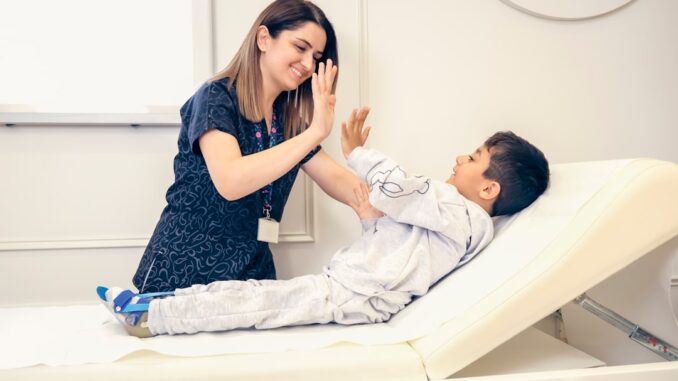

The world of pediatric care, once anchored in traditional diagnostic and treatment methods, has truly exploded with innovation over the past few years. It’s not just incremental steps we’re seeing; we’re talking about a full-blown transformation, a seismic shift in how we approach the health and well-being of our youngest, most vulnerable patients. From decoding the very blueprint of life through genetic research to harnessing the almost magical power of artificial intelligence, these advancements aren’t just improving outcomes, they’re fundamentally reshaping what’s possible in children’s medicine. You really can’t overstate the impact.
Think about it for a moment: we’re talking about a field that continuously strives to give every child the healthiest start, the best possible chance at a vibrant future. And boy, are we making strides. It’s an exciting, sometimes daunting, but ultimately incredibly hopeful time to be involved in pediatric healthcare, wouldn’t you say?
Unlocking Life’s Code: Genetic Breakthroughs in Pediatric Care
Secure patient data with ease. See how TrueNAS offers self-healing data protection.
The impact of genetic research on pediatric care is nothing short of revolutionary, offering insights into conditions that once mystified clinicians and families alike. For so long, many pediatric illnesses felt like a roll of the dice, a cruel mystery. Not anymore, or at least, not as often. We’re finally pulling back the curtain on some of these intricate biological puzzles.
Take congenital adrenal hyperplasia (CAH), for instance, a group of inherited disorders affecting the adrenal glands. Early studies often focused on symptomatic management, but with deeper genetic understanding, we’ve developed more nuanced, preventative, and ultimately more effective strategies for managing CAH. We can now pinpoint specific genetic mutations, allowing for earlier, sometimes even prenatal, diagnosis and more precise treatment plans, which often dramatically improve long-term patient outcomes. It’s about more than just treating symptoms; it’s about proactively managing the disease from its earliest stages, reducing the burden on these kids as they grow up.
But that’s really just one example. The realm of genetic screening, for instance, has expanded dramatically. Newborn screening panels, once limited to a handful of conditions like Phenylketonuria (PKU), now encompass dozens of metabolic, endocrine, and genetic disorders. Every tiny heel prick holds the potential to unlock vital information, enabling early intervention that can prevent severe intellectual disabilities, chronic illness, or even save lives. Imagine a child whose life is completely altered because a simple test caught spinal muscular atrophy (SMA) at birth, allowing them to access life-changing gene therapy before symptoms even manifest. That’s not science fiction; that’s happening right now, today. It’s truly amazing when you consider how far we’ve come.
Then there’s the exciting, albeit ethically complex, frontier of gene editing technologies like CRISPR-Cas9. While still largely in research phases for many conditions, the promise here is immense. Imagine correcting the faulty gene responsible for sickle cell disease or Duchenne muscular dystrophy, not just managing the symptoms, but actually fixing the underlying cause. We’re seeing early clinical trials, and the potential, though tempered with caution, is palpable. It’s a bit like having a powerful editing tool for life’s instruction manual, something we couldn’t have even dreamt of a couple of decades ago.
Moreover, pharmacogenomics is quietly transforming how we prescribe medications for children. Children aren’t just ‘small adults,’ and their bodies metabolize drugs differently. By analyzing a child’s unique genetic makeup, we can predict how they’ll respond to certain medications, tailoring dosages to maximize efficacy and minimize adverse reactions. This means less trial-and-error, fewer side effects, and more personalized, safer care, particularly crucial for vulnerable populations like neonates or those undergoing chemotherapy. It’s a very smart way to do medicine, isn’t it?
And for families grappling with rare diseases, often enduring years on a ‘diagnostic odyssey’ without answers, whole-exome and whole-genome sequencing have become beacons of hope. Getting a definitive diagnosis, even if there isn’t yet a cure, can bring immense relief and open doors to supportive therapies, clinical trials, or simply connecting with other families facing similar challenges. I recall a conversation with a parent whose child had suffered from unexplained seizures for years. When genetic sequencing finally revealed a specific, ultra-rare condition, the mother simply said, ‘It’s heartbreaking, but at least now we know what we’re fighting.’ That clarity is invaluable.
The Immune System Unleashed: Immunology’s Impact on Pediatric Health
The human immune system, that incredible, intricate defense network, is something we understand much better today, and this deepened understanding has profoundly reshaped pediatric health. It’s not just about fighting off sniffles and colds; it’s about preventing serious disease and even reprogramming the body to combat illnesses like cancer.
Let’s start with vaccines, because honestly, their impact is monumental. If you ask me, vaccines are probably humanity’s greatest public health achievement, second only to clean water. They’ve fundamentally altered the landscape of childhood disease. Remember the days when polio crippled children or measles outbreaks regularly led to severe complications and even death? My own grandmother often spoke of her fear during polio season; it was a constant, looming threat. Those fears are largely consigned to history, thanks to widespread vaccination programs. The development of newer vaccines against diseases like HPV, rotavirus, and meningococcal disease has continued this trajectory, shifting epidemiology and saving countless young lives. They don’t just protect the individual child; they build herd immunity, creating a protective shield for the entire community, especially those too young or too unwell to be vaccinated themselves. That said, we can’t ignore the ongoing challenge of vaccine hesitancy; effective communication and trust-building are more important than ever to maintain these hard-won gains.
Beyond prevention, immunotherapies are revolutionizing how we treat existing diseases. Consider pediatric oncology, a field where hope has been tragically thin for certain cancers. CAR T-cell therapy, for example, has emerged as a true game-changer for children with relapsed or refractory acute lymphoblastic leukemia (ALL). This incredible therapy involves extracting a child’s T-cells, genetically engineering them to recognize and attack cancer cells, and then infusing them back into the patient. It’s literally re-educating the immune system to become a powerful, living drug. The stories of remission, after conventional treatments have failed, are nothing short of miraculous.
Similarly, advancements in our understanding of immune dysregulation have led to targeted biologics and immunomodulators for various autoimmune conditions prevalent in childhood, such as juvenile idiopathic arthritis (JIA) or Crohn’s disease. These therapies specifically target inflammatory pathways, offering significant symptom control and preventing long-term damage that traditional, broader immunosuppressants couldn’t achieve without more severe side effects. We’re also seeing innovative approaches to managing severe allergies and asthma, with monoclonal antibodies offering relief to children whose conditions were previously very difficult to control, making a real difference in their quality of life.
And it’s not just about treatment. Our ability to diagnose primary immunodeficiencies – conditions where a child’s immune system is inherently flawed – has also improved dramatically. Early detection means earlier intervention with therapies like immunoglobulin replacement or even bone marrow transplantation, giving these children a fighting chance at a relatively normal life. It really demonstrates the incredible interplay between research, diagnosis, and treatment, doesn’t it?
The Digital Frontier: Technological Innovations in Pediatric Medicine
Technology, once a futuristic concept, is now deeply embedded in the daily fabric of pediatric care, enhancing everything from routine check-ups to life-saving interventions. Honestly, it’s difficult to imagine practicing modern medicine without it.
Transforming Access with Telehealth
Perhaps one of the most visible shifts, accelerated by the recent pandemic, is the widespread adoption of telemedicine. It’s far more than just a video call with a doctor; it’s a comprehensive ecosystem designed to bridge gaps in healthcare access. For families in remote or underserved areas, a specialist consultation that once required hours of travel, missed school, and lost wages can now happen from the comfort of their home. But its benefits extend beyond just geographical barriers. Telehealth now facilitates mental health support for adolescents struggling with anxiety or depression, a critical need that’s only grown over the last few years. It enables remote monitoring for children with chronic conditions like diabetes or asthma, allowing clinicians to track blood glucose levels or lung function data in real-time and intervene proactively, preventing hospitalizations. We even see virtual urgent care services, offering parents peace of mind for minor ailments without a stressful trip to the emergency room. Of course, you do lose the nuance of a physical exam sometimes, but for many situations, the convenience and accessibility far outweigh that limitation. It’s a fundamental part of the toolkit now.
Artificial Intelligence and Machine Learning: The Clinical Superpowers
The integration of artificial intelligence (AI) and machine learning (ML) into pediatric diagnostics and treatment planning is nothing short of astounding. This isn’t just about faster analysis; it’s about unlocking patterns and making predictions that human clinicians simply couldn’t, given the sheer volume of data. For instance, in radiology, AI algorithms can analyze countless X-rays, CT scans, and MRIs with incredible speed and accuracy, often identifying subtle anomalies like early signs of pneumonia or even tiny fractures that might be missed by the fatigued human eye. In the neonatal intensive care unit (NICU), AI-powered predictive analytics can monitor vital signs and lab results, identifying early markers for sepsis or other critical illnesses, sometimes hours before clinical symptoms become apparent. This early warning system can literally be the difference between life and death for fragile newborns. We’re seeing AI assist in drug discovery, rapidly sifting through molecular compounds to identify potential new therapies for childhood cancers or rare diseases, dramatically accelerating a process that traditionally took decades. And when it comes to personalized treatment, AI can analyze a child’s comprehensive medical history, genetic profile, and response to previous therapies to recommend optimal treatment pathways, taking the guesswork out of complex decisions. Naturally, ethical considerations around data privacy and algorithmic bias are paramount; we need to ensure these powerful tools are used responsibly and equitably.
Wearables, Robotics, and 3D Printing: Beyond the Clinic Walls
The technological revolution doesn’t stop there. Wearable devices and remote monitoring tools are empowering children and their families to become active participants in their own healthcare. Continuous glucose monitors for children with Type 1 diabetes, smart inhalers that track medication usage for asthmatic kids, or even pulse oximeters that parents can use at home to monitor a child with a respiratory condition—these devices provide real-time data, foster better self-management, and reduce the need for frequent, intrusive clinic visits. It’s all about putting health management back into the hands of families, a truly empowering shift.
Robotics, too, is carving out a niche. Robotic-assisted surgery, while more common in adult procedures, is making inroads into complex pediatric operations, offering greater precision and minimally invasive options, leading to faster recovery times for our little ones. Therapeutic robots are even being explored to assist children with developmental disorders like autism, providing structured interaction and support in a non-threatening way. And then there’s 3D printing, an absolute marvel. Surgeons can now print exact, three-dimensional models of a child’s complex heart anomaly or a tumor, allowing them to meticulously plan intricate operations, reducing surgical time and improving outcomes. It’s also enabling custom-fitted prosthetics that can be rapidly and affordably adapted as a child grows, alongside bespoke medical devices tailored precisely to a child’s unique anatomy. The imagination is really the only limit here.
Navigating the Road Ahead: Challenges and Future Directions
While the current landscape of pediatric care sparkles with innovation and promise, we’d be remiss not to acknowledge the significant challenges that lie ahead. The path to a healthier future for all children isn’t perfectly smooth; it’s got its share of bumps, steep climbs, and even chasms.
Bridging the Divide: Health Disparities and Equitable Access
One of the most pressing concerns is ensuring that these groundbreaking advancements don’t exacerbate existing health disparities. It’s a harsh truth, but access to cutting-edge genetic therapies, advanced immunotherapies, or even reliable telehealth services often correlates directly with socioeconomic status, geographical location, and racial background. The ‘digital divide,’ for instance, means that families without stable internet access or appropriate devices can’t fully benefit from telehealth, even if the service is available. And let’s be frank, a single dose of gene therapy can cost millions of dollars. How do we ensure that such life-changing treatments aren’t solely the domain of the privileged few? It’s a massive societal question, requiring robust policy interventions, innovative funding models, and a deliberate focus on building infrastructure and educational initiatives in underserved communities. We simply can’t let these incredible leaps forward become yet another source of inequality.
The Human Factor: Workforce Shortages and Mental Health Crisis
Beyond access to technology, we face a critical shortage of pediatric specialists—from neonatologists to child psychiatrists. This isn’t a new problem, but it’s one that’s getting worse, particularly in rural areas. And intertwined with this is the escalating mental health crisis among children and adolescents. The pandemic laid bare existing vulnerabilities, and we’re now seeing unprecedented levels of anxiety, depression, and other mental health challenges. Addressing this requires not just more specialized professionals, but integrated care models where mental health support is seamlessly woven into general pediatric practice. It’s about treating the whole child, not just the physical symptoms.
Ethical Quandaries and Data Security
With powerful technologies come complex ethical dilemmas. Gene editing raises questions about ‘designer babies’ and the long-term, unforeseen consequences of altering the human germline. The vast amounts of data collected by AI and wearables bring legitimate concerns about data privacy, security, and the potential for misuse. Who owns a child’s genetic data? How do we ensure algorithms are unbiased and fair across diverse populations? These aren’t easy questions, and they demand careful, public discourse involving clinicians, ethicists, policymakers, and families.
A Vision for the Future: Collaboration, Prevention, and Global Health
Looking ahead, the future of pediatric care will undoubtedly hinge on several key pillars. Firstly, interdisciplinary collaboration will be absolutely essential. No single specialist or discipline holds all the answers. The best outcomes will come from teams comprising doctors, nurses, genetic counselors, social workers, therapists, nutritionists, and even data scientists, all working together, synergistically. It’s a team sport, after all. Secondly, there needs to be a continued, even greater, emphasis on preventive care and health promotion. While amazing, reactive treatments are vital, preventing disease in the first place, or catching it incredibly early, will always be the gold standard. This means investing in early childhood interventions, addressing social determinants of health, and fostering healthy lifestyles from infancy.
Finally, we have a global responsibility. These incredible advancements in high-income countries mustn’t overshadow the ongoing battles against preventable pediatric killers like malnutrition, diarrheal diseases, and malaria in low-income settings. Extending these innovations and basic care to all corners of the globe remains a monumental, yet absolutely crucial, endeavor. Ultimately, the next frontier for personalized medicine won’t just be about genetics, but integrating a child’s entire environmental, lifestyle, and even microbiome data to create truly holistic, predictive health profiles. That’s a truly exciting prospect, don’t you think?
In summation, the field of pediatric care is not merely evolving; it’s dynamically transforming at an exhilarating pace. The dedicated individuals working tirelessly in research labs, clinics, and hospitals worldwide are truly making a healthier, brighter future for children a tangible reality. But it’s a journey that demands continued, fervent research, unwavering ethical consideration, and robust collaboration across all sectors. Our collective responsibility now is to ensure these incredible advancements don’t just exist but are harnessed fully and equitably, touching the lives of every child, no matter where they are born or what their circumstances might be. We owe them nothing less.
The potential of AI in radiology for early detection is impressive. How can we ensure the datasets used to train these algorithms are diverse enough to accurately identify subtle anomalies across different ethnicities and demographics, thus avoiding biased outcomes?