
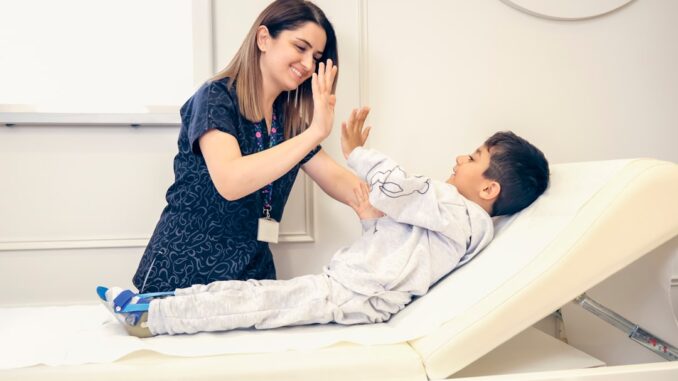

Revolutionizing Pediatric Emergency Care: A Deep Dive into Tomorrow’s Lifesaving Advancements
It’s a challenging space, isn’t it? Pediatric emergency care. You’re dealing with tiny, vulnerable patients who often can’t articulate what’s wrong, and their physiology is just so different from adults. Every second, it feels, carries immense weight. But what if I told you that the landscape of pediatric emergency medicine is undergoing a profound transformation, propelled by a wave of innovation that’s genuinely exciting? Recent research, frankly, has unveiled some truly groundbreaking advancements, promising to significantly enhance the quality and sheer efficiency of treatment for children caught in critical situations. We’re talking about a future where faster, more accurate diagnoses lead directly to better outcomes, and that’s something worth getting enthusiastic about.
The Diagnostic Revolution: AI and Point-of-Care Redefine Speed
Perhaps one of the most talked-about shifts, and for good reason, is the increasingly sophisticated integration of artificial intelligence into diagnostic processes. Think about it: our emergency departments are often chaotic hubs, especially when a seriously ill child arrives. Time is a luxury we don’t often have. Enter AI. These intelligent algorithms aren’t just processing data; they’re dissecting complex imaging scans with a speed and, crucially, an accuracy that can often outpace even the most experienced human eye. You see, AI has already demonstrated incredible proficiency in zeroing in on conditions like subtle fractures, the elusive pneumothorax, or various pulmonary diseases, pulling insights from X-rays, CT scans, and MRIs. It’s not magic, but it certainly feels close sometimes.
Secure patient data with ease. See how TrueNAS offers self-healing data protection.
For instance, imagine a child presenting after a fall. A tiny hairline fracture, easily missed in the rush, might be flagged almost instantly by an AI system. This technological leap doesn’t just expedite the diagnostic process; it also significantly whittles down the potential for human error, paving the way for far more precise, and ultimately, more effective treatment plans. And it’s not just about images. There are fascinating developments like the ‘iMedic’ project, exploring smartphone-based self-auscultation tools powered by AI for pediatric respiratory assessment. Picture a device that could help parents or even paramedics quickly assess a child’s breathing sounds, providing an early alert for conditions like asthma exacerbations or pneumonia. The implications for remote care and early intervention are, well, frankly enormous.
The Rise of Rapid Bedside Diagnostics
Similarly, point-of-care testing (POCT) technologies have seen a phenomenal surge in advancements. We’re talking about devices that deliver incredibly fast and accurate results right at the bedside, bypassing the often-lengthy trip to a central lab. No more waiting an hour for critical blood work. New handheld analyzers and compact cartridge systems can now perform diagnostics for conditions like influenza, respiratory syncytial virus (RSV), and even complex blood gas analyses in mere minutes. I’ve heard clinicians recount stories where these immediate insights have allowed them to switch treatment gears almost instantly, averting potential crises. This immediacy is absolutely pivotal in emergency settings; when a child’s condition can deteriorate so rapidly, every single second truly does count.
Consider a child struggling to breathe. Is it RSV? Flu? Knowing quickly allows for targeted antiviral therapy, appropriate isolation, or even a decision on ventilation much sooner. This isn’t just about speed, either. It’s about reducing the ‘diagnostic odyssey,’ minimizing the child’s discomfort from repeated blood draws, and giving clinicians a comprehensive picture of the patient’s physiological state without delay. Honestly, it’s a game-changer for critical care scenarios.
Pioneering Treatment Protocols: A New Era of Intervention
The advancements aren’t stopping at diagnostics. The very way we approach treatment in pediatric emergencies is evolving, driven by rigorous research and a commitment to evidence-based practice. The Pediatric Emergency Care Applied Research Network (PECARN), a veritable powerhouse in this field, has been at the forefront, conducting influential, multi-center studies designed to fine-tune how clinicians diagnose and treat critically ill and injured children. They’re making a real difference, you know?
One such particularly exciting study, the IMPACT-ED trial, has been piloting the innovative use of intravenous magnesium sulfate in emergency departments specifically for children battling severe asthma. If you’ve ever witnessed a child struggling through an asthma attack, you know how terrifying it can be for everyone involved. IV magnesium, it’s thought, can help relax the smooth muscles in the airways, reducing bronchospasm. The study is diligently exploring whether this intervention can significantly reduce hospitalization rates, ease symptoms faster, and ultimately, improve overall outcomes for these vulnerable pediatric asthma patients. Imagine a world where a severe asthma attack in an ED doesn’t automatically mean an inpatient admission; that’s the kind of impact PECARN is aiming for, and frankly, I’m optimistic.
POCUS: The Clinician’s New Set of Eyes
Alongside these pharmacological advancements, the evolution of point-of-care ultrasonography (POCUS) has become nothing short of integral to pediatric acute care. What started as a tool primarily for evaluating undifferentiated shock states or assessing for abdominal free fluid in trauma resuscitation has exploded in its application. POCUS now allows for thoracic assessments, looking for things like pneumothorax or pleural effusions, right there at the bedside. Clinicians can perform hemodynamic assessments, checking cardiac function and fluid status in real-time, guiding resuscitation efforts with unparalleled precision. Neurologic applications are expanding too, assessing for intracranial pressure changes or guiding lumbar punctures, which, let’s be honest, can be tricky business in a squirming child.
And yes, even ocular assessments are now within POCUS’s purview, looking for retinal detachment or foreign bodies. This incredible expansion allows for far more comprehensive, dynamic evaluations, facilitating timely and incredibly accurate interventions without having to move a critically ill child to a radiology suite. It’s essentially giving emergency physicians an immediate, non-invasive internal view of their patient, which, in the chaos of an emergency, is an invaluable asset. However, it does require significant training and skill, something we can’t overlook when we champion its widespread adoption.
Prioritizing Patient Safety: A Collective Endeavor
Patient safety, as you might expect, remains an absolutely paramount concern in pediatric emergency care. It’s not just about diagnosing and treating; it’s about doing so in the safest possible environment, minimizing risks, and ensuring optimal care pathways. Recent joint recommendations from three giants in the field—the American College of Emergency Physicians (ACEP), the American Academy of Pediatrics (AAP), and the Emergency Nurses Association (ENA)—really underscore this commitment.
These guidelines go beyond just a general nod to safety. They emphasize concrete, evidence-based practices and comprehensive quality improvement plans. They’re particularly focused on children and, very importantly, disaster preparedness. You can’t just throw a few blankets and some juice boxes into a corner and call it ‘pediatric ready’ during a mass casualty event, can you? These guidelines aim to standardize care delivery, establish robust best practice benchmarks, and frankly, strengthen pediatric patient safety efforts across every emergency department, from the smallest rural clinic to the largest urban trauma center. We’re talking about appropriate equipment sizing, medication dosing protocols specific to children, specialized training for staff, and robust communication strategies when families are at their most vulnerable.
The Imperative of Pediatric Readiness
Furthermore, a recent study highlighted by Children’s National Hospital throws into stark relief the critical need for pediatric readiness in all emergency departments. The findings are sobering, yet incredibly motivating: improving preparedness across the board could prevent the deaths of over 2,100 children annually. And here’s the kicker – this could be achieved with minimal costs. Think about that for a second. More than 2,100 lives, potentially saved each year, just by ensuring EDs are adequately equipped, staffed, and trained to handle pediatric emergencies. It’s a powerful argument, isn’t it? It absolutely underscores the moral and practical importance of investing in pediatric emergency care, not just to save lives, but to significantly improve long-term outcomes for those children who survive.
Pediatric readiness isn’t some abstract concept. It means having the right size equipment—a tiny endotracheal tube versus an adult one, for example. It means having staff who are regularly trained in pediatric resuscitation, knowing the specific drug dosages for children by weight, and understanding the nuances of communicating with anxious parents. It means having protocols for managing pediatric pain effectively, which is often very different from adult pain management. It’s a holistic approach, and frankly, it’s non-negotiable if we truly value the lives of our youngest patients.
Navigating the Future: Challenges and Opportunities
While the advancements are thrilling, we can’t pretend that the path ahead is entirely smooth. Challenges certainly persist. Funding, for one, is always a concern. Implementing new technologies like AI and advanced POCT, and ensuring widespread staff training for POCUS or new protocols, requires significant investment. Then there’s the issue of equitable access. Not every community, especially rural ones, will have immediate access to these cutting-edge tools or highly specialized pediatric emergency expertise. We need to bridge that gap.
Another hurdle is the sheer pace of technological evolution. How do we ensure healthcare professionals stay current with the latest devices, algorithms, and evidence-based guidelines? Continuous education and robust professional development programs are absolutely key. Furthermore, with AI, ethical considerations around data privacy, algorithmic bias, and ultimately, accountability, become increasingly important. We want these tools to augment human care, not replace critical human judgment.
Glimpses of What’s Next
Looking ahead, I believe we’ll see even more integration of telemedicine and virtual care, particularly for pediatric emergencies in remote areas. Imagine specialists consulting virtually, guiding local providers through complex cases. Personalized medicine, tailored to a child’s unique genetic makeup and physiological responses, isn’t a pipe dream either; it’s slowly but surely becoming a reality. And don’t discount the power of virtual reality (VR) and augmented reality (AR) for training. Imagine a pediatric emergency physician practicing a rare, high-stakes procedure in a realistic VR environment before ever touching a real patient. The potential for enhancing competency and reducing errors is immense.
Conclusion
The landscape of pediatric emergency care isn’t just changing; it’s undergoing a profound renaissance, driven by brilliant minds, technological innovations, and a collective, unwavering commitment to enhancing patient safety. As these advancements continue to unfold, healthcare providers across the globe are becoming better equipped—more nimble, more precise, and more confident—in their ability to meet the unique and often urgent needs of pediatric patients. We’re moving towards a future where children in critical situations receive not just timely care, but the most effective, safest, and most cutting-edge interventions available. It’s a future where more children survive, thrive, and leave the emergency department to return to their families. And frankly, that’s a future worth investing in, wouldn’t you agree?
References
- ‘Advances in Pediatric Emergency from 2023.’ PubMed. pubmed.ncbi.nlm.nih.gov
- ‘Advancements in Point-of-Care Testing.’ PEPID Pulse. blog.pepid.com
- ‘iMedic: Towards Smartphone-based Self-Auscultation Tool for AI-Powered Pediatric Respiratory Assessment.’ arXiv. arxiv.org
- ‘Advances in Point-of-Care Ultrasound in Pediatric Acute Care Medicine.’ PubMed. pubmed.ncbi.nlm.nih.gov
- ‘Advances and Challenges in Pediatric Emergency and Critical Care: A Clinical Overview.’ PrimePeer Publishing. primepeerpublishing.org
- ‘Improving Pediatric Emergency Care: New Insights from PECARN.’ Emergency Medical Services for Children Innovation and Improvement Center. emscimprovement.center
- ‘New Recommendations on Emergency Care for Children.’ American College of Emergency Physicians. emergencyphysicians.org
- ‘Study: Investment in Pediatric Emergency Care Could Save Over 2,100 Lives Annually.’ GlobeNewswire. globenewswire.com
- ‘Michigan Medicine Elevates Pediatric Emergency Care on the National Stage.’ University of Michigan Medical School. medresearch.umich.edu
Be the first to comment