
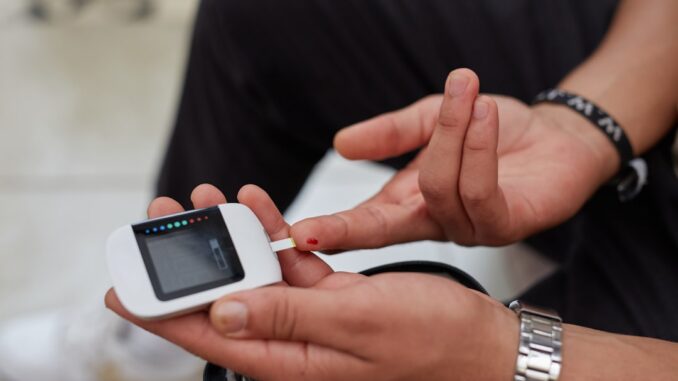

For far too long, diabetes management has felt a bit like navigating a ship with only a compass and a map drawn yesterday. We’ve relied heavily on traditional metrics—daily insulin doses, fasting glucose numbers, the occasional HbA1c—which, while foundational, often provide a snapshot rather than a continuous, unfolding narrative. It’s a chronic condition affecting millions globally, and for those living with it, the relentless daily calculus of food, activity, and medication can be exhausting. Many conventional approaches, honestly, can miss the forest for the trees, hyper-focusing on immediate glucose values without fully appreciating the symphony of other factors at play. But what if we could predict the weather on that ship, not just react to the storms as they break? What if we could see the currents before they pull us off course? That’s precisely where GluMarker steps in, offering a genuinely groundbreaking framework that harnesses digital biomarkers to predict and manage blood glucose levels with an unprecedented degree of effectiveness.
Healthcare data growth can be overwhelming scale effortlessly with TrueNAS by Esdebe.
The Shifting Sands of Diabetes Management: Why a New Approach Was Needed
Think about the typical diabetes journey. It’s often marked by a reactive cycle: measure glucose, administer insulin, eat, measure again, adjust. Patients meticulously log meals, exercise, and drug usage, trying to discern patterns. Healthcare providers then review these logs, perhaps every few months, making adjustments based on historical data. While this system has saved countless lives, it’s inherently limited. It’s like driving by looking only in the rearview mirror. You can see where you’ve been, but not necessarily what’s coming around the bend.
Traditional methods, frankly, often struggle with the sheer dynamism of human physiology. Blood glucose isn’t a static number; it’s a constantly fluctuating variable, influenced by everything from stress to sleep quality, hydration, even the time of day you eat a particular food. Relying primarily on a patient’s self-reported food diary, which, let’s be real, can sometimes be more aspirational than accurate, or just their insulin pump data, means we’re only seeing fragments of a much larger, intricate puzzle. We weren’t just missing pieces; we were often using the wrong kind of glue to hold the available pieces together. GluMarker, however, changes the game by pulling in a much wider array of data sources, not just the usual suspects. It’s looking at dietary intake, yes, but also continuous physical activity levels, sleep patterns, stress indicators, and, of course, insulin usage—synthesizing all of it. This comprehensive approach directly addresses the shortcomings of previous, more siloed models, creating a more holistic, predictive canvas of an individual’s glycemic control. For someone like my uncle, who’s been battling Type 2 for decades, the idea of having a system that actually learns his body’s unique rhythms, rather than just reacting to them, well, it’s nothing short of revolutionary.
Peeling Back the Layers: The Science Powering GluMarker
At its very core, GluMarker isn’t some magic black box; it’s a sophisticated application of machine learning. Specifically, it employs advanced deep learning models, often recurrent neural networks (RNNs) or transformer architectures designed to excel at processing time-series data. This allows the framework to make sense of the complex, temporal relationships inherent in health data. It processes both continuous and discrete features, and this dual approach is really what sets it apart. Continuous data, you see, flows constantly—think glucose readings from a Continuous Glucose Monitor (CGM) every five minutes, insulin dosages delivered by a smart pump, heart rate from a wearable, step counts throughout the day. These are streams of numbers, constantly updating, constantly providing context.
Then you have the discrete digital biomarkers, which are often derived from these continuous inputs or are distinct, categorical events. Imagine your CGM data. Instead of just seeing raw numbers, GluMarker might calculate your glucose variability, the rate of glucose change after a meal, or the frequency of nocturnal hypoglycemia. These aren’t raw readings; they’re insights extracted from the raw readings. Discrete inputs could also be specific meal types (e.g., ‘high carb Italian dinner’), exercise duration and intensity (e.g., ’30-minute brisk walk’), medication adherence, or even self-reported stress levels. The beauty here is that the machine learning model isn’t just crunching numbers; it’s learning the meaning behind those numbers, understanding how an evening workout impacts overnight glucose, or how a particularly stressful morning might blunt insulin sensitivity later in the day.
Furthermore, the integration of these diverse features happens through what’s called a cross-attention mechanism. Now, this is a bit technical, but think of it this way: when you’re trying to understand a complex situation, you pay attention to different pieces of information at different times, weighing some more heavily than others. A cross-attention mechanism does something similar for the model. It allows the AI to dynamically emphasize the most relevant information at any given moment for accurate predictions. For instance, if you’ve just eaten a carb-heavy meal, the model might ‘pay more attention’ to your bolus insulin and the specific carbohydrate count. If you’re exercising, it shifts its focus to your physical activity data and basal insulin. This isn’t just processing data; it’s intelligent data processing, identifying non-obvious correlations and giving critical inputs the weight they deserve. It’s a far cry from a simple regression analysis, capable of uncovering patterns that would be invisible to the human eye, no matter how skilled the clinician.
Unlocking the Secrets: Key Digital Biomarkers Identified
Through its rigorous analysis, GluMarker has shone a spotlight on several critical digital biomarkers that significantly influence glycemic control. These aren’t just arbitrary data points; they’re deeply insightful metrics that paint a much clearer picture of what’s happening inside a person’s body. And honestly, for anyone looking for that edge in managing their health, these insights are gold.
The Power of Prior-Day Context: Time in Range and Time Above Range
Perhaps most notably, the framework has highlighted prior-day time in range (TIR) and time above range (TAR) as exceptionally strong predictors of next-day glycemic control. Now, if you’re not deeply familiar with diabetes jargon, TIR refers to the percentage of time a person’s glucose levels remain within their target healthy range (typically 70-180 mg/dL). TAR, conversely, is the time spent with glucose levels above that range. Why is this historical context so powerful? It’s simple, really. Your body doesn’t hit a reset button at midnight. The metabolic events, insulin sensitivity, and glucose patterns from today profoundly impact tomorrow. If yesterday was a rollercoaster of highs and lows, there’s a higher probability that today will also present challenges. GluMarker leverages this trend analysis, understanding that consistent management over time builds stability, while erratic control can lead to ongoing fluctuations. It helps us move beyond merely correcting a high blood sugar now to preventing it tomorrow by understanding the root cause established by yesterday’s trends. It’s predictive intelligence at its finest.
Insulin: The Ever-Present Regulator
Beyond historical glucose patterns, insulin-related features remain absolutely pivotal. We’re talking about total daily basal and bolus insulin. Basal insulin is your background, continuous insulin; it keeps your glucose stable between meals and overnight. Bolus insulin is what you take for meals or to correct high blood sugar. GluMarker doesn’t just record these amounts; it analyzes their patterns and relationship to glucose trends, food intake, and activity. Has there been a consistent need for higher basal rates on certain days of the week? Does a particular meal consistently require more bolus than initially estimated? By understanding these nuances, the framework can guide both patients and healthcare providers in fine-tuning insulin regimens. It’s about optimizing the timing and dosage of insulin to match the body’s unique rhythms and needs, preventing both hypoglycemic (low blood sugar) and hyperglycemic (high blood sugar) events before they even start to brew. It’s like having a highly personalized, ever-learning insulin coach right in your pocket.
Beyond the Obvious: Exploring Other Key Indicators
But the insights don’t stop there. While TIR, TAR, and insulin are central, GluMarker’s comprehensive data integration allows it to consider a much broader spectrum of influences. For instance, consistent sleep patterns, especially adequate duration and quality, have a well-documented impact on insulin sensitivity. A restless night can throw off glucose control for the entire following day. Similarly, chronic stress, whether from work or personal life, can elevate cortisol levels, which in turn can increase blood glucose. GluMarker has the potential to correlate these seemingly disparate factors with glycemic outcomes, revealing subtle connections that might otherwise be missed. Imagine seeing a predictive warning that your glucose might run high tomorrow because your sleep tracker showed a particularly fragmented night. This level of personalized insight is where the true power lies, offering valuable guidance for tailoring management strategies that go beyond just counting carbs.
A New Dawn for Diabetes: Implications for Personalized Care
The advent of GluMarker isn’t just an incremental improvement; it marks a significant advancement, really a paradigm shift, in personalized diabetes care. For far too long, diabetes management has been a game of generalizations. Doctors provide guidelines, and patients try to fit their unique lives into those often rigid frameworks. But people aren’t algorithms, and no two cases of diabetes are exactly alike. This framework provides a predictive model that considers a truly comprehensive set of factors, empowering individuals to make informed, highly personal decisions about their health. Imagine a world where your device doesn’t just tell you your current blood sugar, but also offers a proactive suggestion: ‘Considering your activity today and last night’s restless sleep, you might want to slightly reduce your bolus for dinner to avoid a late-night low.’ That’s empowerment, isn’t it?
This approach doesn’t just enhance the precision of glycemic control; it also fosters a much-needed proactive stance in managing diabetes. Instead of reacting to highs or lows after they’ve already occurred, individuals can anticipate and potentially prevent them. This translates into fewer dangerous hypoglycemic episodes, less time spent in uncomfortable hyperglycemia, and ultimately, a reduced risk of long-term complications like neuropathy, retinopathy, and kidney disease. For healthcare providers, GluMarker offers an invaluable tool. During patient consultations, instead of sifting through fragmented paper logs or relying solely on memory, clinicians gain access to deeply analyzed trends and predictive insights. This means more productive appointments, data-driven adjustments to treatment plans, and a clearer understanding of a patient’s real-world challenges. It allows them to move from guesswork to precision, significantly reducing their administrative burden and allowing them to focus on the human element of care. The economic benefits are also quite compelling. Better glycemic control means fewer emergency room visits, fewer hospitalizations for complications, and a general reduction in the overall cost burden of diabetes on healthcare systems. It’s a win-win, truly.
The Road Ahead: Challenges and Future Horizons
While GluMarker offers undeniably promising capabilities, we’d be remiss not to acknowledge that the path forward isn’t entirely smooth. Like any innovative technology in healthcare, there are several significant challenges we’ll need to navigate. But don’t misunderstand me; these aren’t roadblocks, they’re opportunities for refinement and growth.
Ensuring Adaptability Across Diverse Populations
One of the primary hurdles lies in ensuring the model’s adaptability across incredibly diverse populations. Human physiology, lifestyle, and even genetic predispositions vary widely across different demographics. What works perfectly for a young, active individual in a high-income country might not translate directly to an older patient with multiple comorbidities in a lower-resource setting. We need larger, more representative datasets that capture the full spectrum of global diabetes experiences. This might involve adopting techniques like federated learning, where models are trained on decentralized datasets without the data ever leaving its source, ensuring privacy while still enhancing the model’s robustness and generalizability. It’s about making sure the AI isn’t just brilliant for a select few, but truly beneficial for everyone.
Seamless Integration into Existing Healthcare Systems
Integrating such a sophisticated framework seamlessly into existing healthcare systems presents its own unique set of complexities. We’re talking about interoperability—getting GluMarker to ‘talk’ to electronic medical records (EMRs), pharmacy systems, and other digital health platforms. There are technical hurdles, of course, but also significant regulatory and logistical ones. Gaining approvals from bodies like the FDA or CE Mark is a rigorous, lengthy process. Beyond that, clinician adoption and training are paramount. Doctors and nurses are already stretched thin; introducing a new tool, no matter how powerful, requires careful implementation, intuitive user interfaces, and comprehensive educational support. It can’t just be another piece of tech; it needs to be an integrated, valuable assistant.
Refining Model Accuracy and Expanding Applicability
Naturally, continuous refinement of the model’s accuracy is an ongoing pursuit. While current predictions are impressive, there’s always room to improve, especially in predicting rare but critical events, handling incomplete or noisy data, and extending the prediction horizon for longer-term planning. Future research should also focus on expanding GluMarker’s applicability to various demographics, including pediatric populations, pregnant women with gestational diabetes, and individuals with pre-diabetes who could benefit from early intervention. The potential for GluMarker to transition from a ‘predictive tool’ to a ‘prescriptive guide’—offering explicit recommendations rather than just forecasts—is also a tantalizing prospect.
Continuous Validation and Ethical Considerations
Moreover, continuous validation with real-world data will be absolutely essential to maintain the model’s relevance and effectiveness. Human health is dynamic, and what works today might need recalibration tomorrow. This demands an ongoing feedback loop, ensuring the model constantly learns and adapts. And let’s not overlook the critical ethical and privacy concerns. We’re dealing with highly sensitive personal health information. Robust data security protocols, transparent data usage policies, and strict adherence to patient consent are non-negotiable. We must also guard against algorithmic bias, ensuring the model doesn’t inadvertently disadvantage certain groups. Responsible AI deployment isn’t just a buzzword; it’s a fundamental responsibility.
User Experience and Accessibility
Finally, the best technology in the world is useless if people can’t or won’t use it. The user experience (UX) must be intuitive, easy to understand, and not overwhelming. Diabetes management is already stressful; the tool should alleviate that, not add to it. And what about accessibility? We need to ensure that such advanced tools don’t become the exclusive domain of the tech-savvy or the wealthy. Equity of access and affordability will be key to realizing GluMarker’s full potential on a global scale.
Stepping into Tomorrow: The Broader Digital Health Revolution
Ultimately, GluMarker isn’t just about diabetes; it’s a powerful emblem of the larger digital health revolution unfolding before our eyes. It embodies the shift towards truly personalized medicine, leveraging artificial intelligence and vast datasets to create ‘digital twins’ of individual health. Imagine a world where preventative care isn’t just a hopeful ideal, but a data-driven reality, where chronic conditions are managed with unprecedented precision and foresight. This technology represents a significant leap from reactive treatment to proactive prevention, pushing the boundaries of what’s possible in healthcare. It’s an exciting time to be in health tech, and I’m genuinely optimistic about the impact we’re going to see.
Conclusion
GluMarker represents a genuinely transformative approach in diabetes management, moving decisively beyond traditional, often siloed methods to offer a personalized, data-driven strategy for glycemic control. By leveraging the power of digital biomarkers and advanced predictive modeling, it holds the immense potential to significantly improve patient outcomes and their quality of life. This isn’t just a clever algorithm; it’s a beacon of hope for millions. As research progresses and challenges are met with innovative solutions, GluMarker could very well become an integral, indispensable tool in the ongoing global effort to combat diabetes, ushering in an era where managing this complex condition becomes not just easier, but profoundly more effective. We’re not just observing the future of diabetes care; we’re actively building it, one intelligent prediction at a time.
References
- Zhou, Z., Cheng, M., Diao, X., Cui, Y., & Li, X. (2024). GluMarker: A Novel Predictive Modeling of Glycemic Control Through Digital Biomarkers. arXiv preprint.
- Bartolome, A., & Prioleau, T. (2022). A computational framework for discovering digital biomarkers of glycemic control. npj Digital Medicine, 5(1), 135.
- Roquemen-Echeverri, V., Kushner, T., Jacobs, P. G., & Mosquera-Lopez, C. (2025). A Physiologically-Constrained Neural Network Digital Twin Framework for Replicating Glucose Dynamics in Type 1 Diabetes. arXiv preprint.
- Arefeen, A., Khamesian, S., Grando, M. A., Thompson, B., & Ghasemzadeh, H. (2025). GlyTwin: Digital Twin for Glucose Control in Type 1 Diabetes Through Optimal Behavioral Modifications Using Patient-Centric Counterfactuals. arXiv preprint.
- Wajahat, I., Singh, A., Keshtkar, F., & Bukhari, S. A. C. (2025). A Machine Learning Framework for Pathway-Driven Therapeutic Target Discovery in Metabolic Disorders. arXiv preprint.
Be the first to comment