
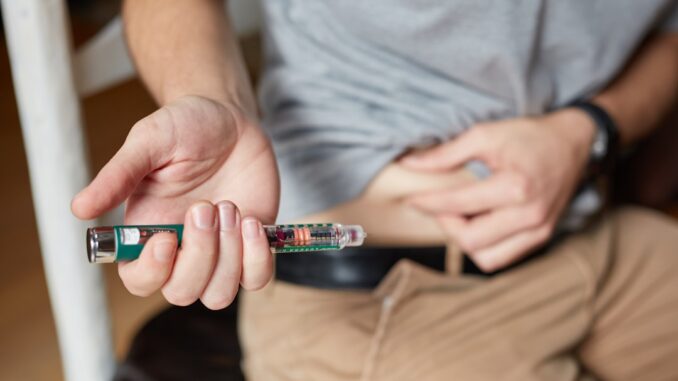

NNC2215: The Dawn of Truly Smart Insulin and a New Horizon for Diabetes Management
For millions across the globe, managing diabetes isn’t just a daily task; it’s a relentless, minute-by-minute balancing act. Imagine walking a tightrope, one eye constantly on your blood sugar levels, knowing that a misstep could plunge you into the dangerous lows of hypoglycemia or the insidious, long-term damage of hyperglycemia. It’s an exhausting reality for so many, isn’t it? Well, what if that tightrope walk became a little less precarious, a bit more like a stroll? This, my friends, is the promise echoing from the labs of Novo Nordisk with their groundbreaking development: NNC2215, a bioengineered, glucose-sensitive insulin.
This isn’t just another incremental update in insulin therapy. No, this feels different, like a genuine paradigm shift. Crafted with meticulous precision by Novo Nordisk’s dedicated team of researchers, NNC2215 isn’t just a hormone; it’s a dynamic, responsive agent. It represents a significant leap forward, moving us closer to truly personalized diabetes care, something we’ve dreamed about for decades.
TrueNAS by Esdebe: healthcare data storage that delivers value without sacrificing security.
The Relentless Challenge of Diabetes Management
Before we dive too deep into the wonders of NNC2215, let’s briefly acknowledge the enormity of the challenge. Diabetes, whether Type 1 or Type 2, demands constant vigilance. Current insulin therapies, while life-saving, often operate with a fixed action profile. You inject a dose, and that insulin goes to work, regardless of whether your blood glucose happens to be dropping rapidly due to unexpected exercise or spiking after a meal. It’s a bit like driving a car with only an accelerator, no brake or subtle throttle control; you’re constantly trying to anticipate and adjust, often after the fact.
This inherent inflexibility leads to significant challenges. Hypoglycemia, the dreaded ‘hypo,’ is a constant companion for many, especially those with Type 1 diabetes. It’s that terrifying sensation of sudden weakness, confusion, the cold sweat, the pounding heart, sometimes even seizures. It’s not just uncomfortable; it’s dangerous, impacting quality of life and even leading to fatal incidents. On the other end, chronic hyperglycemia, though often less immediately dramatic, silently chips away at the body, paving the way for devastating complications like neuropathy, retinopathy, nephropathy, and cardiovascular disease. Clearly, we needed something smarter.
Unpacking the Ingenious Mechanism of NNC2215
So, how does NNC2215 aim to solve this perennial dilemma? It operates through an exquisitely sophisticated, dynamic mechanism that responds directly to blood glucose concentrations. You see, this isn’t your grandfather’s insulin. This is a truly ‘smart’ insulin, designed to adapt in real-time. But how, precisely, does it achieve this almost intuitive response?
At its core, NNC2215 utilizes a clever reversible albumin-binding mechanism. Think of albumin as a kind of shuttle or storage protein found abundantly in your blood plasma. When your glucose levels are low, NNC2215 preferentially binds to this plasma albumin. This binding acts like a temporary leash, limiting its availability to activate insulin receptors on your cells. Essentially, the insulin is ‘held back,’ reducing its potency when it’s not needed as much. This is critical because it significantly diminishes the risk of accidentally pushing your blood sugar too low, which is the primary fear for anyone on insulin therapy, isn’t it?
Conversely, when your blood glucose levels begin to climb – perhaps after a meal, or if your body just needs more metabolic help – NNC2215 undergoes a conformational change. It’s like a tiny, biochemical signal tells it to let go of its albumin tether. Upon dissociating from albumin, its affinity for the insulin receptor increases dramatically. This means it becomes more active, more readily available to bind to cells, facilitating efficient glucose uptake and utilization. It’s an elegant, almost self-regulating system: more glucose means more active insulin, less glucose means less active insulin. This adaptive response aims to maintain optimal blood sugar levels within a much tighter, safer range, minimizing both the dangerous spikes of hyperglycemia and the terrifying plunges into hypoglycemia.
This sophisticated dance between NNC2215, albumin, and cellular receptors is a testament to advanced bioengineering. Traditional insulin, whether rapid-acting or long-acting, has a predetermined pharmacokinetic and pharmacodynamic profile. It works on a schedule, not necessarily on your body’s moment-to-moment metabolic needs. NNC2215, however, offers a truly physiological response, mimicking, to some extent, the natural intelligence of a healthy pancreas. It’s like having a finely tuned dimmer switch for glucose, rather than just an on-off button.
The Scientific Validation: Promising Preclinical Findings
Any groundbreaking medical innovation must first pass rigorous scientific scrutiny, and NNC2215 has certainly begun that journey. Preclinical studies, the essential first step in evaluating a new drug’s safety and efficacy, have yielded incredibly promising results.
Researchers tested NNC2215 in relevant animal models, specifically rats and pigs. Why these animals? Well, their physiological similarities to humans, particularly in terms of metabolic pathways and insulin response, make them excellent proxies for initial investigation. They allow scientists to observe how the drug behaves in a living system before ever thinking about human trials.
In these studies, NNC2215 effectively lowered blood glucose levels, which is, of course, the primary goal of any insulin. But here’s where it really shines: when researchers halted glucose infusions – simulating a situation where blood sugar might naturally drop or if too much insulin was administered – NNC2215 caused a less pronounced decrease in glucose compared to insulin degludec. Insulin degludec, you’ll know, is a widely used, long-acting basal insulin analog, renowned for its steady, prolonged glucose-lowering effect. It serves as a strong benchmark.
This ‘less pronounced decrease’ after glucose infusions were stopped is a pivotal finding. It provides concrete evidence of NNC2215’s built-in safety mechanism, its ‘off-switch’ or ‘dimmer’. Traditional insulins, including degludec, will continue working irrespective of falling glucose, potentially leading to hypoglycemia. NNC2215’s ability to reduce its activity when glucose levels dip is precisely what makes it ‘smart’ and could drastically reduce hypoglycemic events. Imagine the peace of mind that could bring! For anyone who’s ever woken up in a cold sweat, disoriented, or had to explain a low blood sugar episode to a concerned colleague, this difference isn’t just academic; it’s life-changing.
These findings suggest that NNC2215’s controlled bioactivity offers a highly promising avenue for diabetes treatment. While preclinical data is just the beginning, it lays a very strong foundation. The transition from animal models to human use is a complex, multi-stage process involving rigorous clinical trials (Phase 1, 2, and 3), but these initial results certainly generate significant optimism for NNC2215’s potential to translate successfully into effective, safer human therapy.
The Transformative Potential on Diabetes Management: A Glimpse into the Future
The introduction of NNC2215 isn’t just about a new drug; it’s about a fundamentally different way of thinking about and managing diabetes. This glucose-sensitive insulin could revolutionize diabetes care by providing a more responsive and truly personalized treatment option. Let’s delve into what this might mean for the millions living with this chronic condition.
Mitigating the Hypoglycemia Burden
Perhaps the most immediate and profound impact of NNC2215 lies in its potential to drastically reduce the incidence and severity of hypoglycemic events. This is huge. For many individuals with insulin-dependent diabetes, the fear of hypoglycemia isn’t just an abstract concern; it’s a daily dread. It dictates their lifestyle choices, limits spontaneous activities, and can cause significant anxiety. I remember a colleague, Sarah, who has Type 1 diabetes. She once shared how she’d dread long meetings or drives, constantly checking her glucose, sometimes even preemptively eating snacks to avoid a ‘hypo,’ which often led to a subsequent high. ‘It’s like you’re always playing catch-up,’ she’d say, ‘and the fear, it’s just exhausting.’ NNC2215’s intelligent attenuation of activity at lower glucose levels offers a genuine lifeline, potentially freeing individuals from this constant worry.
Achieving Tighter, More Stable Glycemic Control
Beyond just preventing lows, NNC2215’s dynamic response promises to lead to overall improved glycemic control. By increasing insulin activity precisely when glucose levels are high and backing off when they’re low, it can help maintain blood sugar within a much narrower, healthier range. This isn’t just about feeling better day-to-day; it has monumental long-term implications. Consistent, tighter control of blood glucose is directly linked to a reduced risk of developing, or slowing the progression of, devastating diabetes complications such as vision loss (retinopathy), kidney disease (nephropathy), nerve damage (neuropathy), and cardiovascular issues. Imagine the years of healthy, complication-free life that could be added for countless individuals. That, you know, is a truly compelling prospect.
Enhanced Quality of Life and Mental Well-being
The ripple effects of improved glycemic control and reduced hypoglycemia extend directly to quality of life. Less worry about dangerous lows means more freedom to exercise, travel, socialize, and even sleep soundly without setting multiple alarms to check blood sugar. The mental burden of diabetes management is immense; constant calculations, injections, and blood sugar checks can take a toll. A ‘smarter’ insulin could simplify regimens, potentially leading to fewer injections and less intensive management, thereby significantly easing the psychological strain. This, in turn, can lead to better adherence to treatment, creating a virtuous cycle of improved health and well-being.
Broader Implications Across Diabetes Types
While often discussed in the context of Type 1 diabetes due to its absolute insulin dependence, NNC2215 also holds incredible promise for individuals with Type 2 diabetes who require insulin therapy. Many Type 2 patients eventually progress to insulin, and they too face the challenges of hypoglycemia and the need for meticulous management. NNC2215 could offer them a safer, more effective path to glycemic control, reducing the complexities and risks often associated with conventional insulin regimens.
NNC2215 in the Evolving Landscape of Diabetes Technology
It’s worth pausing to consider NNC2215 within the broader context of diabetes technology. We’re currently seeing an incredible acceleration in innovation, from advanced continuous glucose monitors (CGMs) that provide real-time data to sophisticated insulin pumps and hybrid closed-loop systems, often dubbed ‘artificial pancreases.’ These technologies are already transforming lives, and NNC2215 could slot seamlessly into this ecosystem, perhaps even enhancing their capabilities.
Imagine a future where a CGM continuously feeds data to an insulin pump, which then delivers NNC2215. The ‘smartness’ of the insulin itself would add another layer of safety and responsiveness, creating an even more finely tuned closed-loop system. It could simplify the algorithms, make the systems more robust, and ultimately, bring us closer to a truly ‘set it and forget it’ solution for insulin delivery.
Moreover, NNC2215 represents a significant step forward in the quest for ‘smart drugs’ – medications that respond intelligently to physiological cues. This isn’t just about diabetes; it’s a concept that could revolutionize treatment across a multitude of conditions where precise, dynamic drug delivery is paramount. It’s an exciting time to be in healthcare research, isn’t it?
Looking Ahead: Challenges and the Path Forward
While the preclinical results for NNC2215 are incredibly encouraging, the journey from lab bench to patient bedside is long and complex. There are significant hurdles yet to overcome.
First, clinical trials in humans are the next crucial step. Phase 1 trials will primarily focus on safety and pharmacokinetics in healthy volunteers, followed by Phase 2 and 3 trials, which will evaluate efficacy and long-term safety in larger groups of people with diabetes. These trials are rigorous, lengthy, and expensive, but absolutely essential to ensure the drug is both safe and effective for its intended use. We’ll need to see how its unique mechanism translates across diverse human physiologies.
Second, regulatory approval from bodies like the FDA in the US or the EMA in Europe will be required. These processes are incredibly thorough, demanding extensive data on safety, efficacy, and manufacturing quality. Then, there’s the question of manufacturing scalability. Producing a bioengineered product like NNC2215 in large quantities, consistently and affordably, presents its own set of challenges.
Finally, accessibility and affordability will be paramount. A groundbreaking drug is only truly revolutionary if it reaches the patients who need it most. Ensuring equitable access globally will be a key challenge for Novo Nordisk and healthcare systems alike. We’ve seen it before with other life-saving innovations, the cost can be a real barrier, which is a discussion we’re all going to need to have.
A New Era of Hope
Despite these challenges, the future looks brighter than ever for diabetes management. NNC2215 represents a beacon of hope, promising a future where individuals with diabetes can live with less fear, fewer complications, and a significantly improved quality of life. Its ability to adjust insulin activity based on real-time glucose levels isn’t just an advancement; it’s a fundamental reimagining of insulin therapy.
As research progresses and we eagerly await the outcomes of human clinical trials, NNC2215 holds the promise of becoming an invaluable tool. It won’t replace the need for healthy lifestyle choices or diligent self-care entirely, but it certainly has the potential to make that demanding tightrope walk of diabetes management feel a lot more like solid ground. It truly embodies the spirit of innovation in healthcare, pushing the boundaries of what’s possible and offering a glimpse into a healthier, more controlled future for millions worldwide. Keep an eye on this one; it’s truly special.
Be the first to comment