
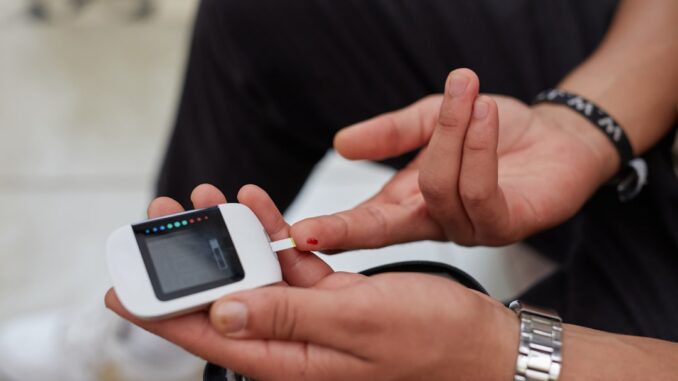

Revolutionizing Diabetes Management: A 2025 Perspective – A Glimpse Into a Brighter Future
Managing Type 1 diabetes (T1D) has, for too long, felt like an intricate, relentless dance. It’s a condition demanding unwavering vigilance, a constant internal debate about blood sugar levels, carbs, insulin, and activity. It really is an exhausting balancing act, isn’t it? For individuals living with T1D and their families, the emotional and mental load often overshadows the physical aspects. But if you’re tuned into the latest in medical tech and therapeutics, you’ll know that 2025 marks a pivotal year, fundamentally transforming this landscape. We’re seeing innovations emerge that aren’t just incremental improvements; they’re offering truly transformative autonomy and a dramatically enhanced quality of life.
From smart devices that learn your body’s unique rhythms to groundbreaking immunotherapies that target the disease’s very origins, the future of T1D care is unfolding with exhilarating speed. It’s a future where constant fear of hypoglycemia lessens, where the mental burden is significantly eased, and where the promise of a life unburdened by chronic monitoring feels, for the first time, truly within reach. This isn’t just about managing symptoms anymore; it’s about reclaiming lives.
Safeguard patient information with TrueNASs self-healing data technology.
The Dawn of Smart Devices: Precision and Peace of Mind
One of the most profound shifts in T1D management has been the seamless integration of technology into daily care. We’re no longer just talking about basic glucose meters and insulin pens. Oh no, the game has changed entirely. We’re witnessing the rise of sophisticated, intelligent systems that automate critical aspects of insulin delivery and provide real-time, actionable insights into glucose levels. This convergence of bio-sensing and artificial intelligence is nothing short of revolutionary, putting sophisticated control directly into the hands of patients – or, more accurately, onto their bodies.
Medtronic MiniMed™ 780G: A Personal Pancreas on Autopilot
Take, for instance, the Medtronic MiniMed™ 780G. This isn’t just an insulin pump; it’s a true hybrid closed-loop system, a kind of external artificial pancreas, and it’s making a real difference for individuals aged 7 and older. What makes it so impressive? It’s not just delivering insulin; it’s thinking. The system constantly communicates with a continuous glucose monitor (CGM) sensor, which means it knows your glucose levels every five minutes. Based on these readings and predictive algorithms, it automatically adjusts basal insulin delivery and even provides correction boluses if it anticipates or detects high blood sugars. It’s like having a highly trained, always-on assistant managing your glucose behind the scenes.
But the real magic often lies in its proprietary Meal Detection™ technology. How many times have you miscalculated carbs for a meal, only to see your blood sugar spike hours later? It’s a common frustration. The 780G helps mitigate this by actively making real-time insulin adjustments after meals, helping to ‘catch’ those post-prandial highs before they become problematic. This reduces the risk of hyperglycemia without demanding additional mental effort or manual bolusing from the user. Imagine enjoying a meal, perhaps even a slightly spontaneous one, without the usual anxiety about the aftermath. That’s a significant gain in freedom, don’t you think? It’s not just about blood sugar numbers; it’s about reducing the cognitive load, allowing folks to focus on living rather than just surviving.
Users frequently report improved time-in-range, fewer hypoglycemic events, and a better night’s sleep – often cited as one of the biggest benefits. I recall a friend, a busy professional, telling me how the 780G transformed his nights. ‘I used to wake up in a cold sweat, heart pounding, convinced I was going low,’ he said. ‘Now, it’s rare. The system just handles it. I actually sleep through the night, and I’m a much better human being because of it.’ That kind of testimonial speaks volumes about the real-world impact of this technology.
Dexcom G7: The Eyes on Your Glucose
Complementing these smart pump systems are the latest continuous glucose monitors, with the Dexcom G7 leading the charge. This isn’t simply an upgrade; it’s a sleeker, more powerful iteration of a device that has already changed millions of lives. The G7 provides real-time glucose readings every five minutes, transmitting that invaluable data directly to your smartphone, smartwatch, or a dedicated receiver. This constant stream of information allows for proactive decision-making, helping you head off highs and lows before they even fully manifest.
Its compact design, roughly the size of a quarter, makes it incredibly discreet, improving user experience and, crucially, adherence to monitoring routines. Nobody wants a bulky device drawing unwanted attention, right? Furthermore, its rapid 30-minute warm-up time means you get real-time data almost immediately after application, a marked improvement over earlier generations that could take hours. This makes starting a new sensor far less of a hassle, promoting consistent use. The accuracy is astounding, especially in critical low glucose ranges, which is where it matters most for safety.
Integration is key too. The G7 doesn’t just work as a standalone monitor; it forms the sensory backbone of advanced automated insulin delivery (AID) systems, including the Medtronic 780G and others. This synergy creates a powerful ecosystem where the CGM acts as the ‘eyes,’ continuously feeding data to the ‘brain’ – the insulin pump – allowing for incredibly precise and responsive insulin delivery. The data it collects can also be shared with healthcare providers, enabling them to make more informed adjustments to treatment plans based on comprehensive trends, not just a snapshot in time. It’s truly a collaborative approach to care.
Beyond the Big Two: The Broader AID Landscape
While the Medtronic 780G and Dexcom G7 are prominent players, the broader landscape of automated insulin delivery (AID) is bustling with innovation. Other systems, like the Tandem t:slim X2 with Control-IQ technology, also offer robust closed-loop functionality, learning individual insulin needs and predicting glucose trends. Then there are systems like the Insulet Omnipod 5, a tubeless pod-based AID system, offering incredible freedom of movement without the hassle of tubes. This variety is fantastic because it means patients and their clinicians can choose a system that best fits their lifestyle and specific needs. It’s not a one-size-fits-all solution, and that’s precisely how it should be. The future definitely leans towards even greater connectivity, miniaturization, and AI-driven predictive capabilities, moving closer to true fully automated systems. Who knows, perhaps soon we won’t even need to tell our devices what we’re eating at all.
Emerging Immunotherapies: Targeting the Root Cause
While advanced devices make managing T1D significantly easier, the holy grail remains a cure, or at least a way to halt its progression entirely. This is where emerging immunotherapies step in, representing a profound shift from symptom management to disease modification. We’re talking about treatments that aim to alter the autoimmune response that mistakenly attacks and destroys insulin-producing beta cells in the pancreas, the very hallmark of T1D.
Teplizumab (Tzield®): A New Frontier in Delaying Progression
Leading this charge is Teplizumab (Tzield®), a humanized anti-CD3 monoclonal antibody. Now, that’s a mouthful, isn’t it? But let’s break it down. T1D is an autoimmune disease, meaning your body’s own immune system, specifically its T-cells, mistakenly attacks your pancreatic beta cells. Teplizumab works by temporarily reducing the number of these autoreactive T-cells that are doing the damage, thereby ‘resetting’ the immune system in a way that allows the remaining beta cells to continue functioning. It’s a very targeted approach, like a precision strike against the rogue elements of the immune system.
Clinical trials have demonstrated remarkable promise for Tzield®. Researchers found that a single, 14-day course of treatment could significantly delay the progression of T1D by an average of two to three years in individuals diagnosed with Stage 2 T1D. What does ‘Stage 2’ mean? It refers to individuals who already have two or more T1D-related autoantibodies and abnormal glucose tolerance but haven’t yet reached a full clinical diagnosis of T1D. This distinction is crucial; it means intervening before the body’s insulin production is completely wiped out.
One of the key metrics they looked at was stimulated C-peptide levels. C-peptide is a byproduct released in equal amounts to insulin when the body produces its own insulin. So, higher C-peptide levels indicate preserved beta-cell function, which is exactly what you want. Seeing this sustained increase in C-peptide levels post-treatment is a strong indicator that the therapy is working to protect those precious beta cells. Delaying the onset of full-blown T1D, even for a few years, has immense benefits for individuals and families. It means more time without the daily grind of insulin injections, more time with a ‘honeymoon phase’ of endogenous insulin production, and potentially less severe complications down the line.
In a landmark decision, August 2025 saw the UK’s Medicines and Healthcare products Regulatory Agency (MHRA) approve Tzield for use in adults with Stage 2 T1D. This marked a profound milestone in early intervention strategies, offering a tangible hope of altering the disease’s natural history. It’s not a cure, not yet, but it’s the closest we’ve come to meaningfully intervening in the autoimmune process itself. Imagine the peace of mind for parents whose child tests positive for autoantibodies; now there’s a proactive step they can take. Of course, access and cost remain considerations, as with any cutting-edge therapy, but the scientific breakthrough here is undeniable.
The Horizon of Immunomodulation
Beyond Teplizumab, the field of immunotherapies is incredibly vibrant. Researchers are exploring various other strategies, from different monoclonal antibodies targeting other immune cells, to tolerizing vaccines designed to retrain the immune system to recognize beta cells as ‘self.’ We’re also seeing work on encapsulated beta cells, essentially protecting transplanted insulin-producing cells from immune attack, which could eventually lead to a functional cure for those whose beta cells are already destroyed. The ultimate goal, of course, is a definitive cure, but these early intervention strategies pave the way, giving us invaluable insights into the complex immunology of T1D. It’s an exciting time, truly, and it won’t be long before we see these advances translating into broader clinical applications.
Digital Health Innovations: Personalized Paths to Better Health
Beyond hardware and direct therapies, the digital revolution is profoundly shaping how we approach diabetes management. We’re moving into an era where artificial intelligence and machine learning aren’t just buzzwords, but practical tools providing hyper-personalized insights. The advent of digital health tools has pushed diabetes management firmly into the realm of truly individualized care, moving beyond generic advice to tailored, actionable recommendations.
GlyTwin Framework: Your AI Health Coach
Consider the GlyTwin framework, a fascinating example of this evolution. It employs ‘counterfactual explanations’ to simulate optimal treatments for glucose regulation. What does that mean in plain language? Imagine an AI system that takes all your personal data – your glucose readings, insulin doses, meal logs, activity levels, even sleep patterns – and then asks, ‘What if you had done X instead of Y?’ It runs simulations, showing you what your glucose trajectory could have been if you’d made different choices. It literally learns from your past to guide your future, identifying patterns and suggesting alternatives that would lead to better outcomes.
By analyzing an individual’s unique data fingerprint, GlyTwin provides highly tailored recommendations. For instance, it might suggest, ‘If you had taken an additional unit of insulin 30 minutes before that pasta meal, your peak glucose would likely have been 40 points lower,’ or ‘Adding a 20-minute walk after lunch could significantly mitigate your usual post-meal spike.’ These aren’t just generic tips; they’re data-driven insights specific to your body, your routines, and your metabolism. This empowers patients to make incredibly informed decisions about their daily routines and insulin dosing, moving from reactive management to proactive optimization.
It effectively acts as a highly sophisticated personal health coach, available 24/7. This kind of predictive analytics and personalized feedback isn’t just about better numbers; it’s about fostering a deeper understanding of one’s own body and how it responds to various inputs. It cultivates an active partnership between the individual and their health data, leading to greater self-efficacy and a palpable sense of control over a condition that often feels uncontrollable.
The Broader Digital Ecosystem
And GlyTwin is just one piece of the puzzle. The wider digital health ecosystem for diabetes includes everything from telehealth platforms that connect patients with endocrinologists from anywhere, to advanced apps that simplify carb counting, track activity, and integrate with smart kitchen scales. Digital therapeutics, which are software programs designed to prevent, manage, or treat a medical disorder, are also gaining traction, offering structured educational content and behavioral support. We’re seeing virtual coaching programs, peer support communities facilitated by digital tools, and even gamified approaches to health management. All these innovations are designed to reduce barriers to care, enhance self-management skills, and create a more connected and supportive environment for individuals living with diabetes. It’s truly a testament to how technology can democratize access to expertise and empower individuals in their health journey.
Global Initiatives and World Diabetes Day 2025: A Collective Call to Action
While technological and therapeutic advancements are vital, they mean little if they aren’t accessible or if global awareness remains low. That’s why initiatives like World Diabetes Day are so crucial. Observed annually on November 14th, it serves as a powerful global platform to raise awareness, advocate for better care, and mobilize action against diabetes, a condition that impacts hundreds of millions worldwide.
Diabetes During the Life Course: A Holistic Perspective
The 2025 theme for World Diabetes Day, ‘Diabetes during the life course,’ really resonates, doesn’t it? It perfectly encapsulates the understanding that diabetes isn’t a static condition; it evolves and presents unique challenges at every stage of life. Think about it: managing T1D in a toddler requires completely different strategies and emotional support than it does for a teenager navigating puberty, or a pregnant woman, or an elderly individual facing other age-related health issues. This theme highlights the imperative for comprehensive, age-appropriate care across the entire lifespan.
For children, the focus is often on integrating management into school life, supporting growth, and preventing early complications. Adolescents grapple with independence, peer pressure, and the notoriously unpredictable hormonal surges that wreak havoc on blood sugar. In adulthood, career, family planning, and stress become central considerations. And for the elderly, co-morbidities, cognitive changes, and frailty add layers of complexity. This theme isn’t just a slogan; it’s a call to action for healthcare systems to develop and implement tailored, holistic care pathways that address these distinct needs, ensuring continuity and appropriate support at every turn.
PAHO and WHO: Driving Global Progress
Regional and global organizations play an indispensable role in translating innovation into tangible improvements in public health. The Pan American Health Organization (PAHO), for instance, has been vocal about the escalating burden of diabetes as a critical public health issue across the Americas. Their efforts in 2025 included introducing new, practical resources, such as a virtual course designed specifically for primary health care providers. This is key, as primary care is often the first, and sometimes only, point of contact for many patients. Equipping these frontline professionals with the latest knowledge and tools can drastically improve early diagnosis, management, and prevention of complications. Moreover, PAHO highlighted the expanded availability of essential diabetes medicines and technologies, including insulin and certain monitoring devices, through its Strategic Fund. This initiative is vital for improving access in low- and middle-income countries, demonstrating a commitment to health equity.
Similarly, the World Health Organization (WHO) launched crucial global guidelines on managing diabetes during pregnancy. This is an area of profound importance, as diabetes in pregnancy, whether pre-existing or gestational, carries significant risks for both mother and child. Uncontrolled diabetes can lead to complications such as pre-eclampsia, macrosomia (large baby), birth trauma, and increased risk of Type 2 diabetes for the child later in life. These guidelines provide evidence-based strategies for delivering high-quality, standardized care, aiming to prevent these serious complications and ensure healthier outcomes for every woman, everywhere, regardless of their socioeconomic status or geographic location. It’s about setting a global standard of care and advocating for its universal implementation. We know that healthy mothers lead to healthier babies, and that’s an investment in future generations.
The Wider Global Effort for Equity
Beyond PAHO and WHO, other organizations like the International Diabetes Federation (IDF) and national bodies like the American Diabetes Association (ADA) and JDRF continue their relentless advocacy for research funding, policy changes, and patient support. Their work is multifaceted: from funding cutting-edge scientific research to advocating for affordable access to insulin and diabetes technologies in every corner of the world. It’s a stark reality that, despite all these incredible advancements, access remains a massive hurdle for many. Ensuring that innovations aren’t just developed but are also distributed equitably, reaching those who need them most, is arguably the biggest challenge we face. After all, what good is a revolutionary therapy if it’s priced out of reach for the majority? This collective, global push underscores the understanding that diabetes is a shared challenge requiring shared solutions and a commitment to health as a fundamental human right.
Looking Ahead: The Horizon of Possibility
The landscape of Type 1 diabetes care is undeniably evolving at a rapid clip, and what a hopeful prospect that is. We’re seeing innovations that not only promise better management but also hint at potential cures that once seemed like science fiction. What’s next? We can anticipate even more sophisticated automated insulin delivery systems, perhaps integrating dual hormones like insulin and glucagon for even tighter control, mimicking the pancreas even more closely. Glucose-sensing insulins that activate only when needed, or smart patches delivering precise doses, are also on the horizon. Beyond that, advances in cell encapsulation technologies, stem cell research aimed at regenerating beta cells, and even gene therapies continue to hold immense promise for a definitive cure.
As we move forward, fueled by this incredible momentum, it’s absolutely essential to continue supporting and advocating for these advancements. We, as a society, must ensure that individuals with T1D, regardless of where they live or their economic standing, have equitable access to the very best possible care, resources, and, ultimately, the hope that these innovations bring. Every new device, every new therapy, every new guideline moves us closer to a world where T1D is no longer a life-limiting condition, but a manageable one, and eventually, perhaps, a condition of the past. It’s a future worth fighting for, isn’t it?
References
Be the first to comment