
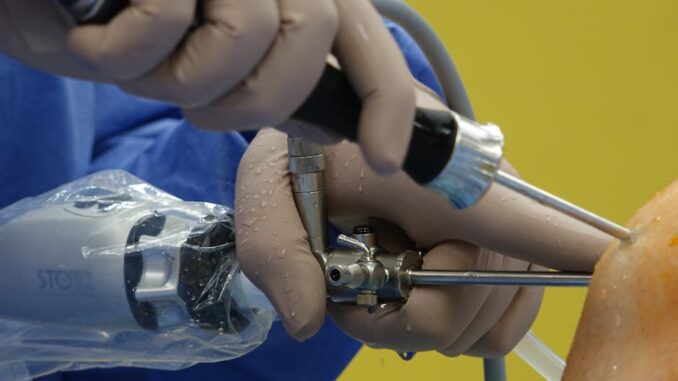

Fujifilm’s EN-840T: Illuminating the Unseen Frontiers of the Small Intestine
In our relentless pursuit of better health outcomes, the medical technology sector continually pushes the boundaries of what’s possible. Every so often, a breakthrough arrives that doesn’t just improve existing methods, but truly transforms them. This year, one such innovation stands out, garnering the prestigious 2025 MedTech Breakthrough Award for ‘Best New Endoscopy Technology Solution’: Fujifilm’s EN-840T Double Balloon Enteroscopy (DBE) Scope. This isn’t just another piece of equipment; it’s a testament to ingenuity, promising to redefine how we diagnose and treat conditions within one of the body’s most elusive organs, the small intestine.
Navigating the Labyrinth: Why the Small Bowel Remains a Diagnostic Challenge
If you’ve ever thought about the complexities of the human body, you’d quickly appreciate the intricate dance of digestion. The small intestine, a remarkable tube stretching up to 20 feet in length, is where most of our nutrient absorption occurs. Yet, despite its critical role, it has historically presented a formidable challenge for medical exploration. Unlike the more accessible esophagus, stomach, and colon, the small bowel is a convoluted, winding labyrinth, full of twists, turns, and loops, making comprehensive visualization incredibly difficult.
TrueNAS by Esdebe: healthcare data storage that delivers value without sacrificing security.
Traditional endoscopic procedures, like gastroscopy and colonoscopy, are fantastic for examining the upper and lower GI tracts, respectively. But their reach often stops short where the small intestine truly begins. For years, clinicians grappled with incomplete views, relying on indirect imaging like CT or MRI, or, in more invasive instances, surgical exploration. Capsule endoscopy offered a brilliant, non-invasive glimpse, a tiny camera swallowed by the patient, providing thousands of images. However, it’s diagnostic only; no biopsy, no immediate intervention, and sometimes, the culprit lesion is missed as the capsule just floats by. Push enteroscopy, while extending further than a standard scope, still only scratches the surface of the proximal small bowel. This diagnostic gap meant delays, prolonged suffering, and sometimes, less optimal treatment strategies for conditions hidden deep within.
The Birth of Double Balloon Enteroscopy: A Game Changer’s Origin Story
The concept of Double Balloon Enteroscopy, first pioneered by Dr. Hironori Yamamoto, was nothing short of revolutionary. Imagine trying to thread a needle through a long, floppy, accordion-like tube. You’d need something to stabilize it, something to pull it along. That’s essentially what DBE accomplishes. It utilizes a soft overtube equipped with a balloon, and the endoscope itself also has a balloon at its tip. By alternately inflating and deflating these balloons, and then pushing and pulling the scope and overtube, the small intestine can be pleated or ‘accordioned’ onto the overtube. This mechanical marvel allows the endoscope to be advanced much deeper than ever before, almost like a mountaineer using two anchors to scale a treacherous face.
This technique transformed small bowel exploration from a surgical endeavor to an endoscopic one, enabling both thorough inspection and crucial therapeutic interventions. Before DBE, patients with obscure GI bleeding or suspected small bowel tumors often faced exploratory laparotomies – major surgeries – just to find the source. DBE changed that narrative, opening up a new frontier for gastrointestinal specialists globally.
Fujifilm’s EN-840T: Pushing the Envelope Further
Fujifilm, a name synonymous with imaging excellence, has taken the foundational principles of DBE and infused them with cutting-edge technology, culminating in the EN-840T. It’s an evolution, really, that significantly amplifies the capabilities already inherent in the DBE method. Let’s delve into what makes this particular scope so impactful.
High-Definition Clarity: Seeing What Was Once Hidden
At the heart of the EN-840T’s superior performance lies its advanced CMOS image sensor. This isn’t just about ‘HD’; it’s about unparalleled visual fidelity. Think about going from a grainy old television to a crystal-clear 4K display. That’s the leap in clarity we’re talking about. The vivid, high-definition images provided by this scope ensure that subtle mucosal changes, tiny polyps, or delicate vascular abnormalities, which might have been missed with previous generations of scopes, are now brought into sharp focus. For a gastroenterologist staring at a screen for hours, this precision means better diagnostic confidence and, ultimately, fewer missed diagnoses. It’s a bit like having a magnifying glass built right into your vision, giving you that extra edge.
Beyond White Light: Advanced Visualization Technologies
One of the most impressive aspects of Fujifilm’s endoscopic technology is its suite of advanced visualization modes. The EN-840T integrates LED multi-light technology with Fujifilm’s proprietary Linked Color Imaging (LCI)® and Blue Light Imaging (BLI) modes. These aren’t just pretty filters; they’re sophisticated optical enhancements designed to highlight specific tissue characteristics that might be invisible under standard white light.
- Linked Color Imaging (LCI)®: LCI is fantastic for accentuating differences in mucosal color. It particularly enhances the redness of inflammation, making inflammatory changes in conditions like Crohn’s disease or nonspecific enteritis much more prominent. You can really pick out areas of erythema, even subtle ones, that might blend in with the surrounding tissue under normal light. It’s like having a specialized pair of glasses that make problem areas pop, making detection quicker and more reliable.
- Blue Light Imaging (BLI): BLI, on the other hand, is a game-changer for evaluating microvascular patterns and detecting superficial lesions. It works by using specific wavelengths of blue light that are absorbed by hemoglobin, enhancing the visibility of blood vessels on the mucosal surface. This is invaluable for identifying early-stage polyps, suspicious lesions, or angioectasias (small vascular malformations) that are often the culprits in obscure GI bleeding. Imagine a map where tiny, hidden roads suddenly become illuminated; that’s the effect BLI has on the microvasculature, providing critical clues for diagnosis and intervention.
Together, LCI and BLI provide a multi-faceted approach to visualization, arming clinicians with comprehensive tools to detect a broader spectrum of pathologies with greater accuracy. This combination means you’re not just looking, you’re seeing in a way that truly aids in deciphering the complexities of small bowel disease.
Maneuverability Redefined: Navigating the Toughest Passages
Accessing the entire small bowel is already a challenge, but what about patients with complex anatomy, perhaps from previous surgeries leading to adhesions? The EN-840T tackles this head-on with ‘adaptive bending’ and ‘advanced force transmission’ technology. It’s not enough for a scope to be long; it needs to be responsive. Adaptive bending allows for highly precise control of the scope’s tip, enabling smooth navigation through sharp turns and angulations without undue force. The advanced force transmission system ensures that the push you apply at the control head translates efficiently to the scope’s tip, preventing looping and improving insertion depth. It’s about maintaining a tactile connection, giving the endoscopist a true feel for what’s happening deep inside the patient.
This improved maneuverability is a godsend for patients with post-surgical adhesions, which can create anatomical obstacles that even standard DBE might struggle with. The EN-840T promises a less traumatic, more successful procedure, even in these challenging cases. It truly minimizes the operator’s struggle, letting them focus on the diagnostic task at hand rather than wrestling with the instrument.
Enhanced Therapeutic Arsenal: More Than Just Looking
What good is finding a problem if you can’t fix it? The EN-840T doesn’t just offer superior diagnostics; it significantly enhances therapeutic capabilities. Its design allows for efficient aspiration of blood or mucus during the insertion of therapeutic devices. This might sound like a minor detail, but anyone who has performed an endoscopy knows how quickly visibility can be obscured by even a small amount of fluid. By maintaining a clear field of view, clinicians can perform interventions like polypectomy (removing polyps), hemostasis (stopping bleeding), or stricture dilation (widening narrowed segments) with greater precision and safety.
This capability reduces procedure times, as you’re not constantly pausing to clear the view, and promotes quicker hemostasis in bleeding cases. It’s about creating an optimal environment for intervention, turning a diagnostic expedition into a seamless opportunity for treatment. You can imagine the stress reduction for both the patient and the physician, knowing that a problem identified can often be addressed immediately.
Transforming Clinical Practice: A Ripple Effect of Benefits
The EN-840T DBE Scope’s advanced features aren’t just technical marvels; they translate directly into profound clinical implications, impacting a wide array of conditions and, most importantly, patient lives.
Deciphering Crohn’s Disease and Other Inflammatory Conditions
Crohn’s disease, a chronic inflammatory condition, can affect any part of the GI tract, but frequently involves the small intestine. Diagnosing and monitoring Crohn’s, especially in its early stages or when conventional scopes can’t reach, has always been difficult. The EN-840T, with its deep insertion capabilities and advanced imaging modes like LCI, provides unparalleled views of the small bowel mucosa, allowing for earlier detection of inflammation, ulcerations, and strictures. This means more precise staging of the disease, targeted biopsies, and better-tailored treatment plans. For patients grappling with this debilitating condition, earlier, more accurate diagnosis can mean a significant improvement in quality of life.
Pinpointing the Elusive Source of GI Bleeding
One of the most frustrating challenges in gastroenterology is ‘obscure GI bleeding’ – bleeding that can’t be explained by conventional endoscopy. Often, the source lies deep within the small intestine. The EN-840T, particularly with BLI, excels at identifying subtle vascular lesions like angioectasias or small ulcers that might be continuously or intermittently bleeding. Once identified, these lesions can often be treated endoscopically with cautery or clipping, avoiding the need for more invasive surgery. This represents a huge leap forward from the days of blind resections or continuous transfusions, offering definitive answers and treatment for patients with persistent, unexplained blood loss.
Small Bowel Polyps and Tumors: Early Detection is Key
While less common than colorectal polyps, small bowel polyps and tumors can occur and are often challenging to detect due to the small bowel’s length and convoluted nature. The high-definition imaging and enhanced visualization of the EN-840T increase the likelihood of spotting these lesions at an earlier, more treatable stage. When detected, the scope’s therapeutic channel allows for their removal via polypectomy, potentially preventing progression to malignancy. This proactive approach is critical for improving prognosis for what can often be aggressive cancers.
Beyond the Usual Suspects: Broader Applications
But the utility doesn’t stop there. The EN-840T is also invaluable for diagnosing and managing other less common conditions: investigating malabsorption syndromes, evaluating the small bowel for complications of celiac disease, managing radiation enteritis, or even assessing graft-versus-host disease in transplant patients. Its versatility truly expands the diagnostic and therapeutic horizons for gastroenterologists.
Dr. Daniel J. Stein of Brigham and Women’s Hospital eloquently summarized this impact, stating, ‘Improvements in all areas—scope dynamics, optics, and irrigation—will empower physicians to really push the envelope for deep small bowel diagnostics and therapeutics.’ It’s this empowerment, this feeling of having the right tool for the job, that truly drives better patient care.
The MedTech Breakthrough Award: A Nod to the Future
The recognition by the MedTech Breakthrough Awards program isn’t just a trophy; it’s a significant endorsement from a highly respected body within the health and medical technology industry. This year’s program saw an astounding 4,500+ nominations from over 18 countries, underscoring the intensely competitive and innovative landscape of medical device development. To emerge as the ‘Best New Endoscopy Technology Solution’ speaks volumes about the EN-840T’s unique capabilities and its anticipated impact.
These awards aren’t given lightly. They involve a thorough evaluation of innovation, performance, ease of use, and overall market impact. Fujifilm’s win here sends a clear signal: this scope isn’t just incrementally better, it’s a significant stride forward, setting a new benchmark for what’s achievable in gastrointestinal endoscopy. For clinicians and healthcare systems, it highlights a tool that warrants serious consideration for its potential to improve patient outcomes and streamline complex procedures.
Fujifilm’s Enduring Commitment to Innovation
Fujifilm’s legacy in imaging spans decades, evolving from photographic film to advanced medical diagnostics. This award for the EN-840T isn’t an isolated incident; it’s a continuation of their steadfast commitment to innovation in endoscopic imaging. They understand that precise imaging isn’t just about pretty pictures; it’s about life-saving information. By consistently investing in R&D and listening to the needs of clinicians, Fujifilm continues to deliver instruments that are not only technologically advanced but also practically useful and intuitively designed.
Their dedication translates into providing clinicians with sophisticated tools that genuinely enhance diagnostic accuracy and therapeutic effectiveness. As a result, patients are the ultimate beneficiaries. We’re talking about fewer invasive surgeries, shorter hospital stays, quicker recovery times, and ultimately, a better quality of life. Isn’t that what all this technology is really for? To make health care more human, more effective, and less burdensome. And, you know, it’s pretty exciting to think about what they’ll come up with next.
The Road Ahead: What’s Next for GI Endoscopy?
The EN-840T represents a significant milestone, but the journey of innovation never truly ends. What might the future hold for GI endoscopy? We’re likely to see even further integration of Artificial Intelligence (AI) for real-time lesion detection and characterization, perhaps even guiding the scope itself. Miniaturization will continue, allowing for less invasive procedures. Robotics could play an even larger role, offering unprecedented precision and stability. And as our understanding of personalized medicine grows, endoscopic techniques may become even more tailored to individual patient anatomies and disease profiles.
For now, the EN-840T stands as a shining example of what thoughtful engineering and clinical collaboration can achieve. It’s not just a device; it’s a beacon, illuminating the previously unseen, and empowering clinicians to navigate the small bowel with unprecedented confidence and capability. The future of GI diagnostics certainly looks brighter, doesn’t it?
References
- Fujifilm’s EN-840T Double Balloon Enteroscopy Scope Wins 2025 MedTech Breakthrough Award. FUJIFILM Healthcare Americas Corporation. (healthcaresolutions-us.fujifilm.com)
- Fujifilm Announces Commercialization of the EN-840T Double Balloon Enteroscopy (DBE) Scope, a Unique Endoscopic Imaging Technology for Diagnosis and Treatment in the Small Intestine. Fujifilm. (fujifilm.com)
- Fujifilm Demonstrates State-of-the-Art Endoscopic Imaging Technology at the Digestive Disease Week (DDW®) 2025 Conference. Fujifilm. (fujifilm.com)
- Gastroenterology News Briefing: June 10-16, 2025. GastroScholar. (gastroscholar.com)
- Double Balloon Enteroscopy Scope Wins MedTech Breakthrough Award. OR Today. (ortoday.com)
Be the first to comment